Canada has hit NATO’s defence spending target of 2 percent of GDP, after a year marked by the biggest jump in military expenditures “in generations,” Prime Minister Mark Carney says.
Carney also announced $3 billion in additional funding for infrastructure and defence-related initiatives in Atlantic Canada.
Despite the boost, Canada remains among the lowest defence spenders, in line with countries such as Portugal, Spain, Albania and Belgium. The NATO report indicates Canada’s defence expenditure hit exactly 2 percent of GDP this fiscal year, which ends March 31.
Carney said Canada now aims to work toward NATO’s new target of spending 5 percent of GDP by 2035. That target includes 3.5 percent on core defence and 1.5 percent on defence and security-related infrastructure.
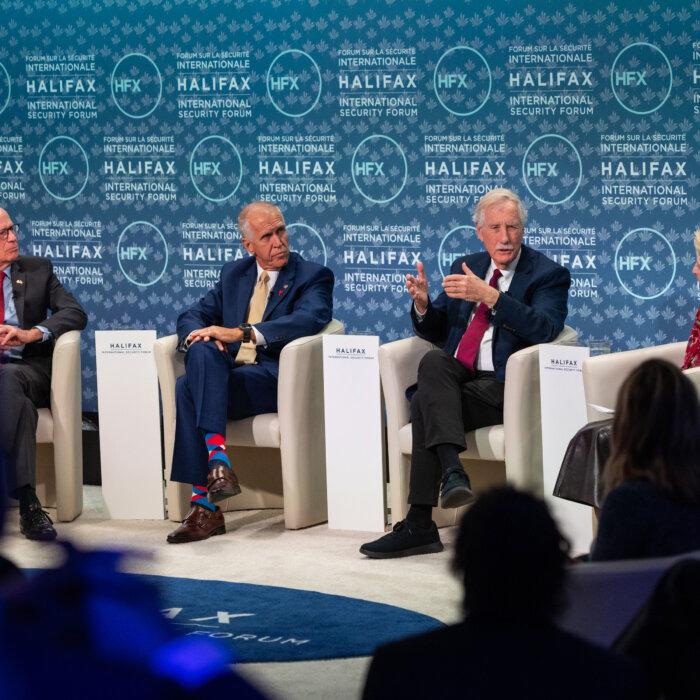
The NATO report says three allies have already met the 3.5 percent portion of the target, including Poland, Lithuania and Latvia.
The $3 billion in additional spending Carney announced includes $1.2 billion to modernize power and municipal infrastructure at the military base in Halifax, more than $1 million for infrastructure at the military base in New Brunswick, and $648 million to build two new aviation support facilities, among other initiatives.
The United States ranked seventh in terms of defence expenditure, spending 3.19 percent of its GDP on defence. The country accounted for 52 percent of NATO allies’ combined GDP and 60 percent of combined defence expenditure.
“I expect Allies at the next NATO Summit in Ankara to show they are on a clear and credible path towards the 5% objective,” NATO Secretary General Mark Rutte said in the report.
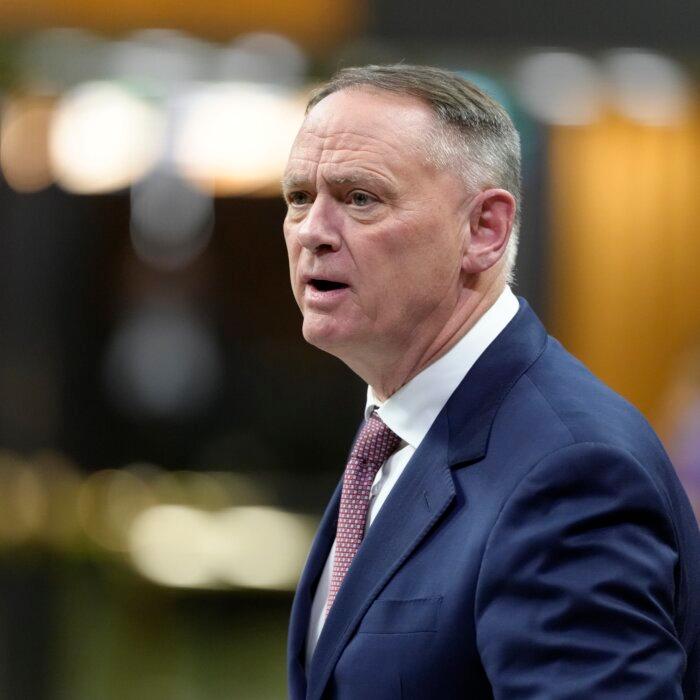
Conservative MP James Bezan, who serves as his party’s defence critic, commented on Canada hitting the 2 percent target, saying it “doesn’t mean that Canada is any stronger“ and that the increased defence spending is ”actually an illusion.”
“We know that through creative accounting, that government spending in national defence has increased by over $10 billion. That hasn’t actually resulted in increased capabilities for the Canadian Armed Forces,” Bezan said at a press conference on March 26. “It has not actually increased our own security or made us safer here at home.”
Commitments
The 2035 NATO target, set at the alliance’s June 2025 summit in The Hague, Netherlands, includes 3.5 percent to fund core defence areas, such as investments in the Canadian Armed Forces, upgrading military equipment and technology, bolstering Canada’s defence industries, and diversifying defence partnerships.In addition, 1.5 percent is to be spent on defence-related areas, including critical defence and security-related infrastructure such as airports, ports, telecommunications, emergency preparedness systems, and other dual-use military-civilian initiatives.
Canada had long been criticized for low military spending. Former NATO Secretary General Jens Stoltenberg called on Canada in 2024 to boost spending amid the most “dangerous security environment for generations.” U.S. President Donald Trump has also been critical of countries that fail to meet the goal. Pressure from the president has motivated NATO allies to spend more on defence.
The government made several defence spending announcements this month, prompting a reporter to ask about the apparent “last-minute spending spree.” McGuinty countered that the announcements came as part of a “systematic rollout” and a plan that “was devised some time ago.”