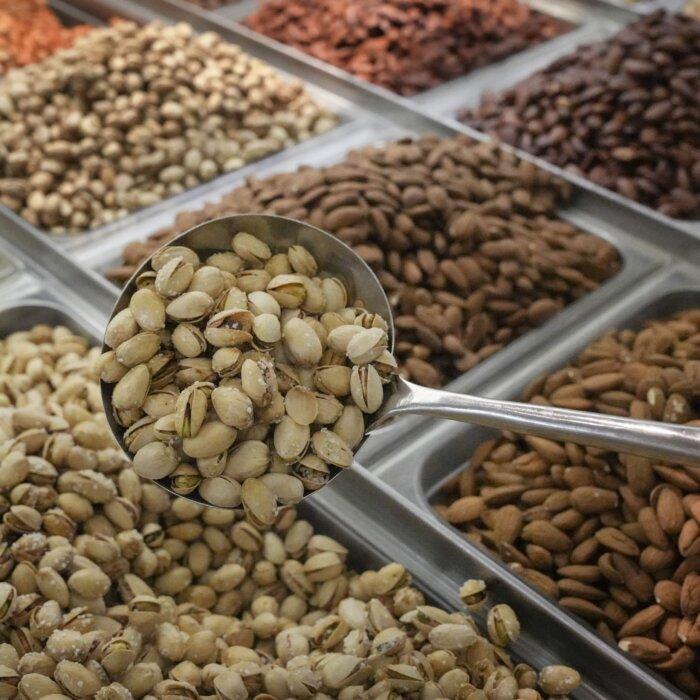
The Canadian Food Inspection Agency has placed a temporary ban on pistachio imports from Iran amid a salmonella outbreak that has affected more than 100 people in Canada.
Importers of pistachio products will be required to show proof that the products don’t originate from Iran in order to be accepted into Canada, the agency says, adding that shipments will be held and tested for salmonella or refused entry if importers fail to provide this proof.
“These measures will remain in place while the CFIA analyzes information from the food safety investigation, ongoing surveillance and inspections of importers,” the release says.
The CFIA says it will continue to conduct inspections to ensure importers comply with federal requirements. If importers don’t comply they could be fined, have their licence suspended or cancelled, or face prosecution, the agency says.
The outbreak has been most prevalent in Quebec, with 66 cases of illnesses related to salmonella, and in Ontario, with 27 cases. There have also been 6 cases in British Columbia, 4cases in Alberta, 1 in Manitoba, and 1 in New Brunswick.
Outbreak
The illnesses began near the beginning of March and peaked in the middle of May, with the latest cases reported in the first week of September.“More recent illnesses may continue to be reported because there is a period between when a person becomes sick and when the illness is reported to public health officials,” the health agency said, noting it can take 15 to 99 days from the time of illness onset to having results confirmed after seeing a doctor and getting tested.
The number of people sick in Canada linked to the outbreak “is likely much higher,” the agency says, adding that the 105 cases reported so far only include those that are “laboratory-confirmed.” Those who have mild symptoms and don’t go to the doctor to get tested are not accounted for.
For each case of illness related to salmonella, researchers estimate there could be 26 more cases that are not reported, the PHAC says.
Symptoms of salmonella can include chills, fever, nausea, diarrhea, vomiting, stomach cramps, and a sudden headache, the public health notice says, noting that some people may not become sick at all.
Salmonella is a foodborne bacterial illness that can spread to other people several days or weeks after a person becomes infected, even if they don’t have symptoms, the notice says.
The symptoms usually begin within 6 to 72 hours of exposure to the contaminated food and typically end within four to seven days. While most people recover on their own, some could get a more serious illness that requires hospital care and could lead to “long-lasting health effects or death,” according to the PHAC.
The agency says older adults, young children, pregnant women, and people with weakened immune systems are at a higher risk for serious illness.
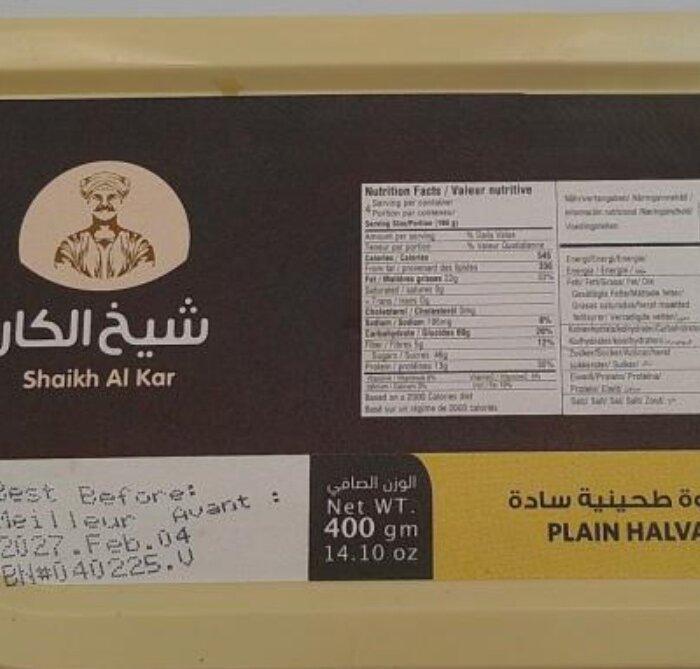
The PHAC says individuals, retailers, distributors, and food service establishments, including grocery stores, pharmacies, bakeries, and cafes across the country should check if they have the recalled products by looking for the specific product name and size, as well as the UPC and codes listed in the recall alerts.
Those who have the recalled products are advised not to consume, serve, use, sell, or distribute those products or any products that are made with them, and should instead throw out the products or return them to the location where they were purchased.