Across Europe, voices are growing to reinterpret or reform the European Convention on Human Rights (ECHR), a postwar cornerstone now under strain from immigration pressures and debates over sovereignty versus the authority of the European Court of Human Rights (ECtHR) in Strasbourg, France.
It guarantees rights to life, liberty, fair trial, privacy, free expression, and protection against torture.
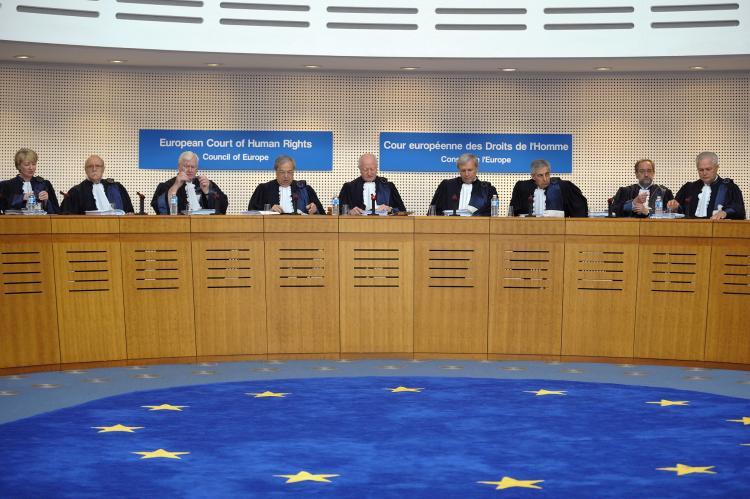
It’s a treaty under the Council of Europe (CoE), separate from the European Union, and its rulings are enforced by the ECtHR, which are binding on all 46 Council of Europe member states.
The Strasbourg court has often drawn criticism for rulings that clashed with national policies.
In 2005, it held that Britain’s blanket ban on prisoner voting breached the right to free elections, a decision critics said overstepped the court’s role and encroached on Parliament’s authority.
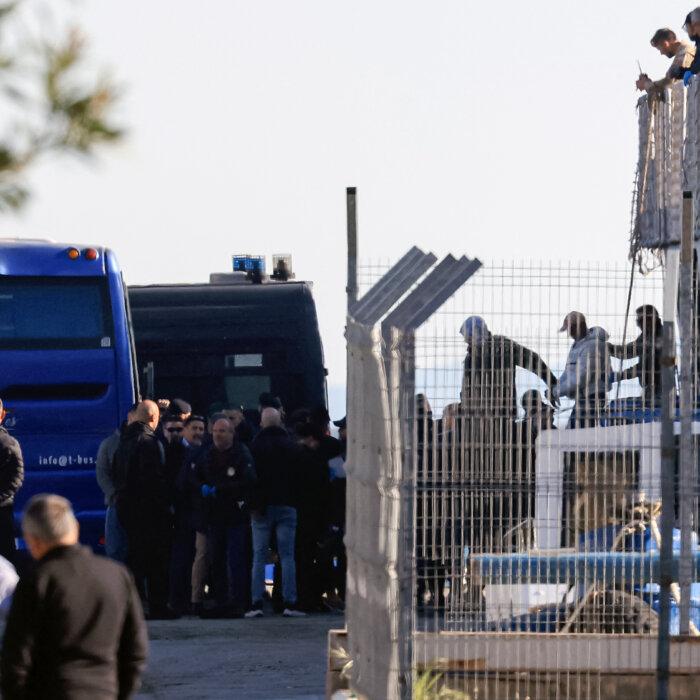

In 2011, it was found that Belgium and Greece violated the rights of an Afghan asylum seeker by returning him to degrading conditions in Athens, challenging the EU rule that the first country of entry must handle claims.
Although British Prime Minister Sir Keir Starmer has ruled out withdrawing from ECHR, he said on Aug. 3 that Britain needs to ensure the convention is “fit for the circumstances” the country currently faces.
Calls for Reform Across Europe
The push is spreading beyond Britain.In May, nine European Union states led by Italy and Denmark issued an open letter urging a review of how the Strasbourg court interprets the ECHR provisions.
The leaders argued that recent rulings had sometimes restricted governments’ ability to make democratic decisions on security and migration.
“We believe that the development in the court’s interpretation has, in some cases, limited our ability to make political decisions in our own democracies,” the letter states, warning that such limits could hinder governments from protecting their societies against contemporary challenges.
Signatories, including Austria, Belgium, the Czech Republic, Estonia, Latvia, Lithuania, and Poland, pointed to deportation cases involving foreign nationals convicted of crimes.
They said the convention’s application had “resulted in the protection of the wrong people and posed too many limitations on the states’ ability to decide whom to expel from their territories.”
In response, CoE Secretary-General Alain Berset said debate was healthy but warned against politicizing the Strasbourg court.
He said that institutions safeguarding fundamental rights must not bend to political cycles or be weaponized by or against governments.

Daniele Scalea, president of the Machiavelli Foundation and former adviser to the Italian Parliament and Ministry of Foreign Affairs, described the letter as “a critical and overdue step.”
He told The Epoch Times that the Strasbourg court’s expansive rulings, particularly on non-refoulement and family reunification, had undermined Italy’s ability to control its borders and deport irregular migrants.
“These interpretations encroach on national sovereignty, tying the hands of democratically elected governments,” Scalea said, adding that an ideal scenario would be for Italy to leave the CoE altogether.
The director of the UK in a Changing Europe think tank, Anand Menon, told The Epoch Times that the rise of the current debate around the ECHR could be linked to three factors: the growing electoral salience of immigration, greater global information mobility, and Europe’s weak economic performance over the past two decades.
“That obviously affects people’s attitude,” he said, noting the genuine challenge in terms of the number of migrants seeking to come to Europe and the UK.
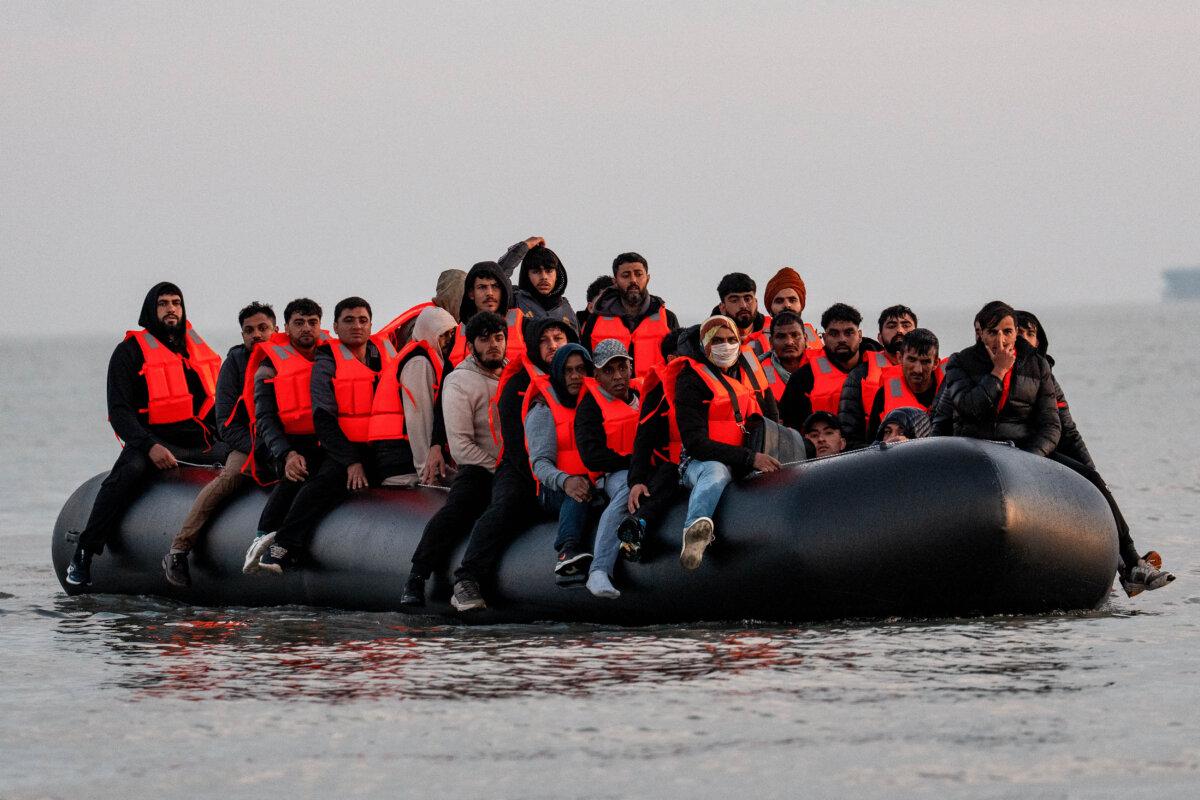
The European border agency Frontex said on Aug. 7 that irregular border crossings into the EU reached 95,200 in the first seven months of 2025.
In the UK, more than 29,000 illegal English Channel crossings have been recorded so far this year, alongside a mounting backlog of asylum applications.
European leaders said in the open letter that, despite spanning the political spectrum—from Italy’s right-wing leader Giorgia Meloni to Denmark’s center-left leader Mette Frederiksen—they share a common view that international conventions must be reconsidered to meet today’s challenges.
What the Convention Covers—and Its Limits
While the convention is not an immigration code, its protections often surface at the removal stage—when deportations risk breaching absolute rights (notably Article 3) or qualified rights such as those defined in Article 8 on family and private life.Germany recently tested these limits.
On June 27, the Bundestag voted to suspend for two years the right of people with subsidiary protection, a status below full refugee recognition, to bring their families to join them.
Critics warn the pause may infringe on Article 8’s guarantee of family life, but Berlin argues it is a proportionate response to capacity strains.
Since Germany did not officially suspend or derogate from the ECHR, the policy can still be challenged in court if someone argues it violates their right to family life under the convention.
The ECHR sets forth 18 core provisions guaranteeing fundamental rights, with additional rights added through 16 protocols to improve the ECtHR’s ability to function.
Members can choose to ratify these protocols, and not all states are bound by all of them.
For example, the UK, Turkey, and Greece never accepted Protocol 4, which prohibits the expulsion of nationals, provides the right to enter a country, and bans the mass expulsion of foreigners.
The Power of Interim Measures
In urgent cases, the ECHR can issue interim measures, also known as Rule 39 orders, when there is an imminent risk of irreparable harm—such as torture, death, or degrading treatment.These orders are temporary and do not decide the case, but they are legally binding.
UK courts ultimately found the policy unlawful; the Supreme Court ruled in November 2023 that Rwanda was not a safe destination, despite government efforts to press ahead.
Later in August, Rwandan government spokesperson Yolande Makolo confirmed that seven individuals had already been received.
Commenting on the transatlantic contrast, Robert Oulds, director of the UK think tank Bruges Group, told The Epoch Times that the United States is more willing to act unilaterally in defense of its interests.
“They are willing to stand up to protect their own borders, to not be bound by treaties which are no longer serving their national interest,” Oulds said.
“It is very different in the UK, where we cling to the fantasy of global leadership by doing things that harm us in the hope of gaining other countries’ appreciation.”
Catherine Barnard, professor of European Law at the University of Cambridge, said that for Britain the political costs of leaving the ECHR would be severe.
She told The Epoch Times that Britain, as a founding drafter with a strong compliance record, would lose moral authority on human rights if it were to leave the convention.
“It would also put us in the same group as Russia, that was kicked out, and Greece under the military junta,” Barnard said.
She added that withdrawal could also undermine the Good Friday Agreement, a premise of which is that both the UK and Ireland remain in the ECHR, and breach the EU–UK Trade and Cooperation Agreement, where human rights commitments are an “essential element.”
Judicial Sovereignty
Judicial sovereignty versus supranational oversight remains a recurring tension, as ECHR member states frequently push back against judgments they regard as politically sensitive or intrusive on domestic decision-making.In 2021, Denmark passed a law allowing asylum seekers to be transferred to third countries for processing, inspired by Rwanda-style models.
The measure, not yet implemented, could test the limits of the convention, potentially breaching Article 3 on inhuman treatment and Article 8 on family life, and triggering emergency Rule 39 orders from Strasbourg.
Belgium is facing its own legal tensions. Tunisian national Nizar Trabelsi, convicted of terrorism, was returned to Belgium in August after years of legal battles and detention in the United States, where he had been extradited despite an ECtHR ruling.
On Sept. 3, Belgian Migration Minister Anneleen Van Bossuyt told public broadcaster VRT that Trabelsi should now be sent “as soon as possible” to Tunisia.
“I find it remarkable that there is constant attention to his rights and what could possibly happen to him. But I am mainly concerned about what danger this person poses to the safety of our citizens,” she said.
In the UK, former Labour home secretary Jack Straw told the Financial Times in August that Britain should “decouple” its law from the ECHR to allow more small boat migrants to be deported, saying the “use or misuse” of the convention had never been anticipated in the 1990s.
Oulds went further, saying that Parliament—not a foreign court—should define rights and their limits, while Barnard said that without external oversight, states would be “marking their own homework.”
Looking ahead, Menon said the key issue in Britain’s case would be how far the government embraces the ECHR reform rhetoric.
He said that human rights are not a major public concern in themselves, and that Labour’s proposals to adjust how British courts apply ECHR judgments were unlikely to affect overall migration numbers.
The real test, he suggested, would be whether Labour leans more toward reform on this issue over the next three or four years.