Work has started on a Calgary water main that broke a day before New Year’s Eve, and officials with the city say they expect the repairs to be completed within two weeks.
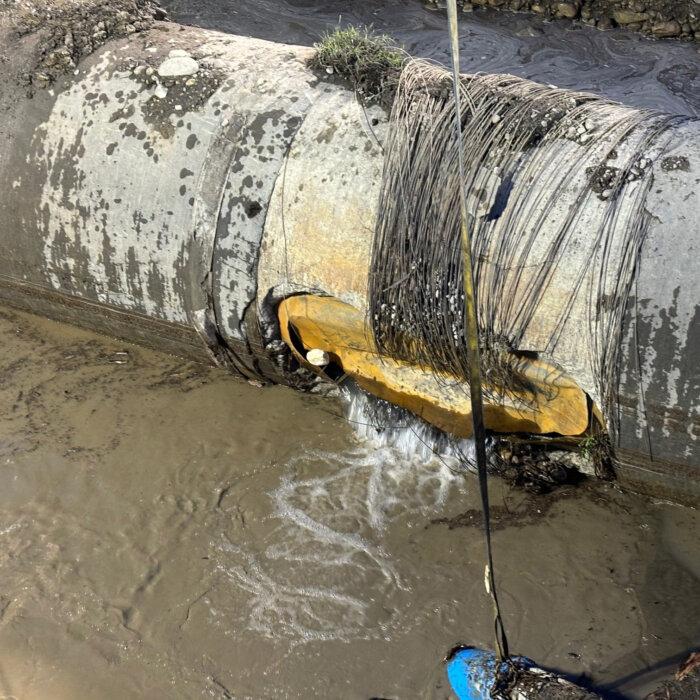
The Bearspaw South Feeder Main burst on 16 Avenue Northwest, east of Sarcee Trail, around 8 p.m. on Dec. 30, causing flooding that required police and firefighters to rescue 13 people from their vehicles. It also caused some temporary loss to the city’s water flow.
The Bearspaw main is the city’s largest feeder main and previously ruptured in June 2024, causing water restrictions across the city and surrounding municipalities.
Officials with the city said the pipe burst was caused by a rapid drop in pressure, and implemented Stage 4 water restrictions for residents on Dec. 31.
Mayor Jeromy Farkas and other city officials updated the media on the main pipe situation at a Jan. 1 technical briefing.
“The hard truth is this: it has reached the end of its reliable life. We can keep patching it, we can keep reacting, but it will continue to fail until there is an alternative built,” Farkas said.

He said council was looking at undertaking two major projects to improve the city’s water supply system, calling the Bearspaw feeder main the “beating heart” of the city’s water system.
The mayor said the “only path forward” was to build a new artery for the system, saying they would do it “faster than anything we have ever done before.”
He said it would require the city to undertake two “mega projects” for the city’s water system. The first is the Bearspaw South Feeder Main Improvements Project, which Farkas said would extend the line.
“This project will add approximately 6 kilometers of new parallel pipe along the existing feeder main,” he said, adding that the new pipe would take over service from the current line.
The second project is the North Calgary Water Servicing Project, which aims to build a new 22-kilometre feeder main and supporting facilities for Northwest Calgary.
The mayor also told reporters that he has asked the chair of the panel working on an independent technical report on the 2024 failure to release their report immediately. Farkas said the report was originally expected later in 2026.
Farkas said that the report would be provided to council when it was finalized, “and we will act on those recommendations immediately.”
Boil Water Advisory
As part of the restrictions for residents, the city and Alberta Health Services issued a boil water alert for several northwest neighbourhoods, including Parkdale, Montgomery, West Hillhurst, and Point McKay.Residents have been recommended to boil all tap water due to potential water quality impacts from the main break. The advisory remains in effect, according to the chief of Calgary’s emergency management agency, Sue Henry.
She said the water main break caused “a significant loss of water” and reducing water use was “critical.”
“Adequate water levels are needed to ensure collectively we have enough water for critical infrastructure, emergency services, and Calgarians,” Henry said.
The boil advisory will be in place until further notice and applies to water used for consumption, brushing teeth, and cleaning raw foods. The restrictions are not required for bathing or laundering.
Residents of Calgary and nearby communities of Strathmore, Airdrie, Chestermere, and Tsuu T’ina Nation have been asked to limit indoor water use by keeping showers to under three minutes, flushing toilets only when necessary, and running dishwashers and washing machines only with full loads.
The restrictions also prohibit large outdoor water use, including for rinks or snow-making. City facilities like swimming pools, rinks, and recreation facilities have also been asked to implement their water reduction plans.