British Prime Minister Keir Starmer on June 12 rejected the notion that he had lost authority and said defense would be his No. 1 priority going forward.
“I’m not going to walk away,” Starmer told the BBC in his first public comments since the duo of ministers left their posts. “Whoever is prime minister is going to face the same prevailing winds as I am facing. None of that is going to change.”
Healey announced his resignation in a public letter posted on X, in which he said Starmer and the British Treasury were unable and unwilling to “commit the resources that the nation needs to defend the country at this time of rising threats.”
He said that, despite working on the Defence Investment Plan together with Starmer and the Treasury, the resulting final settlement “falls well short of what is required for defence and the country at this dangerous time.”
Healey said that without a plan that “meets the moment,” he is “being forced to make decisions that would reduce the readiness of our Forces and increase the risk to personnel on operations, and could make the country less safe.”
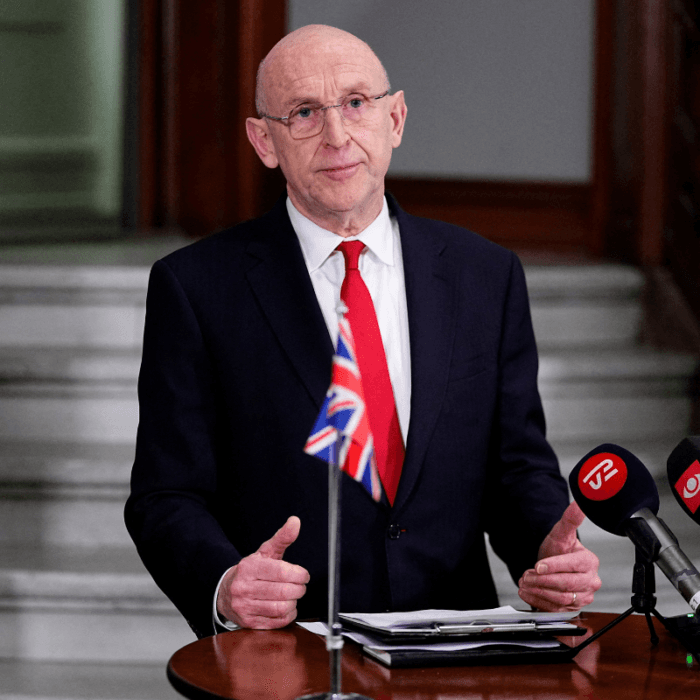
He said the situation left him with “no other option” than to submit his resignation.
Carns, a former Royal Marine, said in a June 11 post on X that the government is not listening.
“We owe those who serve the UK the kit to do the job and the loyalty to stand by them when it’s done. We are failing on both,” he wrote. “I’ve spent my whole time in government making that case. Number 10 will not listen, so I am resigning as Minister for the Armed Forces.”
On June 12, the prime minister rejected the criticism. He said he had already made hard decisions to cut other departments’ budgets and put more money toward defense investment, saying all departments were contributing to make up the difference.
“It is a collective effort, if you like, towards a really important priority of the government, and that is why the first uplift was a decision to cut overseas development aid, a hard-edged decision,” he said. “The second, taken by me in recent weeks, which is to do that reallocation [of funds] within the government departments, outside of a spending review.”
Starmer said his government has already put money into defense and that the as-yet-unpublished Defence Investment Plan lays out “further money on top of that.”
The UK’s defense and finance ministries have been locked in talks for months over how to meet rising demands to expand military spending, delaying the Defence Investment Plan, which was expected to be published last year. Starmer said it will now be published before a NATO summit beginning on July 7.
He said the government is investing in next-generation fighter jets and long-range missiles and that the situation has to be seen in the context of his commitment to raise defense spending to 3 percent of gross domestic product “in the next Parliament.”
“I can tell you now that defense will be the number one priority at every spending review, including the next spending review,” he said.
The ministers’ resignations pile pressure on Starmer, coming just a week before a crucial by-election, which could see Mayor of Manchester Andy Burnham, widely seen as a contender to replace the prime minister, elected to parliament.