Imagine reading backwards in a forgotten dialect, piecing together Renaissance-era instructions, and then breathing life into machines first dreamed up 500 years ago.
That’s the work of three generations of Italian artisans who not only learned to read da Vinci’s “mirror” writing, but are now sharing his visions globally.
Born in Italy in 1452, da Vinci, famous for his Mona Lisa, was also a noted inventor, engineer, scientist, and anatomist.
One of the most curious legacies the Renaissance polymath left to the world was his notebooks, dotted with ideas and concepts for machines so uncanny it feels as though da Vinci glimpsed the future and left sketches as souvenirs.
The man sketched out ideas for modern machinery such as helicopters, tanks, robots, and bicycles centuries before they would become a normal part of life.
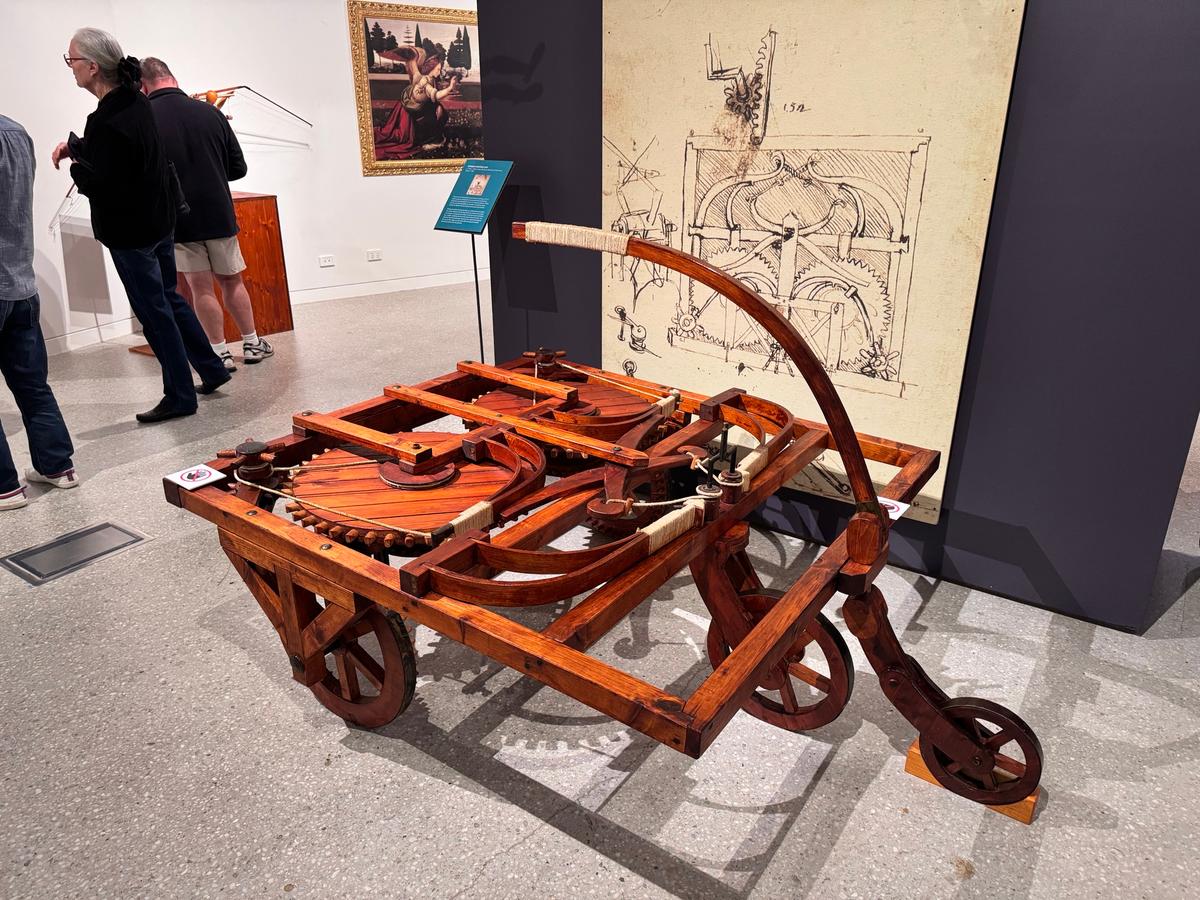
Now, those creations are in Australia, on display for all to see.
The exhibits are arranged by the “Artisans of Florence,” a worldwide touring exhibitions company that works with the Museum of Leonardo da Vinci in Italy, who bring his sketches to life in stunning detail—alongside separate exhibitions of ancient Roman technology and Galileo’s discoveries.
The Global Appeal of da Vinci
Director Tom Rizzo, based in Melbourne and travels the world with the exhibit, spoke about its impact.“I’ve been astonished at the kind of response in countries that I wouldn’t expect there to be a big following of da Vinci places like China, Japan, Korea, yeah, and India,” he told The Epoch Times.
“There’s a huge knowledge of da Vinci worldwide, and I think it’s just his ability to innovate in so many—what we would call—disparate fields.
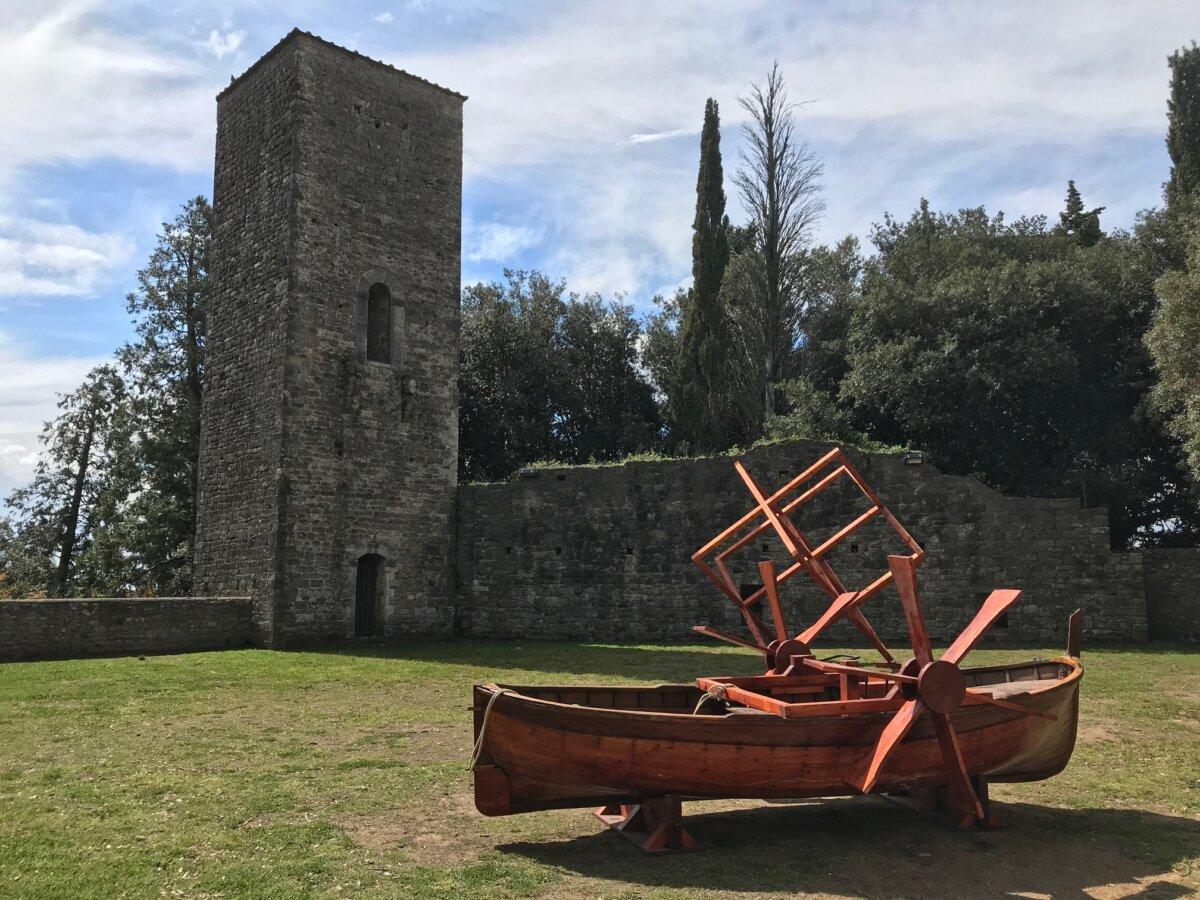
“The fact that he was an anatomist, an architect, a botanist, a military engineer, an aerospace engineer, a painter—the list goes on and on.”
There’s even something in Japan that Rizzo calls “da Vinci mania,” with exhibits drawing massive enthusiasm in high-end department stores.
After initially volunteering to help with one installation in Melbourne, Rizzo said he was left “absolutely fascinated.”
“I was fascinated because all of these sketches and images from the Renaissance, which I had assumed belonged to dozens or hundreds of Renaissance polymaths and artists, I realised they were all da Vinci’s,” he said.
Ahead of His Time, Quite Literally
So many of da Vinci’s visions are still a reality today.“For him to come up with the precursor to the helicopter, the scuba suit, the hang glider—and for all of these things to be independently reinvented some hundreds of years later—is something that really sparks people’s interest,” Rizzo said.
“He was good at finding old technology and innovating it, and bringing it back into common use, like the Archimedes screw for pumping water. He’s even developed a spring-powered car and a bicycle as well.
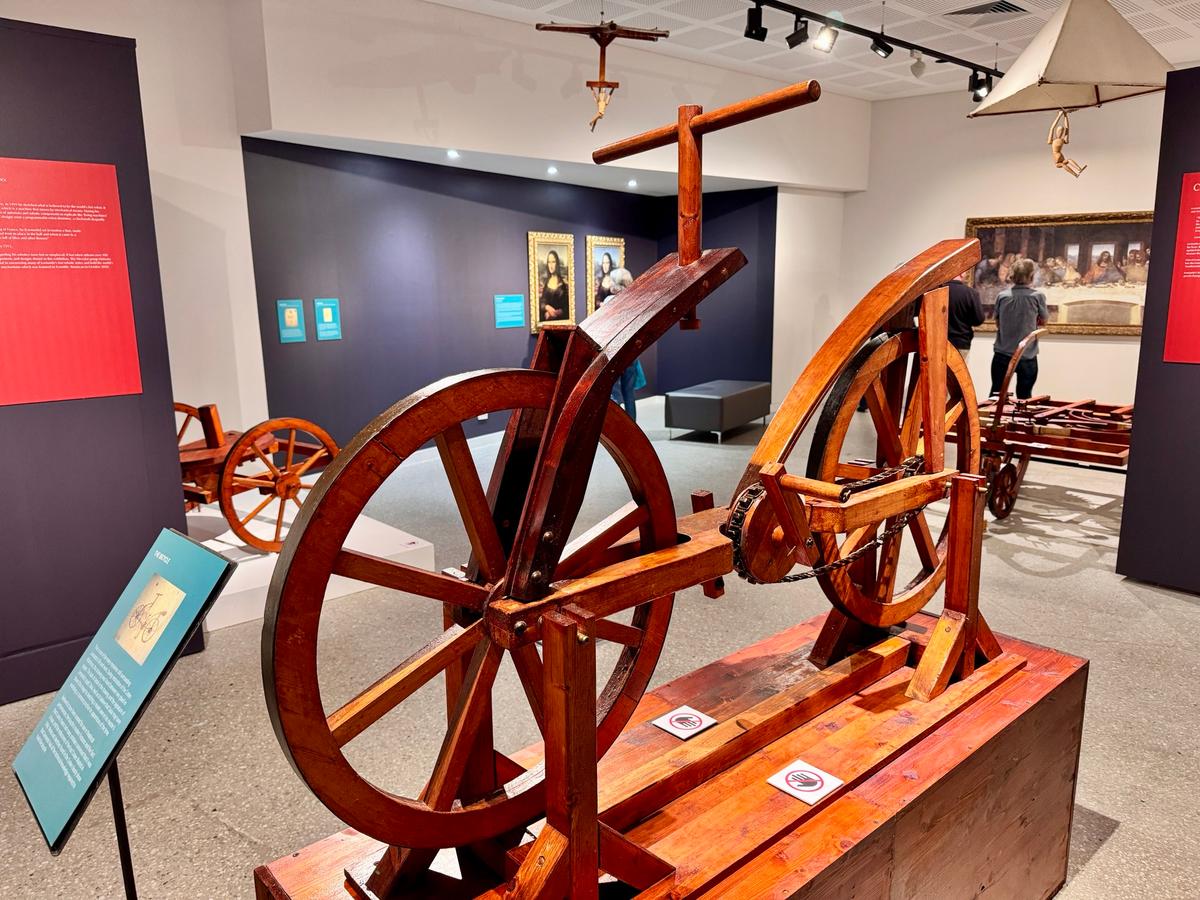
“All these things kind of foreshadow modern inventions. His first bicycle is quite similar to a modern bike in dimension, unlike the penny farthing with a huge front wheel and a small back wheel.”
After da Vinci died in 1519, he left behind more than 2,000 technical drawings, which were then chopped and changed by an art dealer of the time and divided into themes.
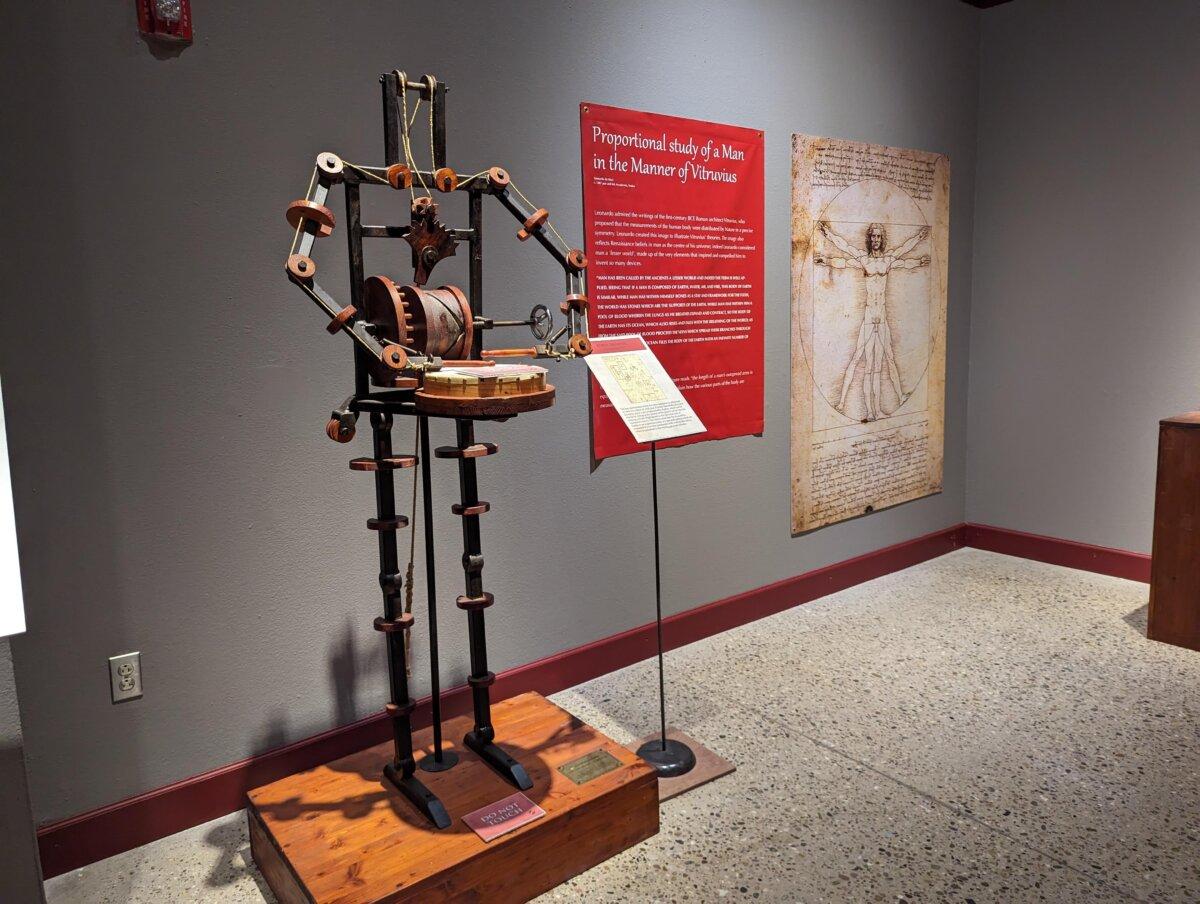
The resultant jigsaw puzzle has served as a challenge for historians, since it means that one sketch for one machine could be in one book, while a sketch for another part of that same machine is in another.
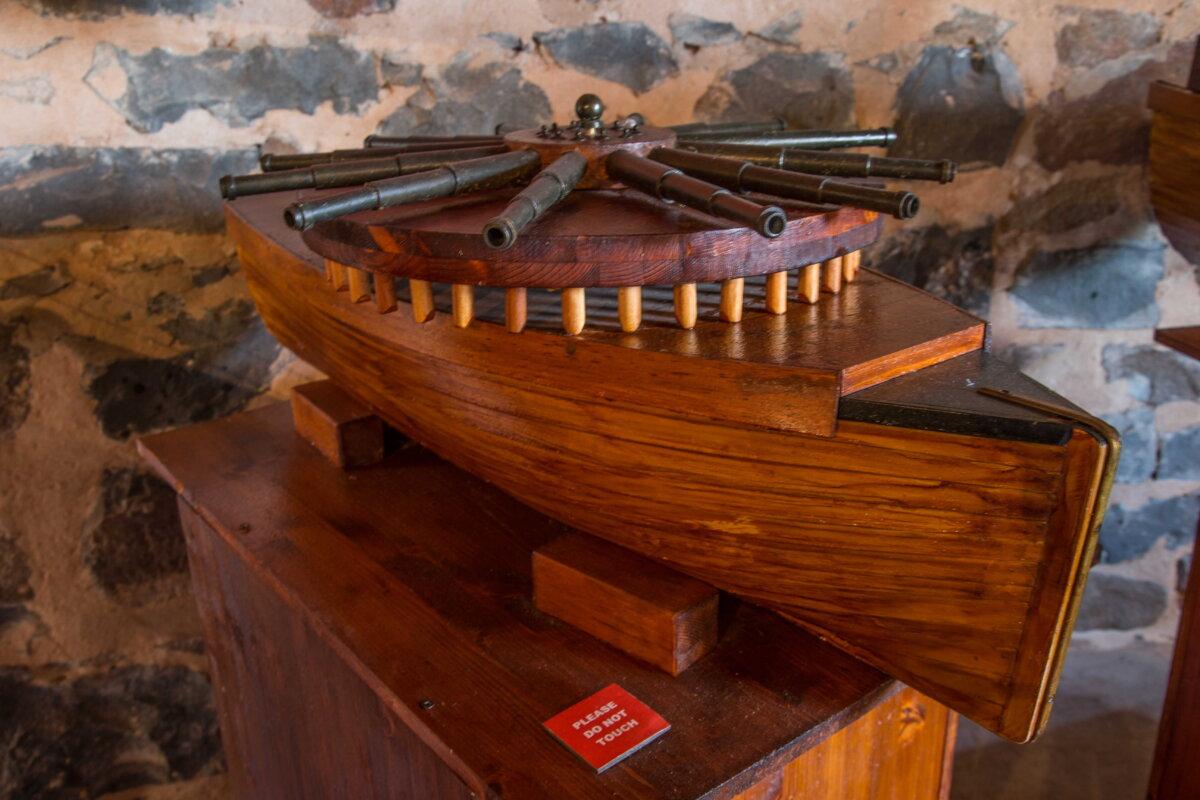
“We need to have this universal knowledge of all of Da Vinci’s sketches and mechanisms so that we can re-piece them back together to recreate faithfully some of these machines,” Rizzo said.
Cracking the da Vinci Code
Another challenge is da Vinci’s idiosyncratic “mirror script”—writing backwards from right to left.“You would need a mirror to be able to easily read his works. Our artisans have been working with these documents for so long that they’re able to read it without a mirror,” Rizzo said.
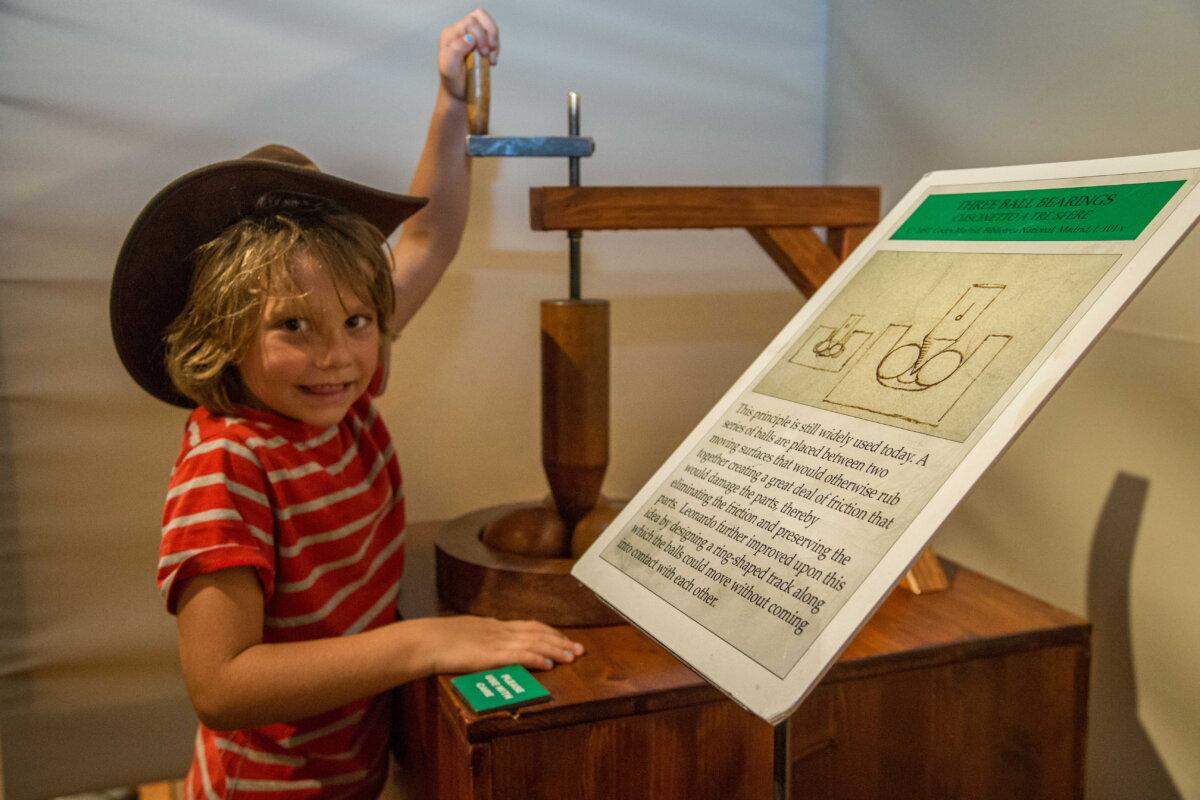
Fortunately, many of the artisans working on da Vinci’s machines are also Florence natives, a necessity when the archaic Florentine used by da Vinci is a distinct dialect.
Many of the terms featured in his Codex Atlanticus would be difficult to understand for those not from the region.
So how does a major European exhibit end up in smaller Australian museums outside of the big cities? Especially as post-modern and modern works dominate space in larger galleries and museums.
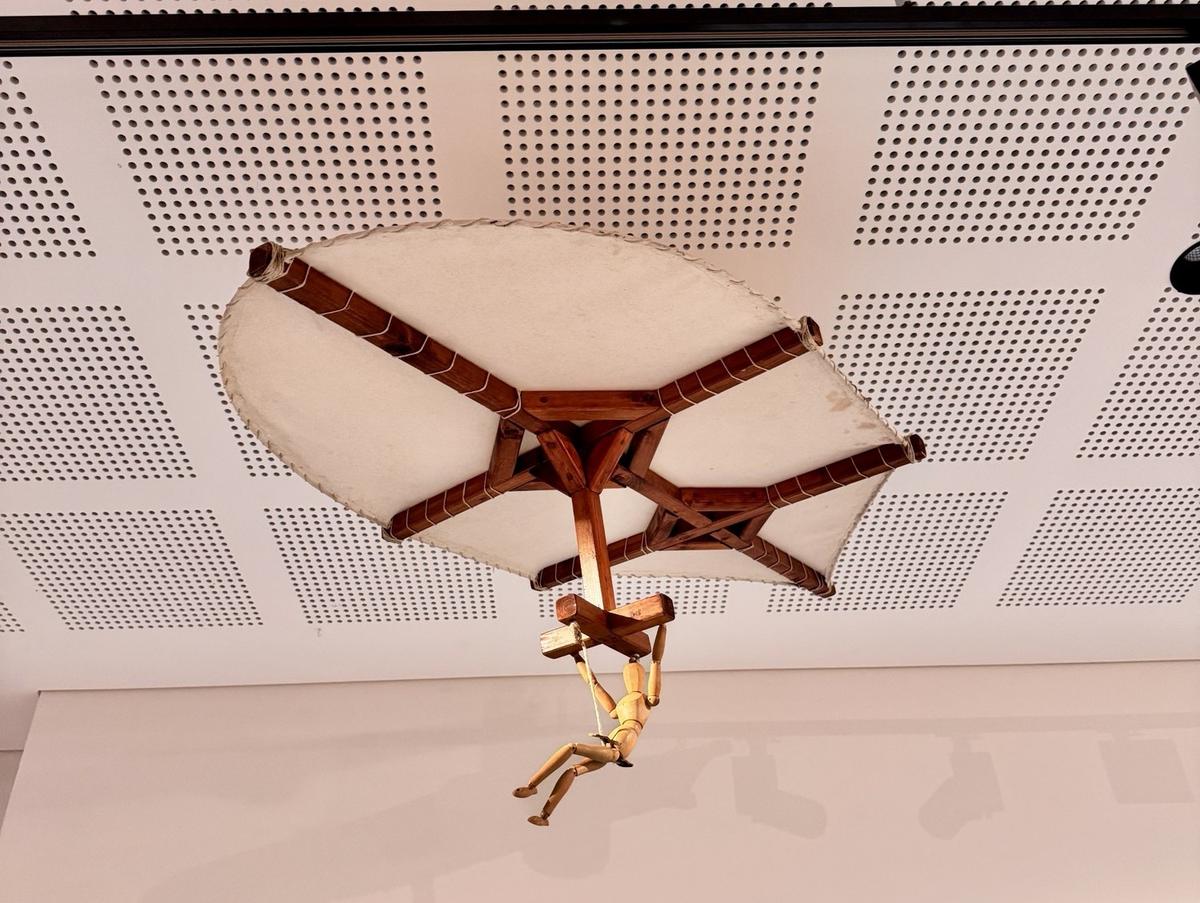
“We’ve made a special arrangement with the museum in Florence so that it can be earmarked for a remote and regional tour of Australia,” Rizzo said.
“We’ve been able to secure favourable economic conditions to make it available to as many venues as possible.
“We want this collection to be seen by as many people as we can, especially to remote and disadvantaged communities that would never get an opportunity otherwise, to have a world-class travelling exhibition come to their town or city.
“A lot of the locals may never have the capacity to travel to Florence to see it at the home museum. So this is really important to us as a part of our mission statement.”