The Autonomous Bougainville Government (ABG) has rejected a proposal that would have watered down its stake in Bougainville Copper Limited (BCL)—which owns the Panguna copper mine, one of the world’s largest—to a Chinese-controlled entity.
Instead, the ABG will turn to an Indian firm to reopen Panguna, which is estimated to contain about 1 billion metric tons (about 2.2 trillion pounds) of copper and 12 million metric tons (about 26 million pounds) of gold, as well as the hopes of the region’s economic future post-independence.
The government was told last year that the mine has more than 20 years of production remaining and would likely generate revenue of approximately $28 billion. BCL was granted a five-year exploration license in 2024.
CMOC Group Limited (formerly China Molybdenum Co., Ltd.) had proposed a partnership with BCL that would have involved equity participation or dilution of ABG’s 72.9 percent stake in BCL (the remaining shares are held by various small investors).
Although CMOC Group trades on the Hong Kong Stock Exchange, and its shareholders include BlackRock and JP Morgan, the Luoyang Municipal Government also holds a substantial stake.
According to MarketScreener, the split is 42.5 percent governments and 42.6 percent individuals (mainly one man, Yong Yu, CEO at Cathay Fortune Corp.), with institutions holding 13.9 percent.
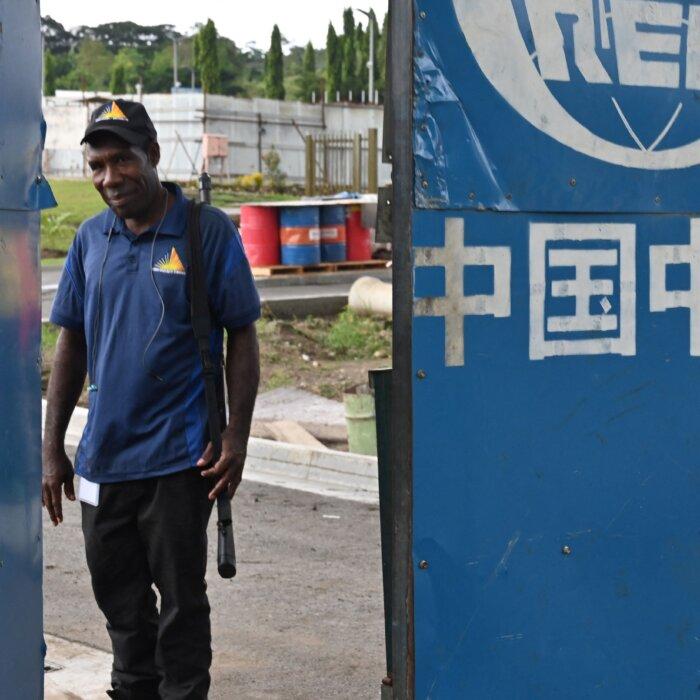
Panguna was formerly one of the world’s largest copper and gold mines.
But close to 1 billion metric tons of waste were released directly into local rivers during its operation between 1972 and 1989. An uprising by local people against this environmental destruction and inequities in the distribution of the mine’s profits forced the mine to stop operating and triggered a brutal, decade-long civil war.
“Around the mine, there is the risk of landslides ... [which] may kill or hurt people or block the main access road,” the report states. “There are also areas of chemicals and metals in the soil and water, and unstable buildings from the mine operations.”
Despite the challenges, there has been no shortage of companies interested in reopening the mine, which the ABG insists must be done with BCL’s participation.
But for reasons that neither party is prepared to disclose, that relationship seems to have cooled.
According to Toroama, the government is considering a deal that would constitute a “contract mining or services partnership model, which should not affect ... ABG’s shareholding in BCL.”
“This direction reflects ABG’s policy position that Bougainville is to retain ownership and control while engaging experienced operators through clearly defined contractual arrangements,” Toroama said in a statement.
“The ABG remains committed to progressing the Panguna project in a lawful, transparent, and orderly manner that serves the long-term interests of the people of Bougainville.”