In August, Prime Minister Anthony Albanese lauded his government’s announcement of 5 percent home loan deposits across the board. The move was intended to ensure more Australians could enter the housing market sooner, by avoiding the typical 20 percent deposit required by many lenders.
Through the scheme, the government guarantees a portion of a first-home buyer’s home loan.
But questions started to arise around how a predictable increase in demand from the scheme could drive prices up even higher, at a time when the median price on an average Australian home sits just under the million-dollar mark.
House Values on the Rise
Kennedy addressed the hearing by quoting the latest figures he'd read on the housing situation—that property prices had spiked at the fastest rate in two years.The majority of that growth is being seen in the lower and middle market, the stomping ground of new home buyers.
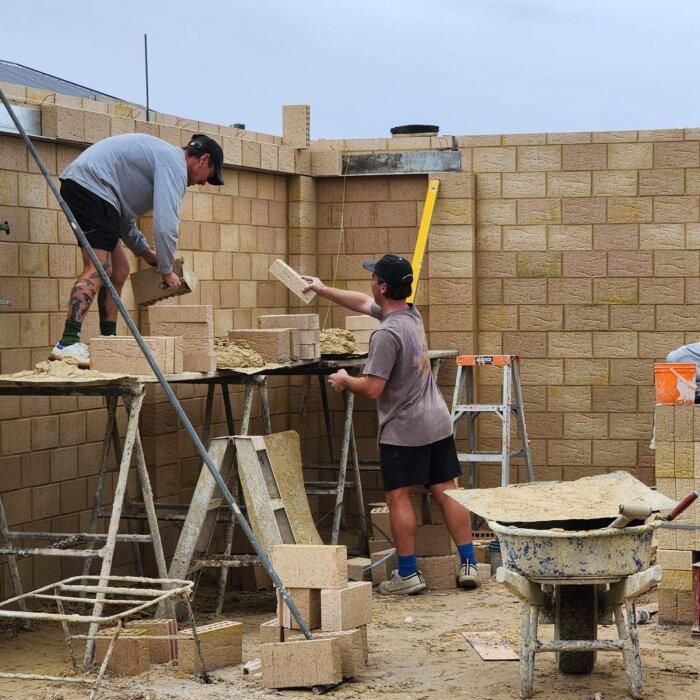
The MP asked, with home values increasing up to 10 times faster than wage growth, if 5 percent deposits were not the boon they seemed.
“Higher demand leads to higher prices,” Comyn said.
“Without having studied it, I know the treasury did some work, my suspicion would be that it’s a very, very small element of the pick-up causally, to demand.”
Comyn said he'd be interested to see whether there would be “some moderation to the demand side of housing,” given there is little confidence that interest rates will reduce any time soon.
Kennedy asked if 5 percent deposits were a hidden trap for buyers, amid reports first home buyers—some of whom are among the most financially vulnerable—could get “trapped” in a cycle of higher overall costs.
The MP pointed to commentary from the “Barefoot Investor,” finance expert Scott Pape, who summised that those on 5 percent deposits would ultimately end up paying back more than $100,000 more than those who front up with 20 percent deposits.
“The question is always what, if any, support should be available to first home buyers and how to do that in the most targeted way,” Comyn said.
While he lacked exact numbers, Comyn said it was true people would be paying back more—the higher the principal and the longer one takes to pay, the more interest they will pay.
“The more you borrow and the slower you pay, borrowing at the absolute maximum will mean more interest,” he said.
Comyn said he would not refute in “an absolute sense” that lower deposits could ultimately be tougher for first home buyers.
He also remarked it was difficult to determine what causes a mortgage to fail. The top causes were generally employment loss or changes, personal illness, and relationship breakdown.
“It’s hard to generalise but I can see the point that you’re making,” he told Kennedy.