This copy is for your personal, non-commercial use only. Distribution and use of this material are governed by our Subscriber Agreement and by copyright law. For non-personal use or to order multiple copies, please contact The Epoch Times Reprints.
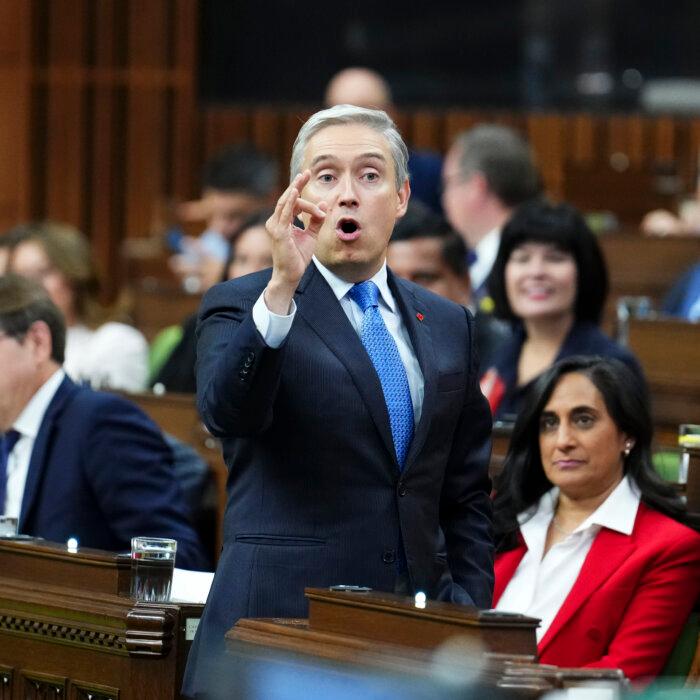
Conservative Leader Pierre Poilievre asks a question during question period in the House of Commons on Parliament Hill in Ottawa on Sept. 17, 2025. The Canadian Press/Sean Kilpatrick
Conservative Leader Pierre Poilievre says he hopes to see “billions of dollars” in cuts in the upcoming Liberal government’s first budget under Prime Minister Mark Carney, which is set to be tabled in November.
“There needs to be billions of dollars of reductions in the federal bureaucracy,” Poilievre said in an interview on CTV’s Question Period with Vassy Kapelos that is set to air on Sept. 21.
Prime Minister Mark Carney has said that his government’s upcoming budget, to be released on Nov. 4, would bring austerity, but he has remained vague on the specifics surrounding the planned cuts.
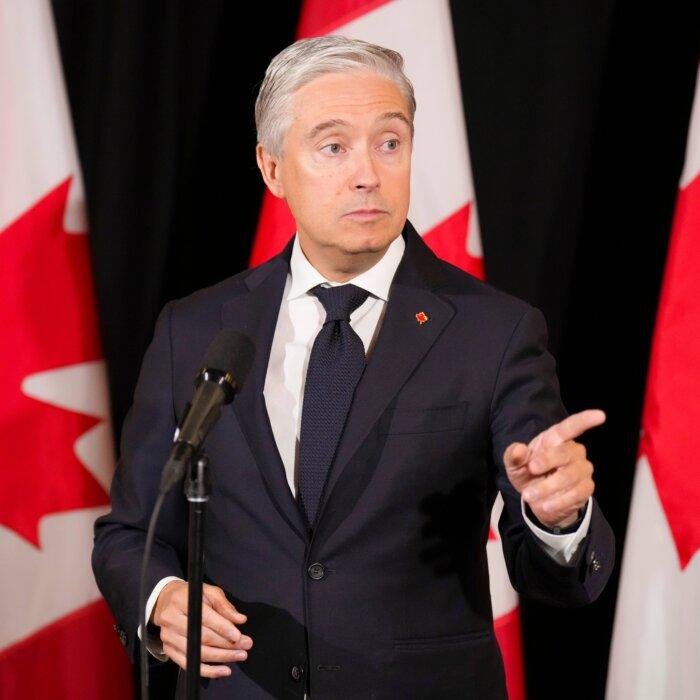
A day prior to Finance Minister François-Philippe Champagne’s Sept. 16 announcement of the budget release date, Government House Leader Steven MacKinnon told reporters that the deficit is “substantial and needs to be dealt with, and is being dealt with with incredible seriousness by the entire government,” while declining to provide more details.
The Tory leader, for his part, told Kapelos that the federal government “should cut the budget for consultants by at least $12 billion.”
As for job cuts to the federal public service itself, Poilievre didn’t specify how big he thinks the cuts should be, but he said the government “should reverse the cost of the bureaucracy back at least five years to the pre-COVID era.”
He noted that five years ago Canada was able to deliver its public services with 30 percent to 40 percent fewer bureaucrats and with lower bureaucratic spending.
Poilievre says the federal government needs to find a “combination” of public service cuts and private sector job creation.
“What we need is private sector employment,” Poilievre said. “We need businesses to hire more people, giving them paycheques, producing things, goods and services that the country needs.”
‘Spend Less to Invest More’
Carney’s slogan since his campaign during the Liberal leadership race earlier this year has been “spend less to invest more.”
His election platform projected a deficit of $62.3 billion in fiscal year 2025–26, which is over $20 billion more than the last official projection of $42.2 billion in the 2024 Fall Economic Statement. However, when accounting for the new spending announced since then, such as that on defence and infrastructure, deficit estimates have grown to nearly $70 billion or even higher.
Anxiety has been rising in some sectors about the proposed austerity cuts to various programs along with the large increased spending.
Although Carney hasn’t spoken of mass layoffs in the federal public service, the unions have been worried about public sector job cuts.
Carney has said the adjustment to the federal workforce will “happen naturally through attrition” as employees retire or seek other opportunities.
Meanwhile, as the prime minister has been advocating for reducing operational spending, the federal government’s largest expenditure is wages and other employee-related expenses.
The Office of the Parliamentary Budget Officer reported in August that government spending on personnel was estimated at $71.1 billion for the previous fiscal year, 2024–25, which would increase to $76.2 billion by 2029–30.
The latest data from the Treasury Board indicate 357,965 employees in the federal public service in 2025, which is nearly 10,000 fewer employees from the previous year. The Montreal Economic Institute said in August that a reduction of 64,000 public service jobs could lead to $10 billion in savings.
A process to find efficiencies in government departments is already underway, despite Carney saying he doesn’t intend to lay off public service workers. Finance Minister Champagne told reporters on Sept. 4 that Canada’s public service will need to go through “adjustments” as Ottawa looks to reduce its spending.
The minister sent a letter to his colleagues in July asking them to make cuts to their budgets to achieve spending cuts of 15 percent over three fiscal years, starting with 7.5 percent in fiscal 2026–27, followed by another 2.5 percent in 2027–28 and a further 5 percent savings in 2028–29.
Isaac Teo and Noé Chartier contributed to this report.