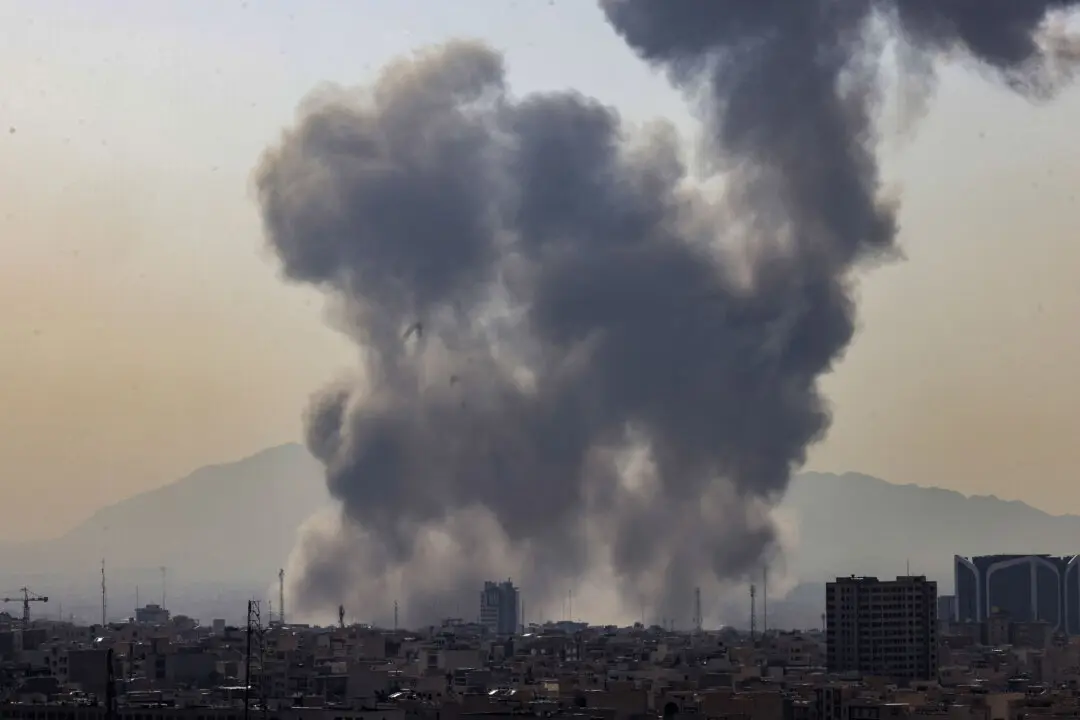
On the night of March 10, sleep ceased to be restful for Merav. It became only a brief pause between one siren and the next. Five times that first night, she woke in alarm, roused her two daughters aged 8 and 11, and led them down six flights of stairs to the building’s bomb shelter.
There, beneath harsh fluorescent lights, a collection of drowsy neighbors, children wrapped in blankets with phones in hand, and restless dogs waited for the danger to pass before returning to their apartments—only to repeat the same process again and again.
“The moment the alert comes through on our phones, we rush to wake the girls and head down to the shelter,” Merav, who gave only her first name, said. “At night, that’s when it’s hardest.”
Since the war began, the threat sending Israelis into shelters has involved more than just “ordinary” ballistic missiles carrying warheads weighing hundreds of kilograms.
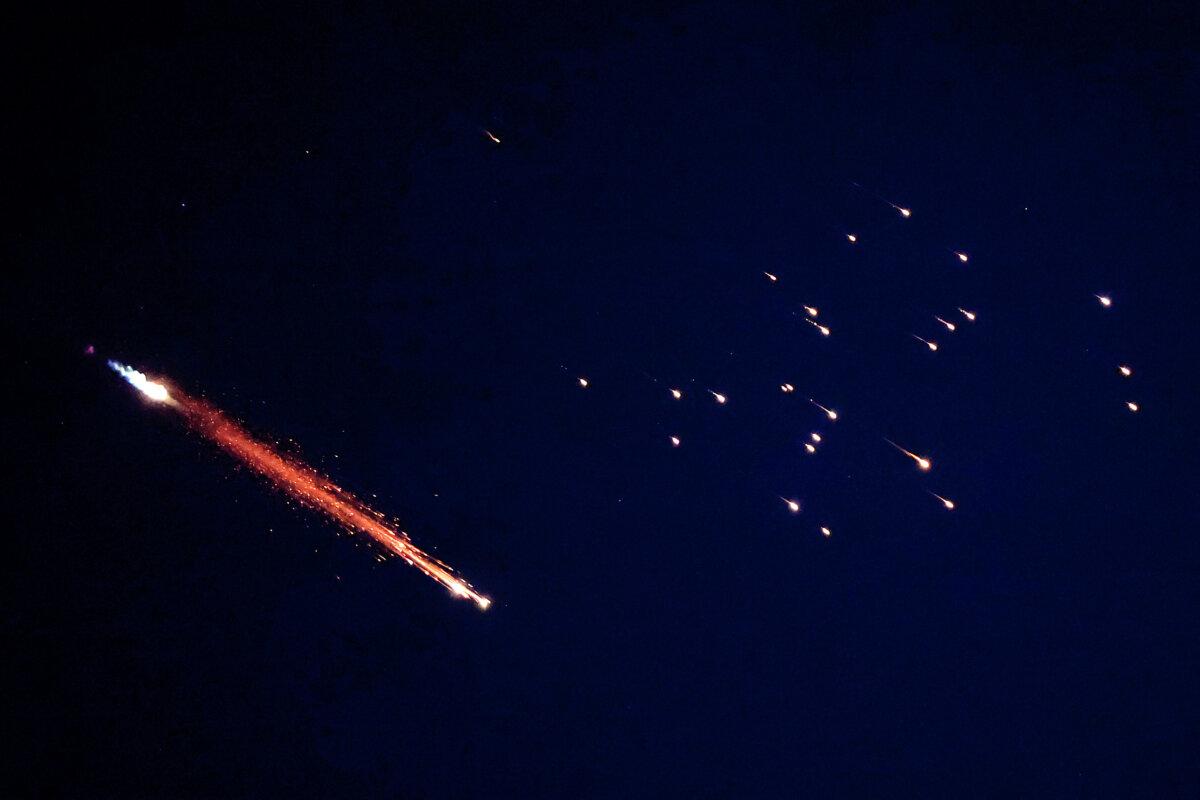
Even those are unlike the missiles familiar from Israel’s other fronts against Hezbollah, Hamas, or the Houthis. They are heavier, faster, more destructive, and more difficult to intercept. According to recent reports, Iran has also launched missiles carrying separating warheads that disperse submunitions over a wide area—effectively a kind of cluster bomb.
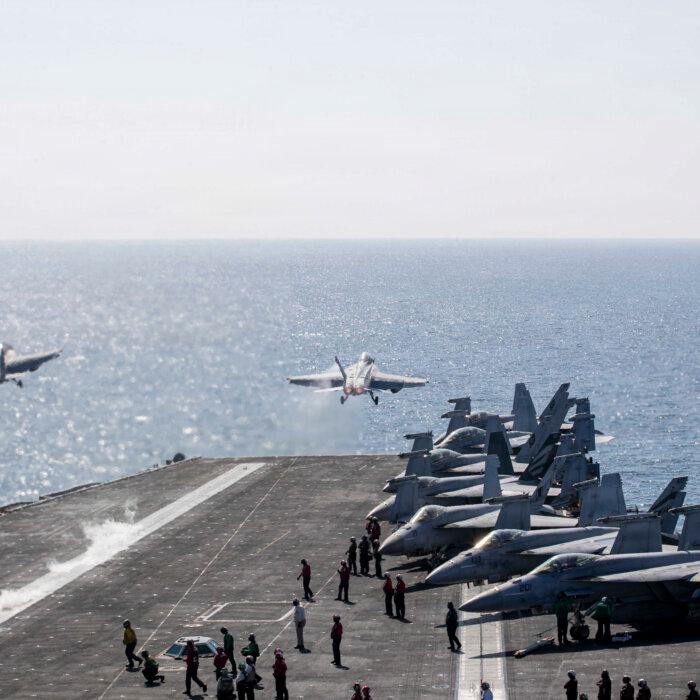
While Merav and her daughters sit on mattresses in the shelter day and night, Israel’s multilayered air-defense umbrella is at work above them. Arrow 3 is designed to intercept ballistic missiles outside the atmosphere. Arrow 2 operates in the upper layers of the atmosphere. David’s Sling is used, among other things, against medium-range ballistic threats. Alongside them, the American terminal high-altitude area defense system is also helping reinforce defenses against ballistic missiles.

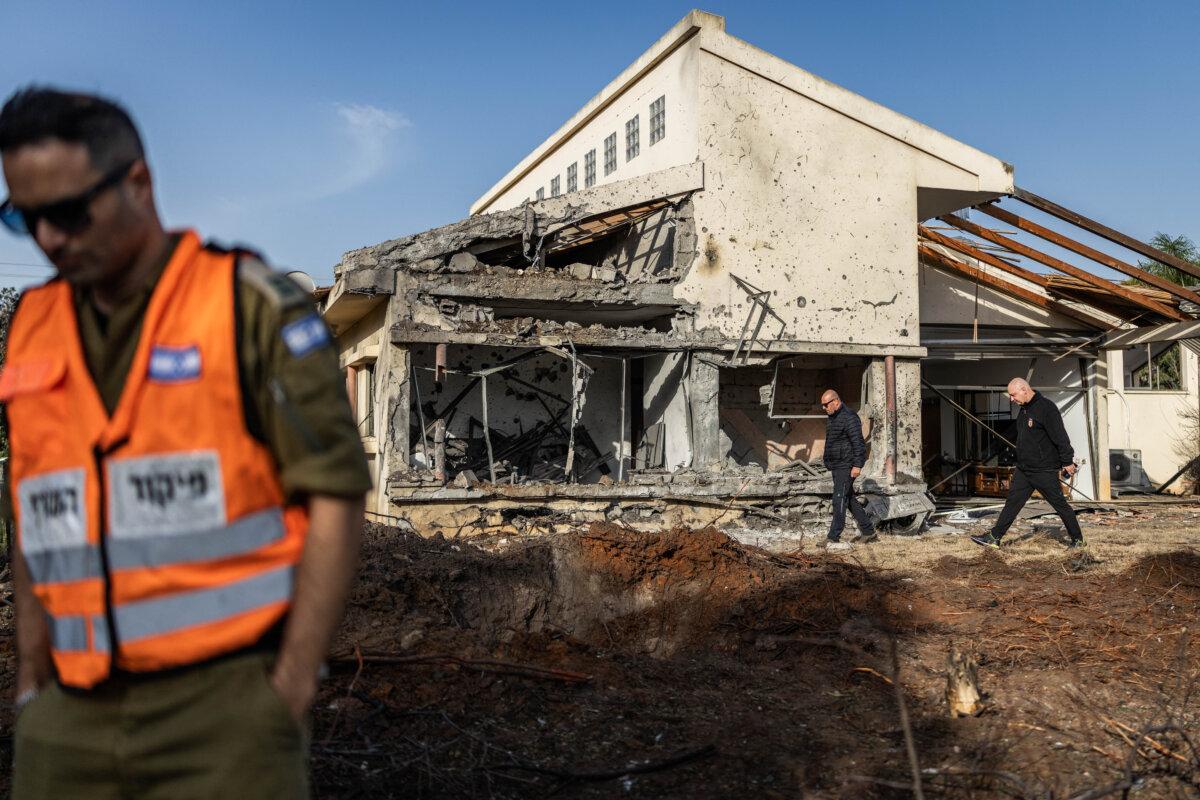
But even knowledge that these advanced interception systems are working above can’t erase the feeling of imminent danger. Three days earlier, part of an Iranian missile struck only about 30 meters (roughly 100 feet) from Merav’s home.
For Merav, the strain is measured not only by the number of sirens, but also by the gradual unraveling of daily life.
“On average, there are eight to 10 sirens a day, and each time, we stay in the shelter for almost half an hour, sometimes longer,” she said. “Daily routine is disrupted again and again because of the alerts, but at night it’s the hardest.”
She and her husband work from home, and their daughters are with them. Life now unfolds between open laptops, phone alerts, a bag packed by the door, and sleep interrupted again and again.
Amid the exhaustion, she insisted on speaking about strength.
“We feel positive and strong, and we act from an understanding that there is no other choice,” she said.
For her, going down to the shelter is not only an emergency response, but also an expression of emotional endurance.
“Anyone who knows Israelis knows that they want to live in peace with anyone who wants the same,” she said.
“But we are also not afraid to fight those who threaten to destroy us. We are a strong people, one that has developed willpower and resilience through decades of war. No threat will break us.”
A Shared Experience
Merav’s story is not only about a prolonged threat, but also about what happens among people forced to wait together. The shelter—in ordinary times a technical, empty, and unremarkable space—has become a place of unexpectedly human connection.“On a personal level, going down to the shelter is a truly rare opportunity to get to know the neighbors,” she said. “While we’re there, you meet every kind of person—families with children, elderly residents, singles, and dogs, too—and everyone gets along in a remarkably harmonious way.”
For Racheli, 42, who gave only her first name, her first memory of the current conflict began on the morning of Feb. 28.
“At around 8:30, the first alert sounded, signaling that the Israeli-American operation in Iran had begun,” she said.
“You can’t say it surprised anyone, because we had already been preparing for the possibility of a strike for about a month.”
The early warnings that now arrive on cellphones several minutes before the sirens blare have fundamentally changed the experience of waiting, she said. They give people time to prepare, grab a blanket, and head to the shelter without unnecessary panic.
“It seems we’ve become fairly used to the situation already; things have become orderly and clear,” she said. “We set up mattresses for sleeping and sitting in the shelter, the children play together, and sometimes they even sleep there together. It creates a unique kind of togetherness.”
For Racheli, the shelter has also become a place of belonging. She is still relatively new to the building, but as she gathered with other residents in the shelter, she stopped being “the new neighbor.”
“Personally, I got to know the neighbors because of this time together,” she said. “Sometimes, I’ve actually found myself waiting for the next siren so I could see everyone.”
Humor, it turns out, also finds its way inside. One evening, wrapped in a blanket on a mattress in the shelter, she opened her eyes and found a dog staring at her from inches away.
“I leaned my head back and started giggling at the situation,” she said. “But then I realized there was another dog to my left staring at me, too, and at that point I burst into laughter.”
That moment, according to her, changed the atmosphere all at once.
“Situations like that always give me a feeling of happiness and a brief moment of calm inside the tension,” she said.
A Place of Quiet
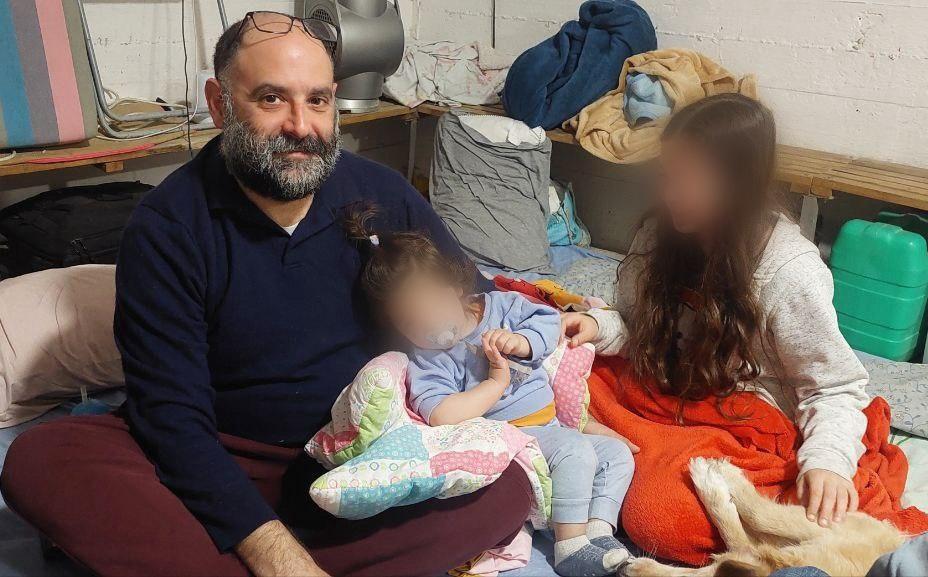
For Eitan, 46, who also gave only his first name, the shelter is above all a place of parenting. He and his wife, Sivan, are raising three small children aged 4, 3, and 1.“The most surprising thing for us during this period has been seeing how the children manage to turn even the shelter into an adventure,” he said. “For adults, it’s a tense and frightening experience; for the children, it’s almost an adventure. They play with the other children in the building.”
That gap—between the way children experience war and the way their parents carry it—lies at the heart of his story.
“There’s something deeply unsettling about that gap between the world of children and the world of adults,” he said. “They’re still too young to truly understand what is happening, and we are doing everything we can to keep it that way.”
Like those of many others, Eitan’s“normal” life has been put on hold. He can work remotely, but in practice, he finds it hard to concentrate. “My mind is somewhere else all the time,” he said.
His wife was supposed to start a new job this month, but that plan, too, has been delayed, he said. During the war that followed the Oct. 7, 2023, attack on Israel by the Hamas terrorist group, he served in the reserves and was away from home. Now, he said, he is exactly where he is needed most.
“This time, I’m here,” he said. “A full-time dad in the shelter.”
And in the midst of it all, there is one small moment he clings to.
“At night, when the children finally fall asleep on the mattresses in the shelter, after all the noise and the sirens, there is a brief moment of quiet,” he said.
“In that moment, you realize that the only thing you truly want is something very simple: for your children to grow up in a world quieter and safer than the one we are living in now.”