British Columbia put forward legislation this week to formalize a treaty with a First Nation on Vancouver Island some three decades after negotiations began.
The treaty would affirm the K’omoks First Nation’s ownership of approximately 3,442 hectares of land distributed across Vancouver Island, with an option to buy an additional 1,592 hectares from the province in the future. All land included in the treaty is currently owned by either the First Nation or the provincial government.
The K’ómoks Treaty Act, also known as Bill 20, was introduced in the legislature on April 14 by Indigenous Relations Minister Spencer Chandra Herbert. The agreement seeks to replace the band administration format mandated by the Indian Act with self-governing authority for the 350-member First Nation.
The deal also establishes a government-to-government relationship, allowing the K’ómoks First Nation to create its own laws concerning taxation, child protective services, and the administration of justice.
K’ómoks First Nation Elected Chief Councillor Nicole Rempel called the proposed treaty formalization “a historic milestone” for her community.
“The introduction of the Komox Treaty Act represents more than three decades of work carried forward by many hands, many voices and many leaders across generations,” she told reporters during an April 14 press conference alongside B.C. Premier David Eby.
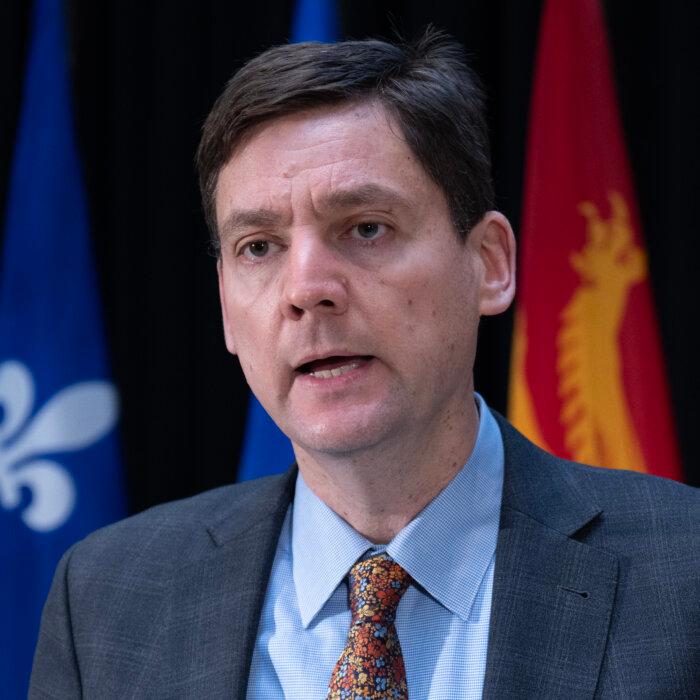
“Today is not the end of the journey,“ she said. ”It’s a meaningful step forward and an important step in implementation and toward a future where our nation can fully realize its potential.”
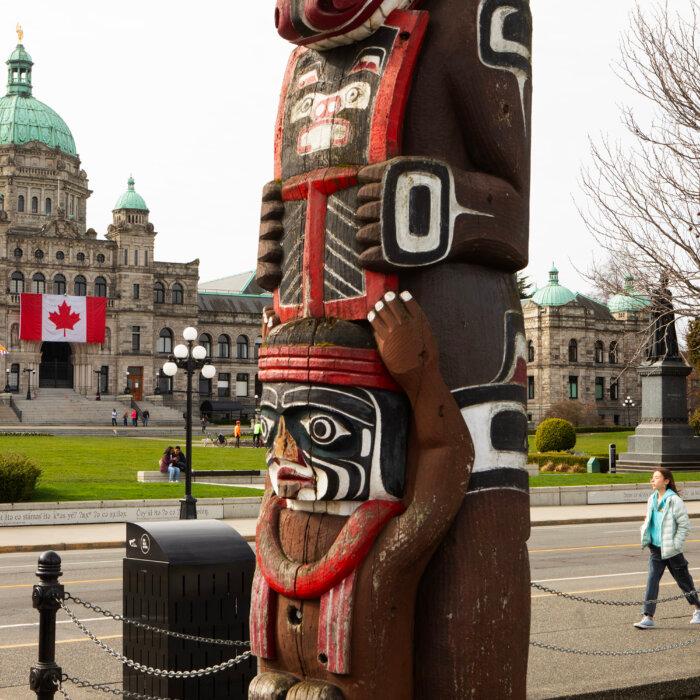
The treaty outlines a framework for developing shared decision-making agreements on multiple issues, including the stewardship of wildlife, parks, fish, and water. It also includes plans for two public tribal parks: one consisting of three small islands near Denman Island and the other in the Wildwood forest.
The agreement was approved by First Nation members in March 2025 but must still be ratified by the federal government to become legally binding. Government documents suggest 2028 would be the earliest possible effective date.
If ratified, K’omoks First Nation would become the eighth First Nation in B.C. to have a modern treaty. The community would receive a $56 million one-time federal transfer payment in addition to ongoing funding for self-government.
Eby described the treaty as a “living agreement” that would acknowledge the K’omoks peoples’ right to self-government.
“Courts have consistently recognized Indigenous rights and title in British Columbia, these rights cannot be erased by any government of any stripe. But for too long, that reality was ignored, the result was constant conflict, court battles and uncertainty,” he said. “This is a path of healing, of partnership, of affirming long sought rights and self determination towards lasting reconciliation.”
Eby faced pushback earlier this month from First Nations leaders and the First Nations Leadership Council for planning to suspend portions of the Declaration on the Rights of Indigenous Peoples Act (DRIPA).
Eby proposed a three-year pause on certain sections of DRIPA and the Interpretation Act last week, saying a B.C. Court of Appeal ruling interpreted DRIPA to mean the UN Declaration on the Rights of Indigenous Peoples (UNDRIP) applies directly to all B.C. laws, creating “huge legal uncertainty” and litigation risk.
Indigenous leaders have said the move abandons the province’s commitment to reconciliation.
The B.C. Conservatives have voiced disapproval of both DRIPA and the government’s handling of the issue, saying it threatens property rights in its current form.
Interim Conservative leader Trevor Halford noted in a recent social media post that Eby promised amendments to the law in January, but no progress has been made four months later.
“At what point does the premier actually back up what he says, when he says that there is extreme legal liability right now, that there is over 20 court decisions that could be pending right now, and that we need immediate action to make sure that British Columbians and property right owners are protected?” Halford asked in the legislature on April 13. “We need immediate action to make sure that British Columbians and property right owners are protected.”
The Canadian Press contributed to this report.