The leader of British Columbia’s anti-extortion task force has apologized for hurting “public confidence” after Premier David Eby called for his resignation if he couldn’t convey the appropriate urgency to address a surge of blackmail-related shootings across the Lower Mainland.
During a Jan. 20 press conference, Brewer had said the RCMP is treating the threat to public safety seriously, but added that “we tend to inflate the word crisis.”
His suggestion that the ongoing incidents targeting members of the South Asian community did not constitute a crisis led Eby to say on Jan. 21 that Brewer needed to clarify his “puzzling” remarks or resign as the head of the BC Extortion Task Force.
Brewer issued his apology shortly after Eby’s comments.
“I want to apologize for challenging the term ‘crisis’ yesterday, as it has become the focus and called into question the RCMP’s commitment to addressing extortions in BC. That was not my intention,” he wrote. “The task force’s commitment to addressing the ongoing threats and violence has not wavered. Our efforts have never been limited because of a term.”

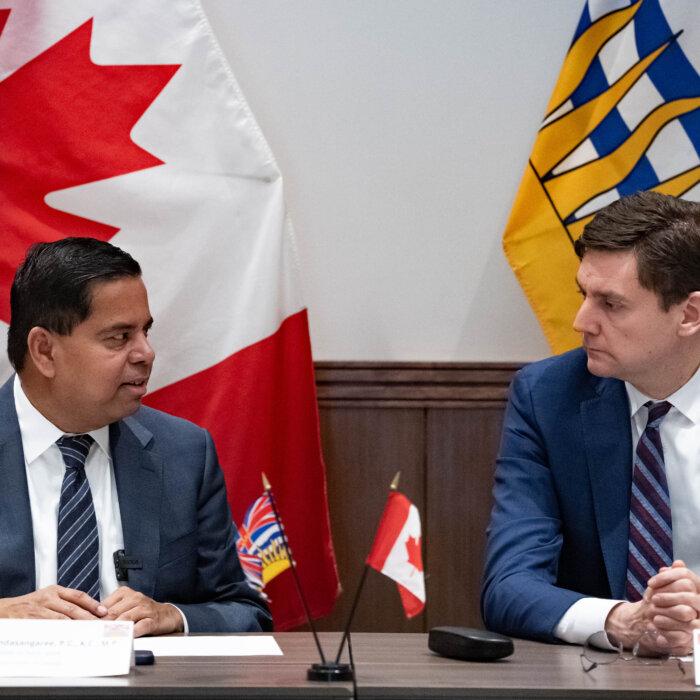
Ebay has not commented publicly on Brewer’s apology and a request for comment from the premier’s office was not returned before publication time.
Eby said the task force was set up four months ago because of the “urgent and serious” issue.
“Frankly, until his comments yesterday, I thought that Mr. Brewer had really demonstrated that sense of urgency,” Eby said.
Ongoing Investigation
The BC Extortion Task Force is “actively hunting” suspects in 32 files across the Lower Mainland, Brewer told reporters during his four-month update, noting that multiple groups are involved in the ongoing criminal activities.Police have connected at least four shootings in the past week to extortion that has resulted in gunfire impacting both businesses and residences. Similar incidents have persisted for several months, with the suspected extortionists frequently posting videos of the attacks on social media.
The situation escalated over the weekend, as authorities in the Metro Vancouver city of Surrey reported they were conducting an investigation into the residents of a specific home who were suspected of shooting back at the attackers.
Brewer said he understands people are living in fear, but he said resorting to violence isn’t the answer.
“When people take the law in their hands for any reason, the chance of people getting hurt is exponentially greater,” he told reporters. “There’s no need for anybody to take the law in their hands or engage in overt acts of self-defence. You are going to endanger yourself, and you’re going to endanger your neighbours. Let the police do their job.”
Brewer also fielded several questions from the media about a perceived lack of progress made by the task force. He emphasized that his officers are working hard on rooting out the groups involved in the extortion schemes and fear campaigns that have mostly targeted South Asian business owners.
“We are now actively hunting these extortionists, and they know we’re hunting them,” he said. “Make no mistake, right there, they are changing their MO [modus operandi] because we’re hunting them, and we will continue to hunt them.”
He added that the goal is to either deport the alleged criminals or put them before the courts, but said it is a very involved process because the task force wants to ensure airtight cases for every suspect.
The task force has released data indicating that seven people have been charged so far and nine individuals have been deported as part of 111 investigations into the admissibility of foreign nationals.
Surrey Mayor Brenda Locke is calling on Ottawa to “take immediate action and implement a full-scale national initiative” against extortion violence.
Locke said in a Jan. 21 statement that her city had seen 34 cases of reported extortion in the last three weeks, and residents remain in “constant fear.”
She penned a letter to federal Public Safety Minister Gary Anandasangaree urging the federal government to appoint a “national extortion commissioner” to create a co-ordinated, nationwide approach to these types of crimes.
Locke said police are working diligently on the cases, but a more unified national approach to combat extortion violence is necessary, and a commissioner would be able to tackle the issue.
“This is unlike anything Surrey has faced before,” Locke said, adding current laws were “too weak.”
“This role should have the authority to examine the obvious gaps in our criminal, immigration, and citizenship systems and lead a national response that actually stops these crimes from happening.”