The mayor of Barrie, Ont., has declared a city-wide state of emergency in response to homeless encampments that have led to a rise in municipal property damage and public safety concerns stemming from the ongoing opioid crisis.
“The City of Barrie is immediately instituting a state of emergency to reclaim our streets, our boulevards, our parks, our squares, our feeling of safety, and our order,” he said.
The mayor referenced a sequence of incidents over the past few months that led to the decision, including overdoses, thefts, assaults and, encampment fires.
The murder charges are linked to the deaths and dismemberments of William ‘Blake’ Robinson, 45, and David ‘Kyle’ Cheewsquay, 41.
At the time, Nuttall said that “waterways flow downstream, and contaminants can impact drinking water, the natural environment, and residents well beyond the encampment itself.” He noted that other agencies declined to test the water, and the city “took the step” of conducting the testing.
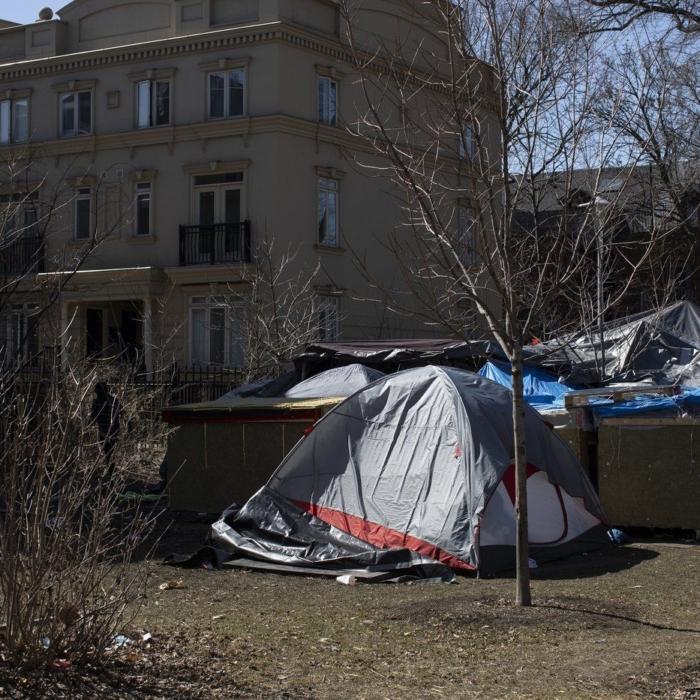
Encampments present “unsafe conditions” for those living in and around them, the mayor said, noting the amount of waste on the site posed a health and safety risk and environmental concerns.
Nuttall said the state of emergency declaration would include the testing of all water and waterways near encampments, and the removal of encampments, starting with those that are closest to “critical infrastructure and public spaces.”
State of Emergency
Nuttall said the state of emergency declaration also allows for the creation of a new position to “oversee the implementation of social services” and to coordinate the various agencies responsible.“One of the things that we’re doing is creating a task force headed by our chief administrative officer or delegate,” he said. “They will obviously work to remove the silos, get all of the offerings in place.”
He said a report will be commissioned to determine “how we got here” and make recommendations so that “we never come back into this emergency situation.”
Nuttall is also calling on the County of Simcoe to open shelter spaces to accommodate encampment residents and has asked the province to help with funding as well.
The province said it has earmarked $75.5 million to support homelessness prevention. The money was said to provide those living in encampments with access to “reasonable accommodation.”
The government funding was in addition to its ongoing $700 million for homeless prevention programs and $378 million it put into the creation of 19 homeless and addiction recovery treatment (HART) hubs.
Premier Doug Ford said at the time that mayors and residents in the province had been “clear that enough is enough” regarding encampments and illegal drug use in parks and public spaces.