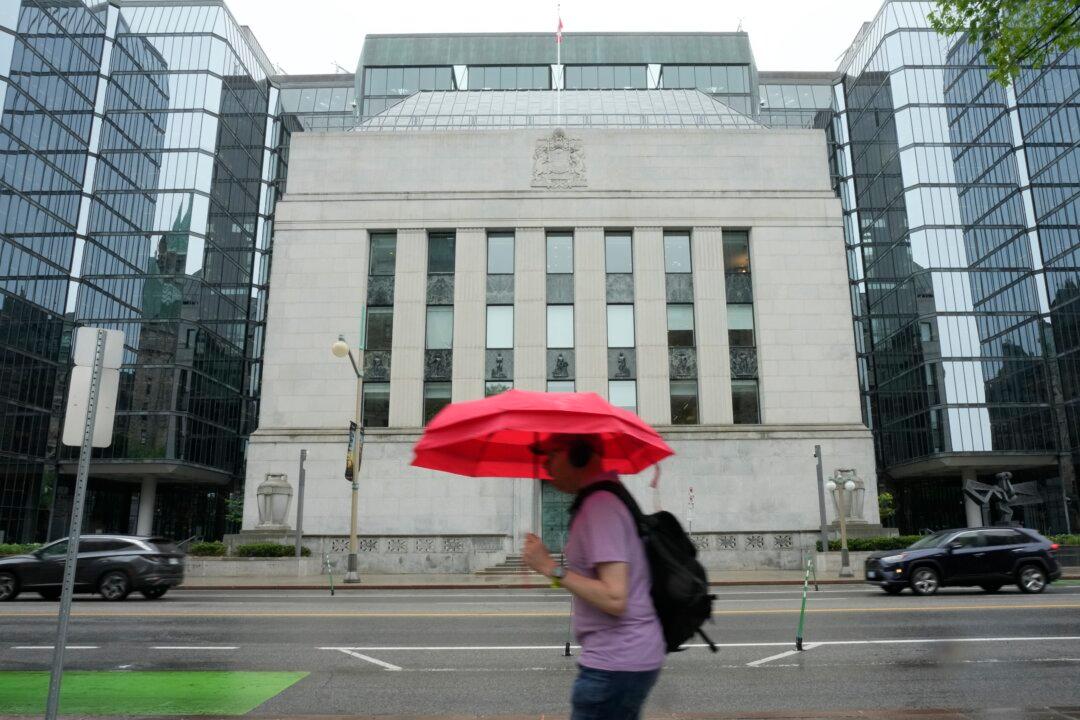
OTTAWA—The Bank of Canada held its interest rate steady at 2.25 percent for a sixth straight meeting, saying that economic growth appears to be recovering and inflation looks set to fall as oil prices decline.
“The data we have received since April have increased our confidence that the economy is indeed working its way through this period of global upheaval,” Bank of Canada Governor Tiff Macklem told reporters on July 15.
Macklem said economic growth seems to have resumed in Canada after stalling over the past year. He said U.S. trade policy has continued to add pressure, but Canadian consumers and businesses have adapted.
Macklem said that the Bank of Canada has been “looking through” the direct effects of higher oil prices due to the war in Iran and their impact on inflation in Canada.
Monetary Policy Report
The bank’s July monetary policy report painted an optimistic picture of Canada’s economy in the medium-term, stating that the economy is showing signs of “improvement” and inflation is expected to fall from its recent peak of 3.2 percent in May.The report forecast economic growth of 2.5 percent in the second quarter of 2026, after remaining flat in the first quarter, due to the “unwinding of temporary factors that restrained growth in the first quarter.”
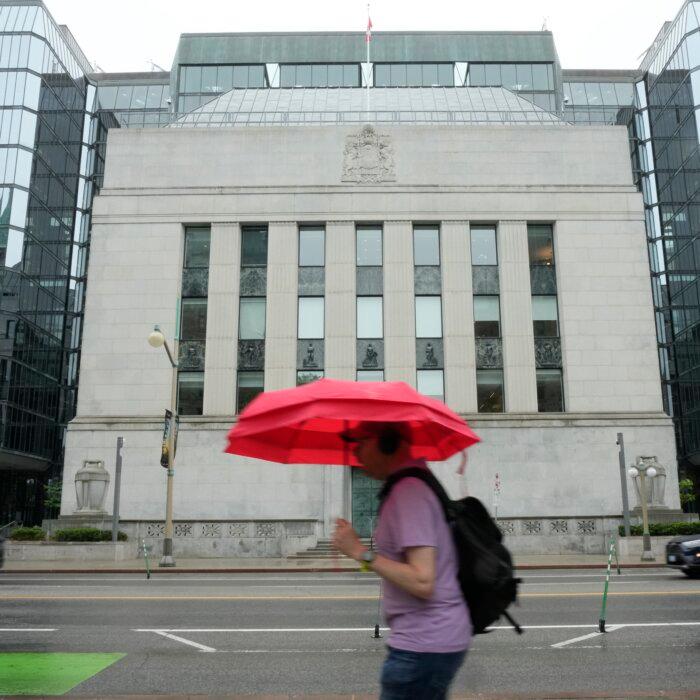
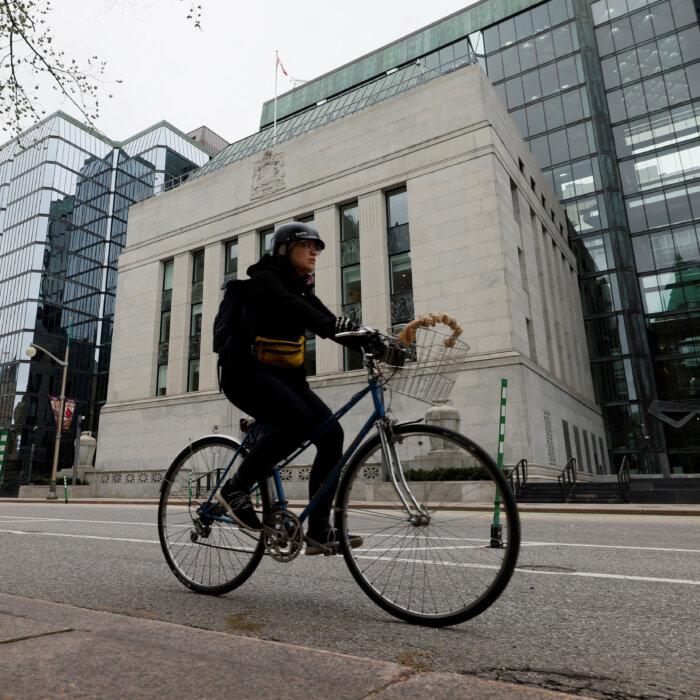
The central bank said Canadian businesses have adapted to “elevated geopolitical uncertainty” caused by U.S. trade policy and the Iran war. Exports will contribute to growth over the next few quarters, consumer and government spending remain steady, and business and residential investment are expected to recover.
While the Bank of Canada had projected growth of 1.5 percent in the first quarter of 2026, Statistics Canada reported in May that Canada’s economy contracted by 0.1 percent in the quarter on an annualized basis, after shrinking 1 percent in the fourth quarter of 2025. Two straight quarters of contraction meet the definition of a technical recession.
Macklem told reporters in June that he does not believe Canada is in a recession, echoing a similar analysis from the C.D. Howe Institute. The institute is widely regarded as the authority on determining when Canada is in a recession.
The July monetary policy report said economic growth was slow in the first quarter of 2026 due to a decline in government spending, motor vehicle production, oil and gas investment, and housing activity. But GDP growth picked up in the second quarter, led by exports of energy and non-commodity goods, while oil and gas investment rebounded in response to higher energy prices.
Disagreements over several aspects of the memorandum and continued skirmishes led U.S. President Donald Trump to declare on July 8 that the agreement with Iran was “over.” The two countries have since been trading strikes for nearly a week. Iran has also said the Strait of Hormuz is once again closed to all traffic, and Trump has threatened to attack Iranian oil infrastructure. The price of WTI has risen to around $US83.