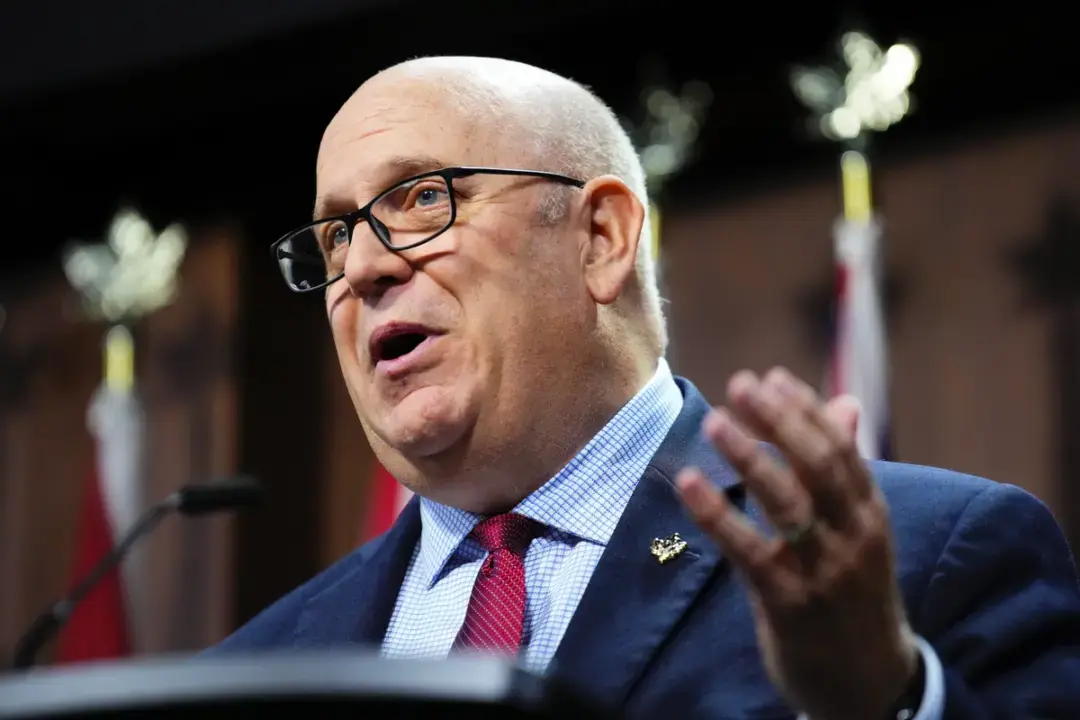
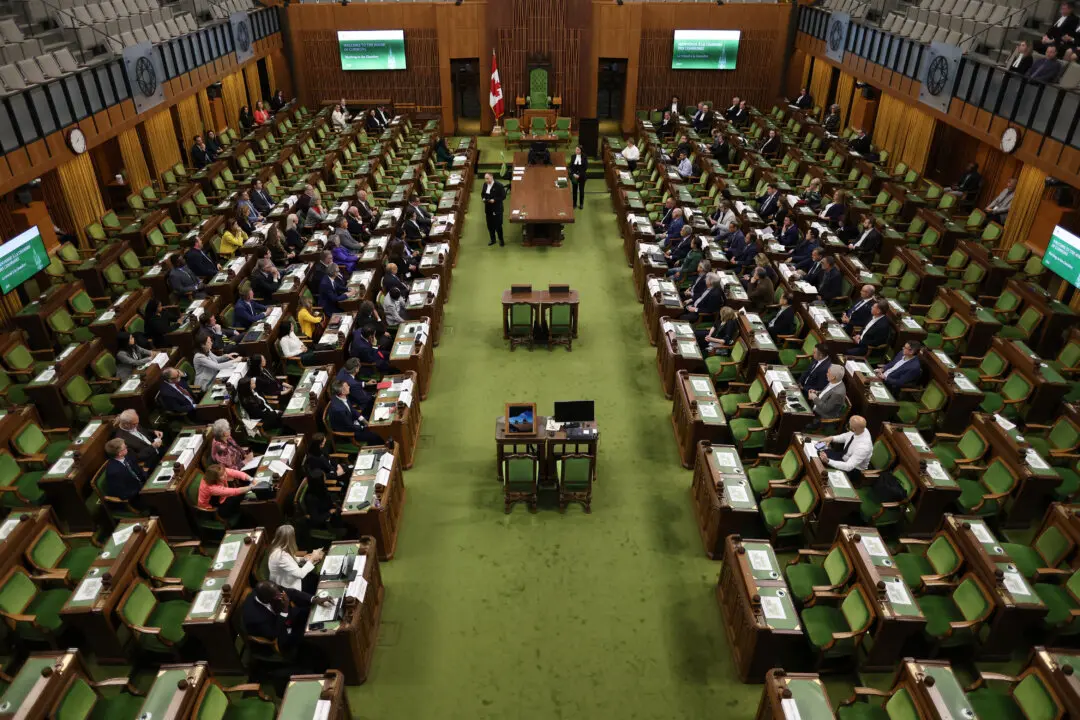
Bank of Canada Governor Tiff Macklem says “imbalances” among major economic powers, including persistent trade surpluses in China and over-investment in the United States, pose growing risks to the global economy.
Speaking in Paris on June 23, Macklem pointed to China’s persistent trade surpluses and high savings rate, the United States’ large trade deficits financed by capital inflows and low national saving, and Europe’s weak investment and productivity growth as examples of widening global imbalances.
On China, Macklem said the country’s rapid growth over the past 25 years has been driven in part by high savings and investment patterns that have supported strong export growth, while also contributing to excess capacity and “damaging deflationary pressures” inside the country. He said this has led to accusations of unfair trade practices and the use of tariffs and other restrictions by trading partners.
On the United States, he said strong consumption, large fiscal deficits, and capital inflows have contributed to sustained trade imbalances, noting that Americans “save less than they invest domestically.”
Macklem also argued that the combination of lower savings in the United States, Europe’s lack of investment, and weak consumption in China, is pushing global capital disproportionately into the United States.

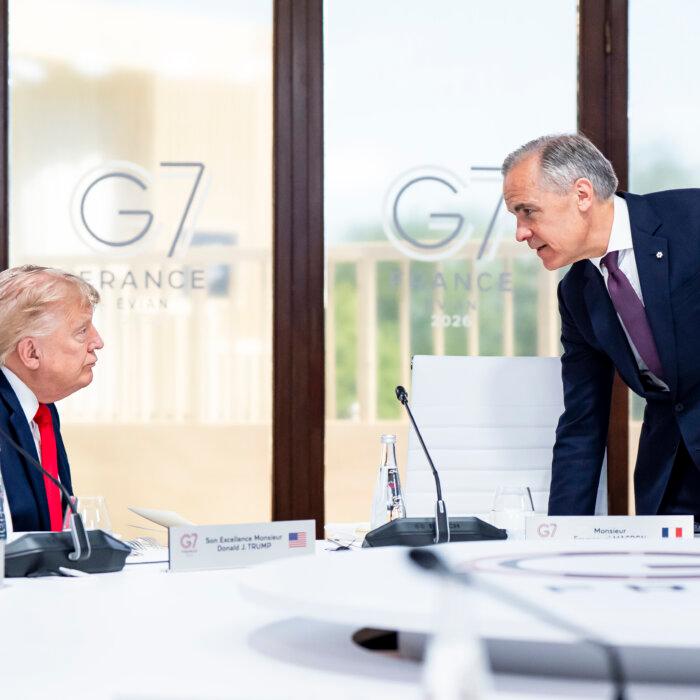
“When flows become excessive, they can widen trade gaps, fuel protectionism and distort asset prices. Capital gets misallocated. Pressures cumulate and financial stability risks increase,” he said.
He added that the 2008 financial crisis showed how quickly shocks can spread through interconnected global markets, warning that similar vulnerabilities could emerge if imbalances continue to build.
“Through history, we’ve seen that change tends to come in moments of crisis. But crises are costly and don’t guarantee positive outcomes. A better path would be to adjust the system before pressures reach a tipping point,” he said.Macklem said reducing risks would require structural adjustments across major economies, including higher consumption in China, higher saving in the United States, and higher investment in Europe.
He also encouraged stronger trade and investment ties between Canada and the European Union, and greater efforts by international institutions to identify emerging financial risks earlier.
Leveraged Bond Purchase Risks
During his speech, Macklem also warned that hedge funds’ leveraged purchases of government bonds could pose financial stability risks. He said while such activity can improve market liquidity, the heavy use of leverage may make core bond markets more fragile and increase the risk of “contagion” across countries if conditions deteriorate.The governor said higher funding costs could force the funds to sell their positions, which would lead to assets declining in value and liquidity drying up. He said in a scenario where market volatility leads to interest rates rising, the leveraged investors would be forced to “sell sovereign bonds into already stressed markets.”
“The cross-border nature of markets means that stress that begins in one jurisdiction or sector can quickly move to another,” he said.