Australia’s economy expanded more quickly at the end of 2025, according to new national accounts released by the Australian Bureau of Statistics, though the figures also highlight the continued role of government spending in driving growth.
Gross domestic product (GDP) rose 0.8 percent in the December quarter, lifting annual growth to 2.6 percent, up from 2.1 percent in the year to September.
The ABS said the increase was broad-based across much of the economy, with both public and private demand contributing equally to quarterly growth.
Each added 0.3 percentage points to GDP in the December quarter.
Public Spending Continues to Rise
Government consumption increased 0.9 percent during the quarter, adding 0.2 percentage points to overall GDP growth.Most of the increase came from state and local governments, where spending rose 1.0 percent.
The higher expenditure reflects growing costs in public services such as health, education, and policing. Electricity rebates offered in New South Wales, Western Australia, and the ACT also added to government spending.
Payments to households through programs including the National Disability Insurance Scheme, the Medicare Benefits Scheme, and home care services also continued to grow.
Chalmers Welcomes the Numbers
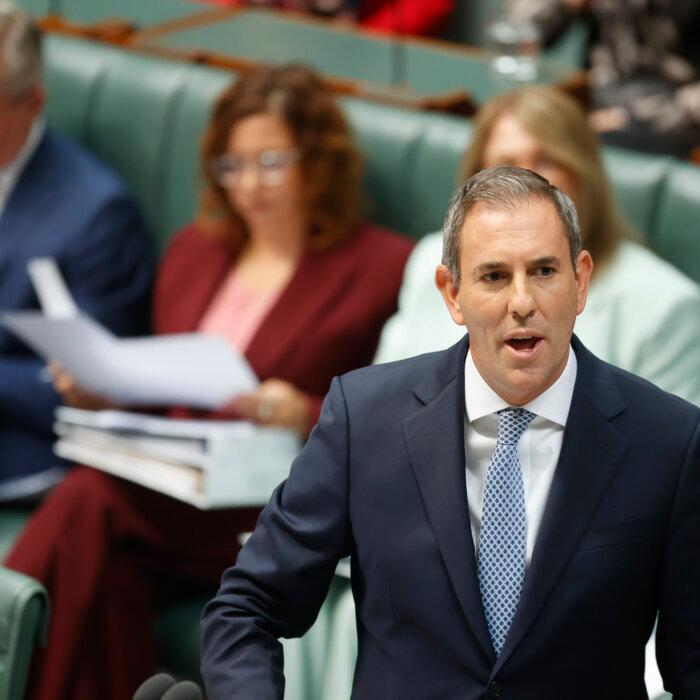
Treasurer Jim Chalmers said the figures show the economy strengthening despite global uncertainty.“These really encouraging numbers are a very robust foundation from which we confront intense global economic volatility, made worse by the dramatic escalation of hostilities in Iran and across the Middle East,” he told reporters at a press conference on March 4.
Chalmers said the results marked the strongest GDP growth in almost three years.
“But it’s the composition of that growth that we find especially encouraging,” he said.
“There’s more growth in business investment, dwelling investment, market, sector, productivity and consumption, but consumption came in a bit weaker than was expected.
“The big story of 2025 is the recovery in the private sector, which is a very good thing.”
Private demand grew 3.2 percent over the year, while household spending increased 2.4 percent.
“Now household consumption came in a bit weaker in the quarter, but it was still up 2.4 percent through the year, and that’s all about rising incomes, again, a very good thing,” he said.
Shadow treasurer Tim Wilson did not directly comment on the GDP figures but criticised the government’s spending approach earlier in the day.
“He needs to stop pouring debt petrol on the inflation fire, which is why your bills are going up at the supermarket,” Wilson wrote on X.