Australia’s economic performance has largely flatlined in early 2025, with gross domestic product (GDP) inching up just 0.2 percent in the March quarter.
That’s a slowdown from the 0.6 percent growth recorded in the December quarter.
On an annual basis, the economy expanded by 1.3 percent compared to March 2024, according to seasonally adjusted figures released by the Australian Bureau of Statistics (ABS) on June 4.
Cyclone Alfred—the first to hit South East Queensland in half a century—was the headline factor blamed for the slower economic growth.
Private Investment Up Slightly
For the first time in several quarters, private spending was slightly ahead of public spending.
The data recorded a drop in public investment by 2 percent owing to completion or delays in major infrastructure projects in energy, transport, and telecommunications.
Private investment was up 0.7 percent.
Approvals for new dwellings have increased, and that is now translating into actual building activity. Non-dwelling construction also rose, buoyed by mining, manufacturing, and ongoing work on electricity generation and distribution.
Australians Dipping Deeper Into Their Pockets
Meanwhile, household spending increased by 0.4 percent.Spending on essentials—food, rent, electricity, and gas—continued to rise, with higher-than-usual temperatures and the end of taxpayer-funded rebates pushing up utility bills. Food prices have also increased due to inflation, forcing Australians to spend more.
Chalmers Hails Private Spending Rebound
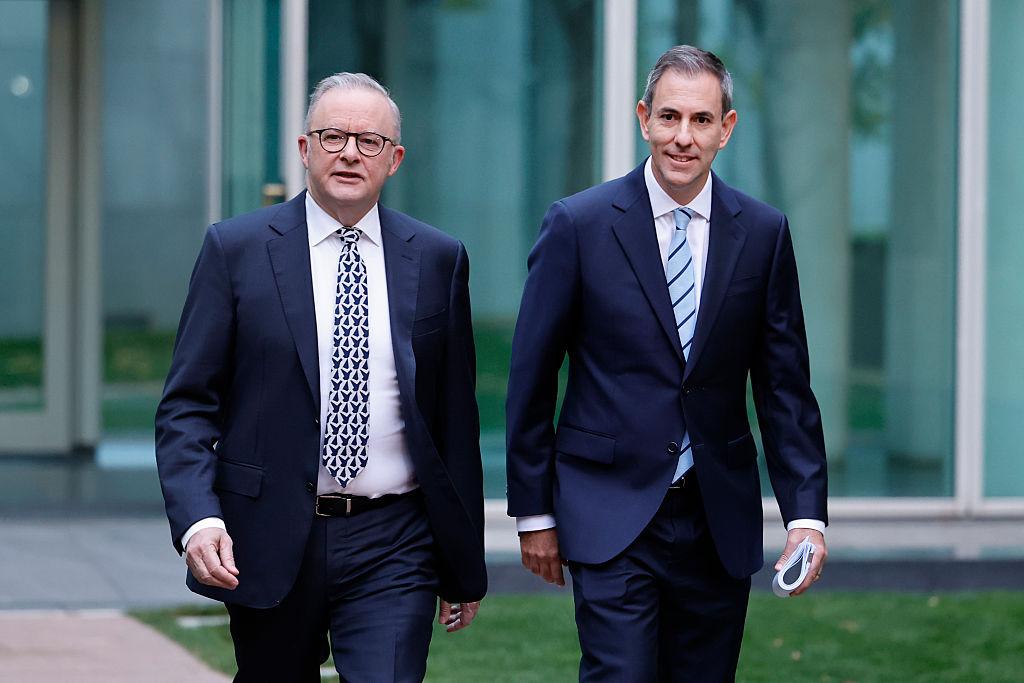
Reacting to the numbers, Treasurer Jim Chalmers took to X and continued his argument that Australia’s sluggish economic growth for the past four years was due to factors out of the control of the government.“With all the uncertainty in the world, any growth is a decent outcome. Lower public demand, combined with global economic uncertainty and natural disasters, meant growth was weaker than expected.”
He pointed out that while overall growth remains subdued, the private sector recovery the government has “planned and prepared for” is gradually taking hold.
Calls for Urgent Economic Reform Still Wanting
Meanwhile, a day earlier, the Organisation for Economic Co-operation and Development (OECD) cut its growth outlook for Australia, forecasting GDP to rise just 1.8 percent in 2025—down from 1.9 percent in its March estimate.While it expects some recovery in 2026, projecting 2.2 percent growth, this remains well below the 2.5 percent forecast made in December.
“Key structural policy priorities are to address the housing affordability crisis by boosting supply and to accelerate progress toward net zero carbon emissions, especially in transport and industry,” the report said.
It recommended easing zoning restrictions, streamlining planning laws, and enhancing competition policy—particularly through the agreements struck in 2024 between federal and state governments to overhaul regulatory barriers.
“Productivity is at the same level as it was eight years ago, and the moribund economy is why many people are struggling,” said chief economist at the Australian Taxpayers Alliance, John Humphreys.
He warned Australia’s anaemic growth was being patched over with superficial measures—while a slightly positive step—sacrificed long term growth for short-term political wins.