Australian Treasurer Jim Chalmers says the United States made no formal request for naval assistance in the Strait of Hormuz following criticism from U.S. President Donald Trump.
The Strait of Hormuz is a crucial maritime passage between the Persian Gulf and the Gulf of Oman and a major route for around a quarter of the world’s oil and liquified natural gas exports.
The area is controlled by Iran and Oman, but international maritime law governs shipping lanes.
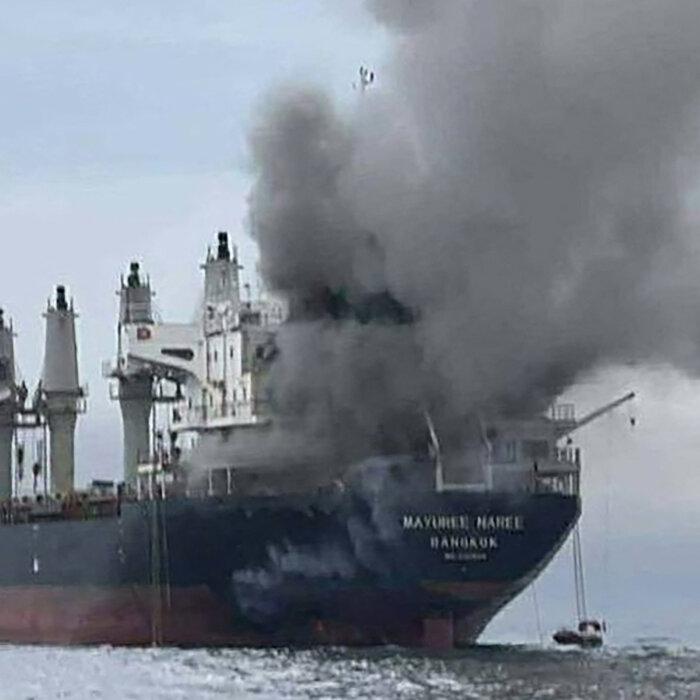
Since the joint U.S.-Israel operation on Iran, more than 1,000 fuel-bearing cargo ships have been disrupted by ongoing hostilities in the region.
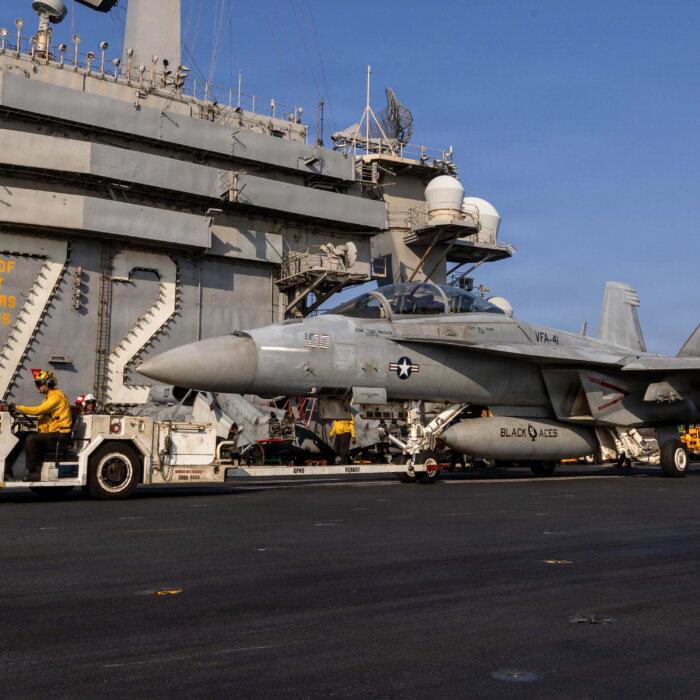
In a post online, President Trump said most NATO countries expressed no interest—mentioning Australia, Japan, and South Korea.
“I am not surprised by their action, however, because I always considered NATO—where we spend hundreds of billions of dollars per year protecting these same countries—to be a one way street.
“We will protect them, but they will do nothing for us, in particular, in a time of need.”
Trump also said the U.S. military had “decimated” Iran’s military, including its navy, air force, anti-aircraft, anti-radar capabilities, and a large number of the Iranian Revolutionary Guard Corps (IRGC) leadership.
‘There Wasn’t a Formal Request’: Treasurer
Yet Australian Treasurer Chalmers appeared to dispute Trump’s comments saying there was no formal request for naval assistance.“That wasn’t something we were considering, as far as I understand it there wasn’t a formal request to send ships into the Strait,” Chalmers told ABC Radio National on March 18.
“We’ve made a commitment to the region and our commitment’s really clear. We responded to a request from the [United Arab Emirates or UAE]—we’ve got the [Boeing] Wedgetail in the air in the region and primarily that’s about keeping about 100,000 Australians as safe as they can be, including, I think, about 25,000 in the UAE alone.
Why the Strait Matters
Shadow spokesman for Sovereign Capability Andrew Hastie took to social media arguing why defending the Strait was important.“Singapore, South Korea and Malaysia supply around 70–72 percent of Australia’s diesel imports,” he said in comments to ABC Radio National.
“These countries are refining hubs rather than major crude producers.
“They import crude, refine it, and re-export diesel to Australia. When we trace the supply chain further, approximately 40 to 60 percent of the crude processed by those Asian refineries comes from the Middle East.
“That means a large share of Australia’s diesel supply depends on Persian Gulf crude flows through the Strait of Hormuz. The Albanese government needs a plan to mitigate the impact of an extended oil supply shock in the global economy.”
In response to Trump’s Truth Social post, Hastie called it a “petulant post for a president.”
Hastie said the U.S. government did not expect the Strait to be closed for so long and Trump’s comments were a “reflection on his character.”