It was always going to be a matter of “when, not if” Australia would recognise Palestinian statehood.
Indeed, Prime Minister Anthony Albanese repeated as much this past weekend (on Aug. 9 and 10) at his annual bilateral meeting with New Zealand Prime Minister Christopher Luxon.
But both leaders stressed that it would come only after certain conditions were met, including reform of the Palestinian Authority and a guarantee Hamas would not be involved in its governance.
A day later, it seems those reservations have been satisfied, as Albanese emerged from Cabinet to announce that Australia will recognise a Palestinian state in September at the United Nations General Assembly.
He said the decision was made to add momentum to a two-state solution, and that Australia had received commitments from the Palestinian Authority that Hamas would have no involvement in any future state.
“A two-state solution is humanity’s best hope to break the cycle of violence in the Middle East and to bring an end to the conflict, suffering and starvation in Gaza,” Albanese said at a news conference.
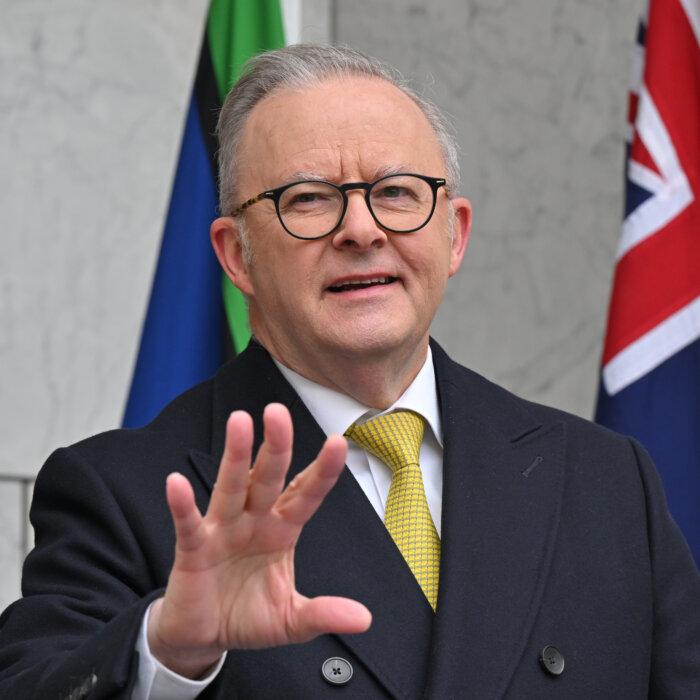
“This is a practical contribution towards building momentum (towards peace),” Albanese said. “This is not Australia acting alone. What we are seeing is a range of countries engaging in detailed dialogue as well behind the scenes.”
“This conflict which has gone on for such a long period of time, I think Australians want to see an end to it. And an end to it can only be secured when both Israelis and Palestinians can live in peace and security.”

Two Nations ‘Only Prospect for Peace’: Wong
Foreign Minister Penny Wong added that Australia had an “opportunity as a nation to contribute to momentum towards two states. And that is the only prospect for peace.“We made clear we would recognise Palestine when it would best contribute momentum to peace. September is that time.
“The world says this has gone on far too long ... the heartbreak, death and destruction must end …
“We have always said that Palestinian civilians cannot be made to pay the price of defeating Hamas. But a whole population has been shattered. So this September, the international community has the chance to forge hope from despair.”
The prime minister emphasised that the announcement did not undermine Australia’s support for Israel, reiterating calls for the release of all the remaining hostages held by Hamas.
“When we recognise the long-held and legitimate aspirations of the people of Palestine, we are also upholding and strengthening our commitment to the people of Israel and their right to live in freedom, security and safety,” he said.
“Because until Israeli and Palestinian statehood is permanent, peace can only be temporary. Ever since the atrocities perpetrated by Hamas on October 7, 2023, Australia has stood with the people of Israel and our partners and allies around the world in calling for the release of the hostages. For the sake of the loved ones and all who share in their pain, we repeat that call today.”
The decision follows that of Canada, the United Kingdom, and France, and also comes as Australia grapples with ongoing domestic tensions related to the conflict.
Netanyahu Informed
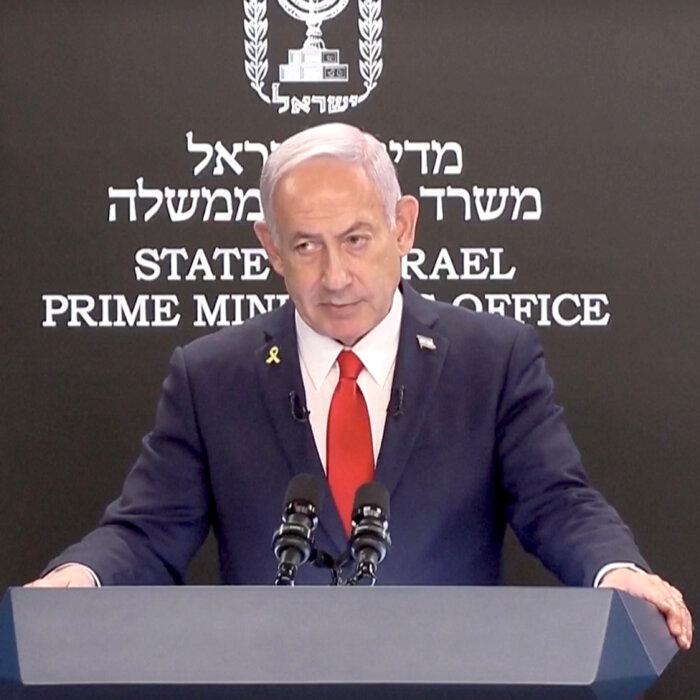
Albanese said he had told Israeli Prime Minister Benjamin Netanyahu of the decision in a discussion that was both “long” and “civil.”
“The arguments he put to me were very similar to the arguments he put more than a year ago. It seems to me very clearly [that] we need a political solution, not a military one,” he said.
“I have said it publicly, and I said it directly to Prime Minister Netanyahu: the situation in Gaza has gone beyond the world’s worst fears.
Ealier in the day, Netanyahu told journalists that Australia and other nations were “delusional” for thinking Palestinian recognition would bring peace, calling it “marching into a rabbit hole.”
“I think it’s actually shameful, but it’s not going to change our position,” he said.
The federal opposition warned the move put Australia “at odds with the United States of America, our most important ally, and the most consequential player in the conflict in Gaza.”“Despite his words today, the reality is Anthony Albanese has committed Australia to recognising Palestine while hostages remain in tunnels under Gaza and with Hamas still in control of the population of Gaza. Nothing he has said today changes that fact,” said Opposition Leader Sussan Ley and shadow foreign affairs spokesperson Michaelia Cash, in a statement.
“Recognising a Palestinian state prior to a return of the hostages and defeat of Hamas, as the government has today, risks delivering Hamas one of its strategic objectives of the horrific terrorism of October 7.
New Zealand to Wait
Meanwhile, New Zealand’s Foreign Minister Winston Peters said his government will take another month to consider its position.“Some of New Zealand’s close partners have opted to recognise a Palestinian state, and some have not,” Peters said. “Ultimately, New Zealand has an independent foreign policy, and on this issue, we intend to weigh up the issue carefully and then act according to New Zealand’s principles, values and national interest.”
He confirmed he raised the issue in Cabinet today, ahead of a formal consideration in September.
However he reiterated that it “has been clear for some time that our recognition of a Palestinian state is a matter of when, not if.”
If New Zealand does go ahead, it would mean four of the Five Eyes nations would officially recognise a Palestinian state, with U.S. President Donald Trump cautioning that doing so would only “reward Hamas.”