Treasurer Jim Chalmers has given six shareholders 14 days to sell their interests—about 17.5 percent—in Australian rare earths miner Northern Minerals Limited.
The six shareholders include four companies and two individuals—all but one are based in Hong Kong or China.
Northern Minerals, which hopes to extract dysprosium and terbium in Western Australia’s East Kimberley region, has long been a target of Chinese interest with multiple companies attempting to buy into the group.
Out of its 9.54 billion outstanding shares, Chalmer’s current order relates to 1.7 billion of them.
The Foreign Investment Review Board (FIRG) believes that a group of Chinese investors who were previously forced to sell their holdings, instead, gave them to a company called Hong Kong Ying Tak, which is included in the sell-off order.
- Hong Kong Ying Tak Limited (Hong Kong): 95,328,713 shares.
- Real International Resources Limited (British Virgin Islands): 619,071,000 shares.
- Qogir Trading & Service Co., Limited (Hong Kong): 523,463,250 shares.
- Cong Chuanyou (China): 130,056,866 shares.
- Vastness Investment Group Limited (China): 271,250,091 shares.
- Lin Zhongxiong (China): 39,725,860 shares.

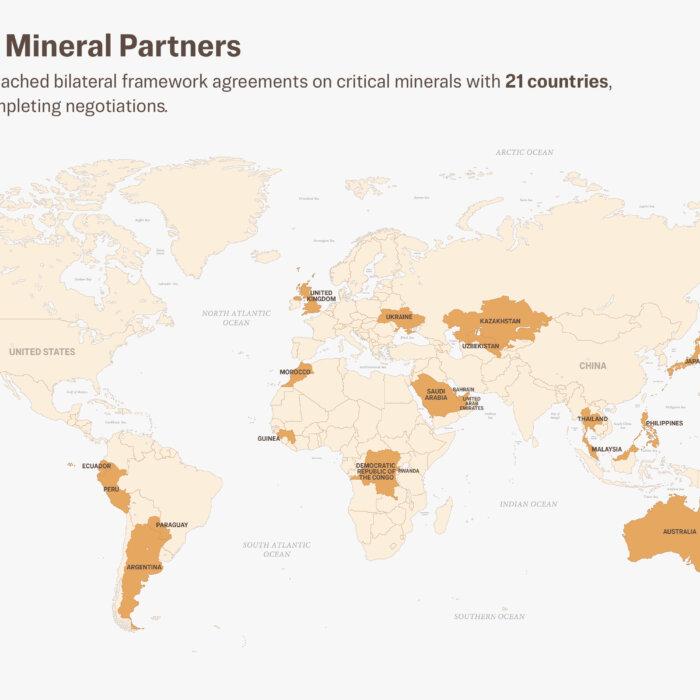
Specialised magnets made from dysprosium and terbium are crucial in the manufacture of precision-guided weapons, radar and sonar systems, jet engines and avionics, and targeting and communication devices. They are also necessary for industrial robots, wind turbines, and electric cars.
Northern Minerals owns 100 percent of the Browns Range Heavy Rare Earths Project in the East Kimberley region, where deposits are uniquely rich in the two elements.
‘Protecting the National Interest,’ Treasurer says
“This decision was entirely consistent with advice from Treasury and the Foreign Investment Review Board. It’s about protecting our national interest and ensuring compliance with our foreign investment framework,” Treasurer Chalmers told reporters.“We operate a robust and non-discriminatory foreign investment framework, and we will take further action if it’s necessary to protect our national interest in relation to this matter,” he said.
It then contacted the Foreign Investment Review Board (FIRB), and an investigation subsequently revealed that Wu and associated Chinese conglomerates had unlawfully circumvented foreign investment rules by using proxies to accumulate a combined 20 percent stake.
After the investment was capped, Wu also sought a seat on Northern Minerals’ board. He narrowly lost this board bid at the Annual General Meeting, receiving 49.06 percent of the vote.
Those events were mirrored in January this year, when the China-based Vastness Investment Group—one of the companies targeted by Chalmer’s divestment order—made an unsuccessful bid to remove the company’s current chairman, Adam Handley.
Chalmers said at the time the orders were issued “due to national security concerns.”