The Australian government has finally announced it will remove tough restrictions on fresh U.S. beef imports after months-long internal debate over how to respond to the Trump administration’s tariff regime.
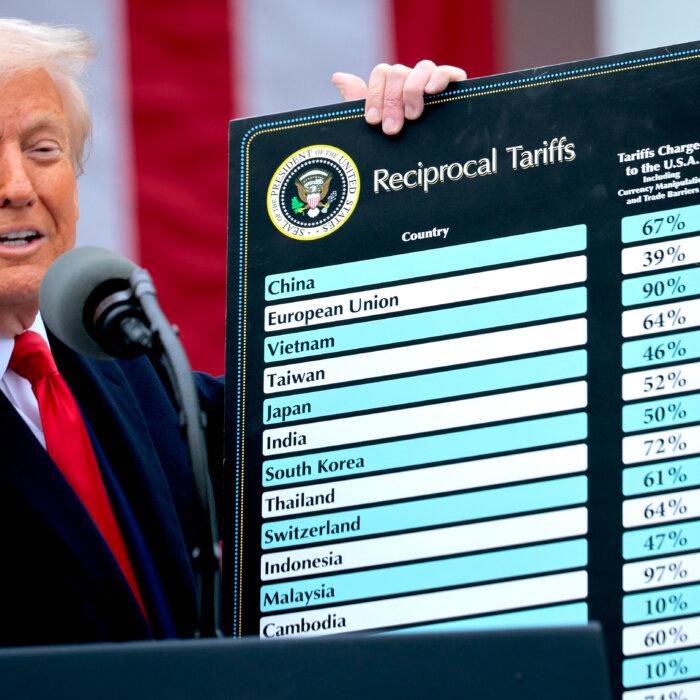
In April, U.S. President Donald Trump unveiled his administration’s sweeping “Liberation Day” tariffs that saw countries like Australia hit with a 10 percent tariff on all goods going to America.
A major bone of contention from U.S. producers has been Australia’s biosecurity restrictions that have held up U.S. beef for about 20 years.
In 2003, U.S. beef imports were barred after a single case of mad cow disease was discovered. This ban was finally lifted in 2019, however, another issue was the origin of U.S. beef, with herds often using Canadian and Mexican cattle.
Yet despite Australian protestations against tariffs, ultimately, the U.S. side held the key bargaining chip with the tariffs bringing uncertainty to Australia’s vast beef export trade to the United States.
Minister Satisfied With US Beef Standards
On July 24, Agriculture Minister Julie Collins said the Labor government would be willing to embrace “open and fair trade.”“Our cattle industry has significantly benefited from this,” she told reporters in Canberra.
Collins gave assurances that biosecurity would not be compromised, though the finer details need to be defined.
“The U.S. Beef Imports Review has undergone a rigorous science and risk-based assessment over the past decade,” she said.
“The Department of Agriculture, Fisheries and Forestry is satisfied the strengthened control measures put in place by the U.S. effectively manage biosecurity risks.
The latest announcement will lift the ban on beef sourced from Canada or Mexico after the United States introduced more robust movement controls in late 2024 and early 2025, allowing for improved identification and tracing.
Labor MP Amanda Rishworth said the Department of Agriculture was satisfied with U.S. standards.
“The review of the beef, the U.S. beef imports, has been a decade long,” she told ABC Radio National.
Coalition Calls for More Detail
But National and Liberal MPs have asked for more clarity around what those checks and assurances mean.Nationals Leader David Littleproud went so far as to suggest an independent panel review the decision.
Nationals Deputy Kevin Hogan said his party was still waiting on assurances that Australia’s biosecurity was protected.
“There hasn’t been a full ban on American beef into Australia for years, there’s been a partial ban in place,” he said.
“The full ban has actually applied to Mexico and Canada ... we just don’t want any of the biosecurity measures and protocols to be weakened.”
Fellow Liberal MP James Patterson also called for more detail.
“The prime minister himself has said that we couldn’t relax the restrictions on the importation of U.S. beef because of serious biosecurity concerns,” he said.
Bipartisan Criticism of Tariffs, Lawyer Says There’s More to the Story
Previously, both sides of politics had been critical of the Trump tariffs, espousing the benefits of “free trade” without tariffs.“We'll never loosen any rules regarding our biosecurity,” he said.
A line the Liberal Party also maintained.
“This isn’t about protecting an industry’s prosperity, it’s about protecting an industry’s integrity,” said Senator Jane Hume.
“So if you are tweaking biosecurity laws by watering them down, that’s something that I think that we would be very concerned about.”
“You will never be able to produce a manufacturing industry of any consequence, as long as you have a trade agreement with China that allows 100 percent of their manufactured goods to come in here duty-free,” said the Mandarin-speaking lawyer, who was formerly on the Australia-China Council.
“The founders of Australia, [Robert] Menzies and others, recognise that as a sovereign nation, we need to have our own independent industrial capacity, even if it costs a little bit more,” Ryan said.