Australia is set to increase its development aid to Fiji by an additional $40 million (FJD 56 million) over four years, bringing the total bilateral support to nearly $500 million (FJD$734 million) between 2025 and 2029.
The updated assistance will see two technical experts deployed to help roll out Fiji’s new National Security Strategy.
Security, Surveillance and Skills Training
Both countries plan to expand their collaboration under the Vuvale Partnership by supporting the Ocean of Peace initiative and encouraging deeper Pacific regional unity.New commitments include implementing a secure, modern ICT Border Management System, improving coordination to combat transnational crime—particularly illicit drug trafficking—and exploring broader information-sharing frameworks.
Australia will also provide support to Fiji’s police infrastructure and continue its work in health by building on a $7.1 million (FJD 10.4 million) HIV/AIDS investment. Further collaboration is planned in maritime security, shipbuilding, and workforce training to open up economic opportunities.
Strategic Concerns over China
The announcement coincides with Fiji Prime Minister Sitiveni Rabuka’s speech at the National Press Club of Australia, where he reaffirmed his neutral regional stance amid growing geopolitical tension.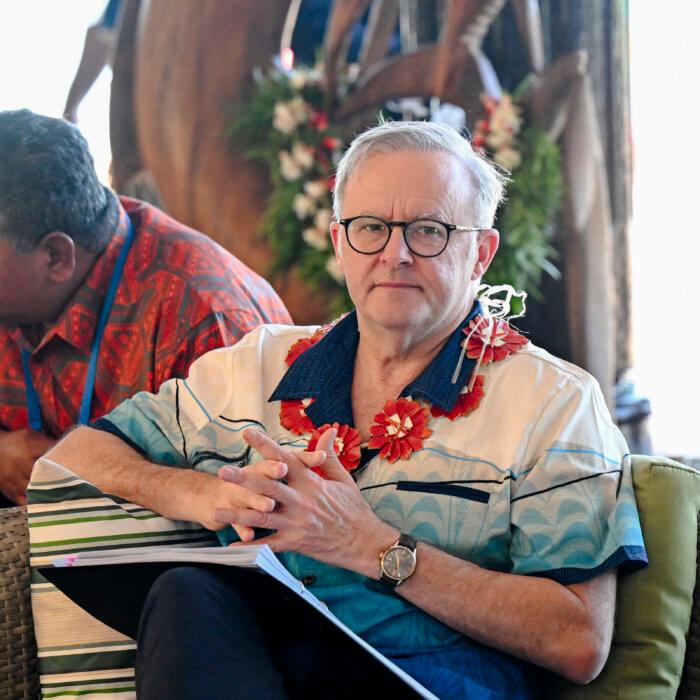
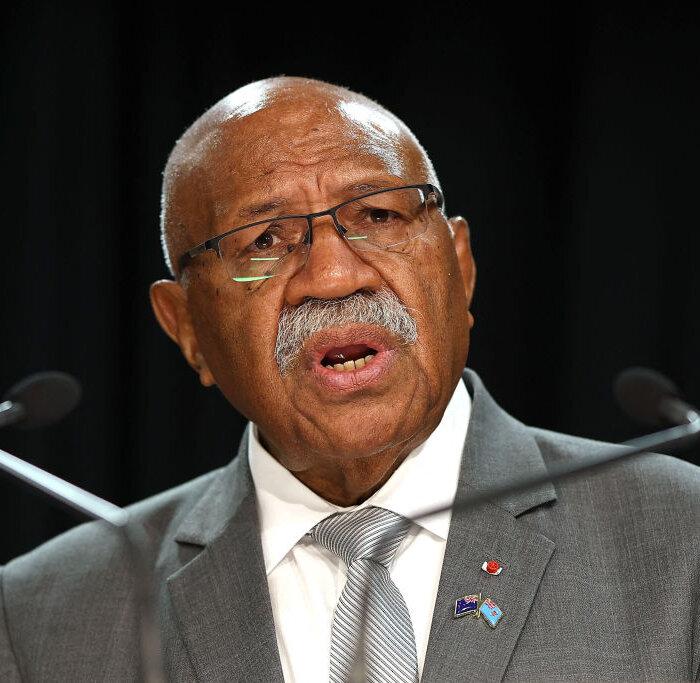
Referring to China’s increasing presence, Rabuka said the Pacific faced the challenge of navigating relations with “a China that is big, really big,” and noted Beijing’s desire to “spread its influence.”
Rabuka repeated the Pacific Islands Forum’s official line of being “friendly to all and enemies to none” but admitted it would be “a fairly tough course to steer.”
On the possibility of a Chinese military base in the region, Rabuka stated, “Who would want them? Not Fiji,” adding that he would actively work to prevent such a development and believes “China understands that well.”
He downplayed Beijing’s strategic intent, though, suggesting the Chinese Communist Party does not need foreign bases to project military power globally.
However, a recent report by Prague-based think tank Sinopsis has raised concerns about China’s establishment of “dual use” infrastructure—ports, runways and telecom hubs—across 10 Pacific nations.
These assets, the report warned, could be converted into military facilities “at a moment’s notice,” potentially giving the People’s Liberation Army a logistics network stretching across nearly 3,000 miles between Australia and American Samoa.