Opposition leader Sussan Ley is promising to end dependency on government in her first major policy direction pitch since the election.
Ley warned against accepting ongoing government expansion and higher debt as the norm.
“We cannot keep normalising bigger government, higher spending, and endless debt.”
Ley framed her vision around aspiration and hard work while ensuring a safety net remains in place for the vulnerable.
“Australians deserve an economy that backs aspiration, rewards effort, encourages responsibility, and supports those who need help when they need it most,” Ley said.
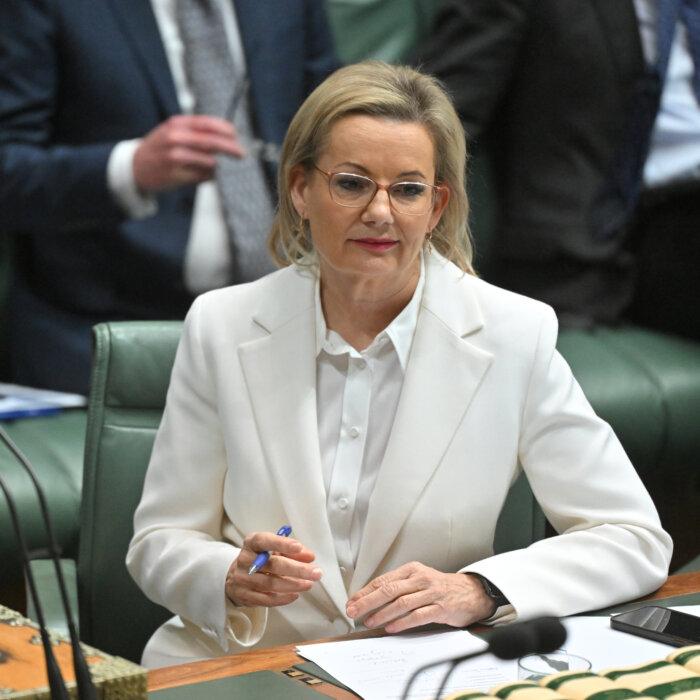
“That is the conversation I will be leading: restoring fiscal discipline, focusing on outcomes, and making sure every dollar delivers real results.”
Ley’s comments were made ahead of an economic speech on Sept. 17 at the Committee for Economic Development of Australia (CEDA).
Debt is Rising
The 2025 federal budget (pdf) showed Australia’s gross debt ballooning to $1.02 trillion (US$669 billion) in 2025-26.The budget estimated this would rise to $1.09 trillion in 2026-27, $1.16 trillion in 2027-28, and $1.22 trillion in 2028-29.
The budget also revealed an underlying deficit of $42.1 billion in 2025-26. This figure was up to $42.2 billion in the PEFO.
Meanwhile, Prime Minister Anthony Albanese is planning to discuss economic reform at a speech to the Business Council of Australia dinner in Sydney on Sept. 9.
“We are working together to get things done, to deliver, in the national interest. That focus on delivery is what drives our government.”
This comes after Treasurer Jim Chalmers held an economic reform roundtable in late August. He argued that the Albanese government is a responsible economic manager.
When the government thinks about tax reform, Chalmers said it considers the budget more broadly.
“We take great pride in the progress that we’ve made in the budget. We don’t pretend that the task of budget repair or fiscal sustainability is finished. It’s never finished,” he said.
“We get asked from time to time, will this budget focus on budget repair and re‑prioritisation, and we say every budget will. But we see responsible economic management really as one of the defining features of Anthony’s government.”
Chalmers defended the government’s record, saying the government achieved two surpluses in their first term.
“And even if you think about last year’s deficit, which we will report on next month, in a final sense, that was less than half of what we expected in the budget and in the Pre-election Economic and Fiscal Outlook (PEFO),” he said.
During question time on Sept. 4, Chalmers pointed to recent national accounts showing a pick-up in economic growth, up 0.6 percent in the June quarter.
However, he admitted there is more to do, including boosting productivity.
“We know that there’s more work to do, that people are under pressure and that the global environment is unpredictable. We know our economy needs to grow more strongly, and, for that, it needs to be more productive. We’ve made good progress, but we know there’s more work to do.”