Former Australian Tax Office (ATO) employee-turned-whistleblower Richard Boyle has finally learned his fate seven years after his Adelaide home was raided by Australian Federal Police (AFP) officers and then charged with 66 offences.
He later pleaded guilty to four charges following a protracted legal battle and was handed a 12-month good behaviour bond with no recorded conviction.
Judge Liesl Kudelka noted that his offending had occurred in “extenuating circumstances.”
Those circumstances, and the ordeal Boyle subsequently faced, have led to widespread calls for laws that supposedly protect whistleblowers to be strengthened.
In 2017, Boyle was entering his 14th year as a debt collection officer at the ATO when he came to believe it had started using unethical tactics to recover debts.
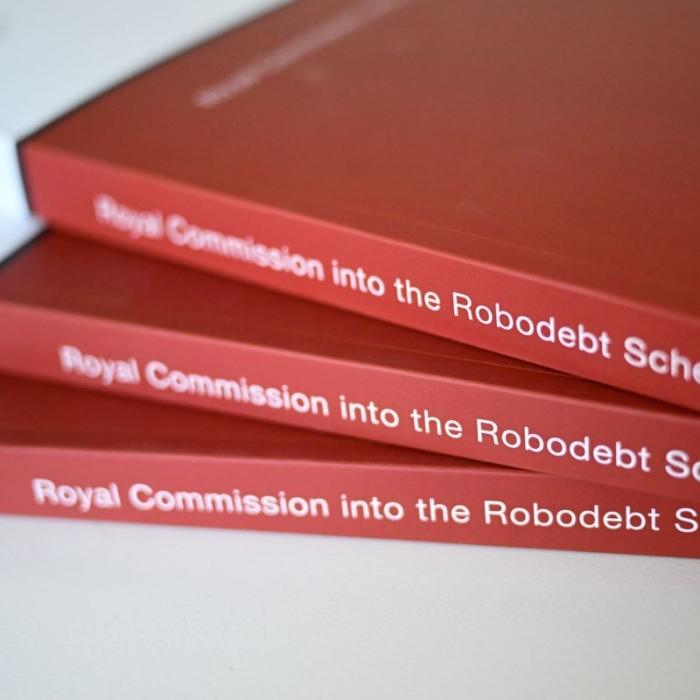

Instead, the AFP and the Commonwealth Director of Public Prosecutions proceeded with charging him, despite independent inquiries substantiating his allegations, which led to new laws being introduced to prevent such conduct from being repeated.
As the case progressed, both the District Court and later the Court of Appeal ruled that, despite the Act, he did not have immunity from prosecution.
Guilty of Four Offences
The offences to which he eventually pleaded guilty were recording protected information, recording another person’s tax file number, intentionally using a listening device to record a private conversation without consent, and disclosing protected information to another entity.Boyle argued that these actions were necessary to provide evidence for his disclosures.
For instance, the charge of making an unauthorised recording related to a “garnishee training meeting” which occurred after the ATO debt recovery team in Adelaide had been instructed “quite clearly and categorically” to start issuing standard garnishees on every case, Boyle said.
A garnishee notice orders a bank to hand over a taxpayer’s money directly to the tax authorities without consulting the account holder.
“Blowing the whistle can be a tough gig,” Kudelka said as she discharged Boyle without conviction.
But there is a growing chorus of politicians and legal commentators calling for greater protections so that what happened to Boyle—whose case was the first test of the existing whistleblower law—will never happen again.
Boyle a ‘Hero’: Former Senator
Former South Australian Senator Rex Patrick, said on X that it was “a small win in an otherwise disgraceful prosecution.”Patrick has been pushing for more openness across government by lodging multiple Freedom of Information Act requests and taking any that are refused to court.
“He actually thought he was protected. It’s taken four judges, and silks and lawyers, to work out whether or not he was protected. He went in thinking he was, but it turns out that he wasn’t. All he did was press a record button, he took a photograph, [and] he sent an encrypted email to his lawyer,” he said.
He said Boyle’s treatment was “disgraceful,” and there was no public interest in prosecuting him.
Kieran Pender, associate legal director at the Human Rights Law Centre, said in a statement that the sentence “concludes a sorry saga that has been devastating for Richard Boyle and undermined Australian democracy.“While the no-conviction sentence is a small ray of light, this never should have happened. Richard Boyle made the brave decision to speak up when he witnessed wrongdoing, [and] for years, he has faced prosecution and punishment.”
Peter Greste, executive director of the Alliance for Journalists’ Freedom, agreed, saying “[Boyle’s] prosecution and sentencing have had a serious chilling effect on public interest journalism and the sources they rely on.”
Both organisations called on the federal government to establish a Whistleblower Protection Authority and undertake urgent reform of the law.