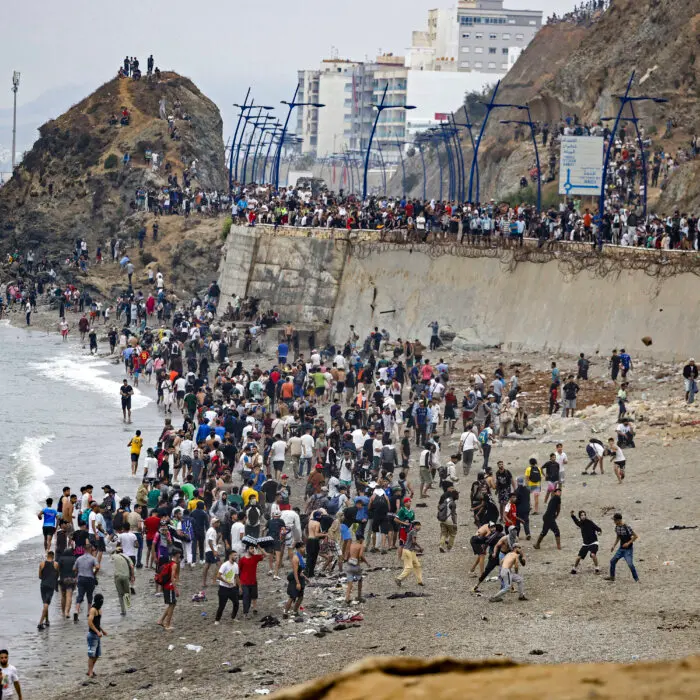
At least 111 people attempting to enter Spain’s North African enclave of Ceuta were arrested by Moroccan police on Aug. 15.
The detainees included 109 migrants from sub-Saharan Africa and two Moroccan citizens, a source inside Morocco’s Interior Ministry told Reuters.
The crossing attempt occurred after social media posts of “unknown origin” called for a mass crossing on Saturday, according to Moroccan authorities.
Hundreds of Moroccan police officers attempted to disperse the crowd on the hills near the land border.
Spain has since installed a floating maritime barrier and deployed more than 500 additional police officers to Ceuta in an effort to crack down on illegal immigration.

“We'll continue to deploy whatever personnel are necessary to restore normality as soon as possible and prevent events like those of July 30 from happening again,” Spanish Interior Minister Fernando Grande-Marlaska Gómez said on Aug. 13.
Ceuta is a Spanish autonomous city on the North African coast and fully part of Spain and the European Union.
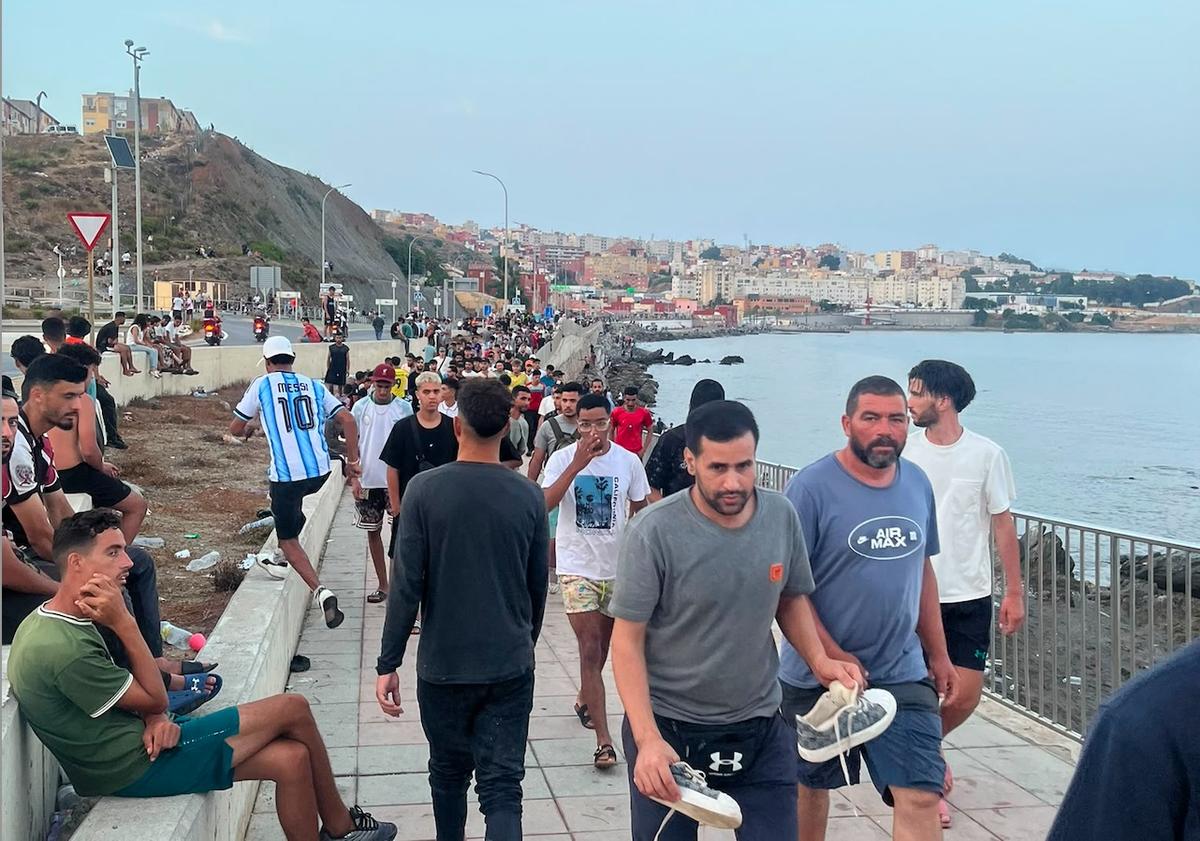
The swim proved to be deadly, as at least 96 people died in the mass attempt to navigate the three-mile route to reach European soil.
Most of the migrants who entered Ceuta in late July did not stay long, according to Grande-Marlaska.
“We have reasonably established that 72,000 people irregularly entered Spain and 70,000 have already left,” Grande-Marlaska said.
After the surge, shops and supermarkets in the city closed and there weren’t enough shelter opportunities, causing many to sleep in streets, parks, or beaches.
Migrant Driss Sadik, 22, said he swam for five hours to reach Ceuta and strongly advised against it.
“The important thing I would advise people trying to cross: Don’t cross now, my brothers. You’re only going to suffer,” Sadik told Reuters.
Spanish Health Minister Mónica García Gómez denied that there was a “health collapse” on Aug. 16 but confirmed that approximately 5,800 migrants have received either primary care or hospital care, Spanish media reported.