Canada’s parliamentary budget officer says the federal health-care program used by asylum claimants will cost more than $1.5 billion annually within the next five years.
The program provides coverage to resettled refugees, refugee claimants, protected persons, foreign nationals detained under the Immigration and Refugee Protection Act, victims of human trafficking, and “other identified groups where the Minister has granted coverage,” according to IRCC.
The PBO said the program’s cost increased from $211 million to $896 million between fiscal 2020-21 and fiscal 2024-25, representing an average growth rate of 33.7 percent. However, the average growth rate is expected to drop to 11.2 percent over the next five years.
“This slower growth reflects both a moderated increase in the number of beneficiaries and a more gradual rise in average annual costs,” the PBO wrote in the report.
The PBO said the number of beneficiaries has increased “considerably” in recent years, with a growing number of asylum claims and longer durations of eligibility due to processing delays.
IRCC says the program is needed to bridge gaps in health coverage for refugees, asylum claimants, and other “uniquely vulnerable” foreign nationals by providing coverage while their claims are being adjudicated, until they become eligible for provincial or territorial health insurance, or depart Canada.
While the intake of asylum claims has moderated over the past year, it remained above processing and determination capacity, the PBO report said, adding that the projection in the report is based on the assumption that intake, as well as processing and determination capacity, will remain close to current levels.
Rejected Asylum Claims
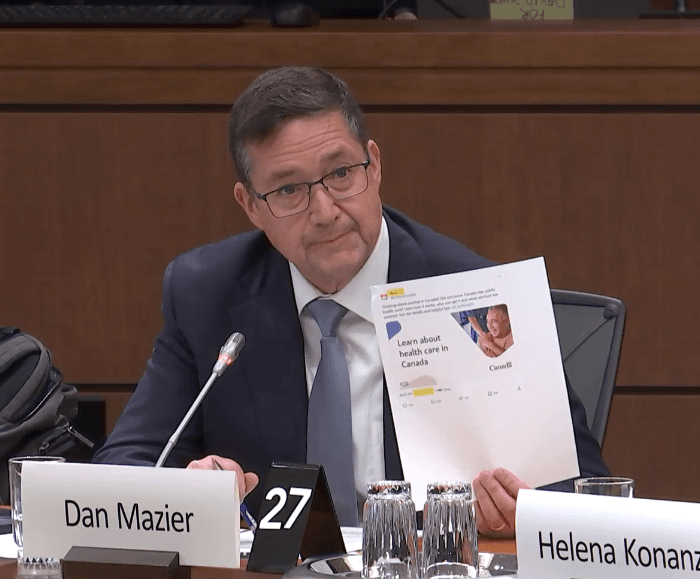
The Conservatives have raised concerns about the program providing coverage to migrants who have had their asylum claims rejected.“According to the government’s website, refugee claimants remain eligible for supplemental health benefits through this program until they leave Canada,” Conservative MP Dan Mazier said at the Feb. 12 committee meeting. “So what happens if they don’t leave Canada?”
PBO adviser-analyst Caroline Nicol told MPs that based on the information IRCC has provided the PBO, even if a refugee’s claim is rejected, their coverage only ends when the individual leaves the country.
Tory MPs also asked whether an individual facing terrorism charges, or an individual who has been ordered deported but doesn’t show up for the deportation and remains in Canada, would still be covered under the IFHP.
Nicol reiterated that according to the IRCC’s guidance, an individual’s coverage only ends when they leave Canada, even if they have been ordered to be deported or are facing charges.
“Including this new measure would reduce our estimate of the total cost for the IFHP program,” the report said.
Liberal MP Doug Eyolfson said during the committee meeting the co-payments are estimated to save between $127 million and $232 million per year.
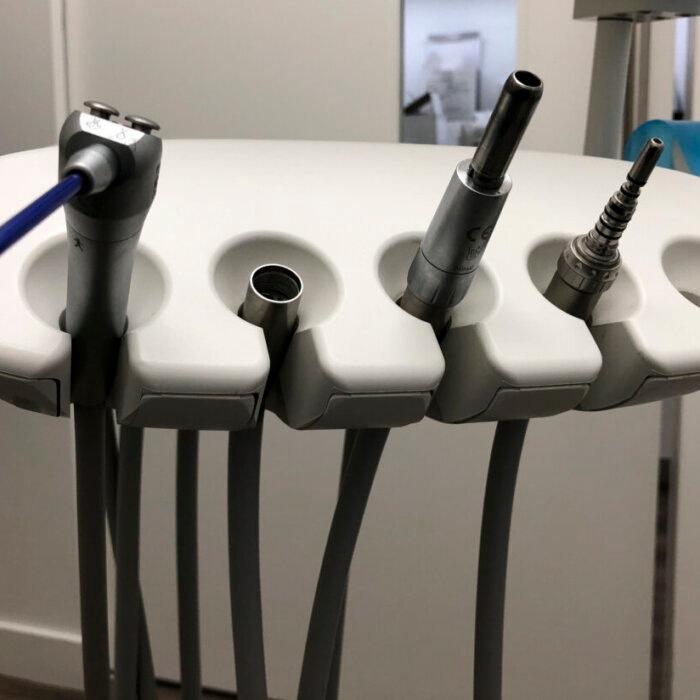
IFHP beneficiaries will be responsible for paying $4 for each eligible prescription medication filled or refilled under the program, and 30 percent of the cost of all other eligible supplemental health services, such as dental care, vision care, counselling, and assistive devices.
Jacques told MPs his projection also doesn’t account for measures to tighten immigration under Bill C-12, which is still under consideration before the Senate and has not yet received royal assent. He said his office would be “very happy to extend the analysis” to incorporate the co-payment model and the changes under Bill C-12.
Liberal MPs said during the meeting that the PBO’s report is “based on old data” since it doesn’t include this information. Liberal MP Maggie Chi said the projection numbers should therefore be “taken with a grain of salt.”