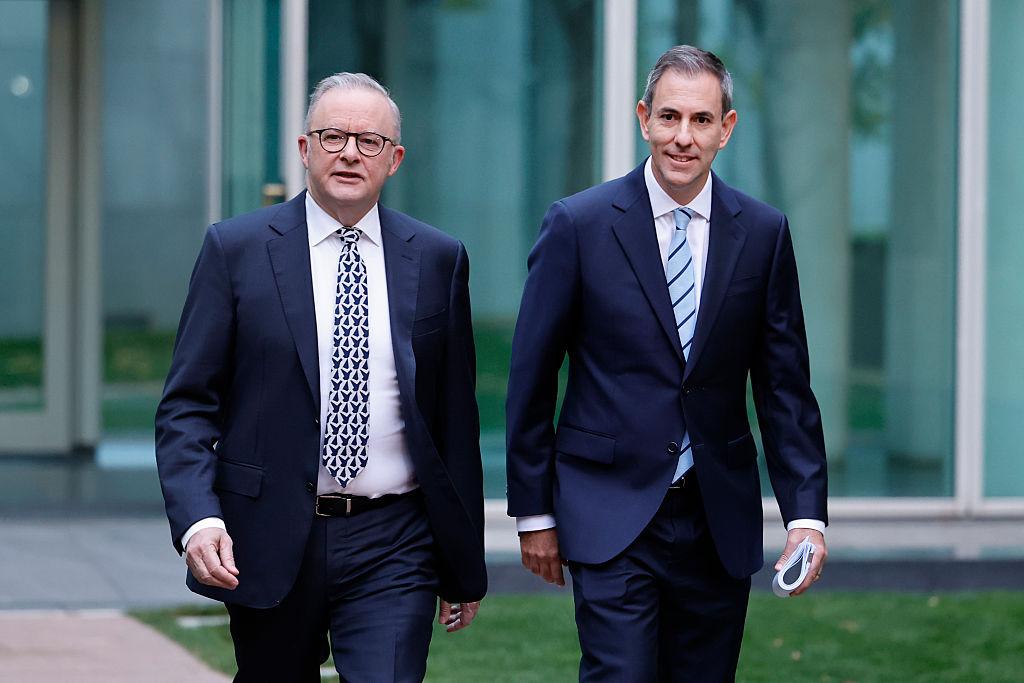
Australia’s intelligence agency has taken the rare step of publicly rebuking—and pre-empting—the national broadcaster ahead of a Four Corners episode on the Bondi Beach terror massacre.
The Australian Security Intelligence Organisation (ASIO) posted its full written response to the program’s interview questions to it online, accusing the taxpayer-funded Australian Broadcasting Corporation (ABC) of relying on “uncorroborated claims” from a supposed “single, unreliable and disgruntled source.”
The ABC’s program published on Feb. 9 is the second instalment of its two-part investigation into the Dec. 14 attack, where Naveed Akram and his father Sajid allegedly killed 15 people at a Hanukkah gathering.
A promotional clip for the episode says the program will scrutinise whether there were “failures in intelligence and counter-terrorism” in the weeks and months before the shooting, and delve into “the secret lives of the terrorists,” promising “astonishing new information” about the lead-up.
He claims that self-declared commander of ISIS in Australia, Isaac El Matari, shared a plan with the younger Naveed to attempt to smuggle firearms from Lebanon to commit a terror attack in Sydney.
There were attempts to brainwash Naveed, and Marcus claims to have reported this to his ASIO handlers—ASIO later said Marcus misidentified Naveed.
Four Corners says it could not independently verify the “substance of Marcus’s conversations with ASIO” and also of “Naveed’s interactions with the El Mataris group.”
‘Misidentified’ and ‘Untrue’, Agency Says
In its statement, ASIO said the program contained “significant errors of fact,” while noting its ability to respond publicly was limited by the ongoing investigation, criminal proceedings, and the Royal Commission on anti-Semitism and Social Cohesion.ASIO said it investigated Akram at the time and concluded he “did not adhere to or intend to engage in violent extremism at that time.”

“We stand by our assessment at that point in time,” it said.
ASIO also argued the line of questioning appeared to be driven by “the uncorroborated claims of a single, unreliable and disgruntled source.”
ASIO also accused the ABC source of repeatedly making false statements, including allegedly confusing Naveed Akram with another individual.
“The ABC’s source misidentified Naveed Akram,” ASIO said.
“That is, the source claimed Naveed Akram said and did things that were actually said and done by an entirely different person.”
“To be clear, Four Corners’ source misidentified Naveed Akram, and therefore the associated claims are untrue.”
The agency also rejected any suggestion it had received intelligence that Sajid Akram was part of discussions to establish a pro-ISIS community in Türkiye.
ASIO also pushed back on claims that Naveed was “a close associate” of known terrorists.
Agency Admits It Did Not Know of Plan in Advance
ASIO also denied claims that internal restructuring reduced counter-terrorism capability or contributed to the Bondi attack, saying it shows a “profound ignorance” of ASIO’s frameworks.It did acknowledge that it was not aware of the Bondi plot in advance.
“Tragically, ASIO did not know what the perpetrators of the Bondi attack were planning — or indeed that they were planning anything,” it said.
“This is a matter of grave regret. It weighs on us heavily.”
However, ASIO argued this did not prove intelligence was ignored, mistakes were made, or that additional resources would have prevented the massacre.
ABC Stands by Episode
An ABC spokesperson defended the reporting, saying: “Four Corners spoke to numerous people and provides a number of sources of information for a detailed picture of the Akrams’ actions and associations in the years leading up to the Bondi attack.”“The Four Corners program is a comprehensive investigation examining the events that led to the worst terrorist attack on Australian soil. Detailed questions were put to ASIO and its response is reflected in the story,” the spokesperson told media.
The Epoch Times also reached out to the publication but is yet to receive a response.
Former Australian Federal Police agent Paul Johnstone said intelligence agencies rarely confirm or deny the effectiveness of their work.
“Intelligence work is inherently complex. Assessments are made with incomplete information, sources vary in reliability, and judgments are constantly revised as new material emerges,” Johnstone told The Epoch Times.
“However, unless an intelligence agency has a holistic approach (human, signals, open source, and cyber intelligence) to a target, then they can never be certain they are 100 percent accurate in making an assessment or security assessment.”