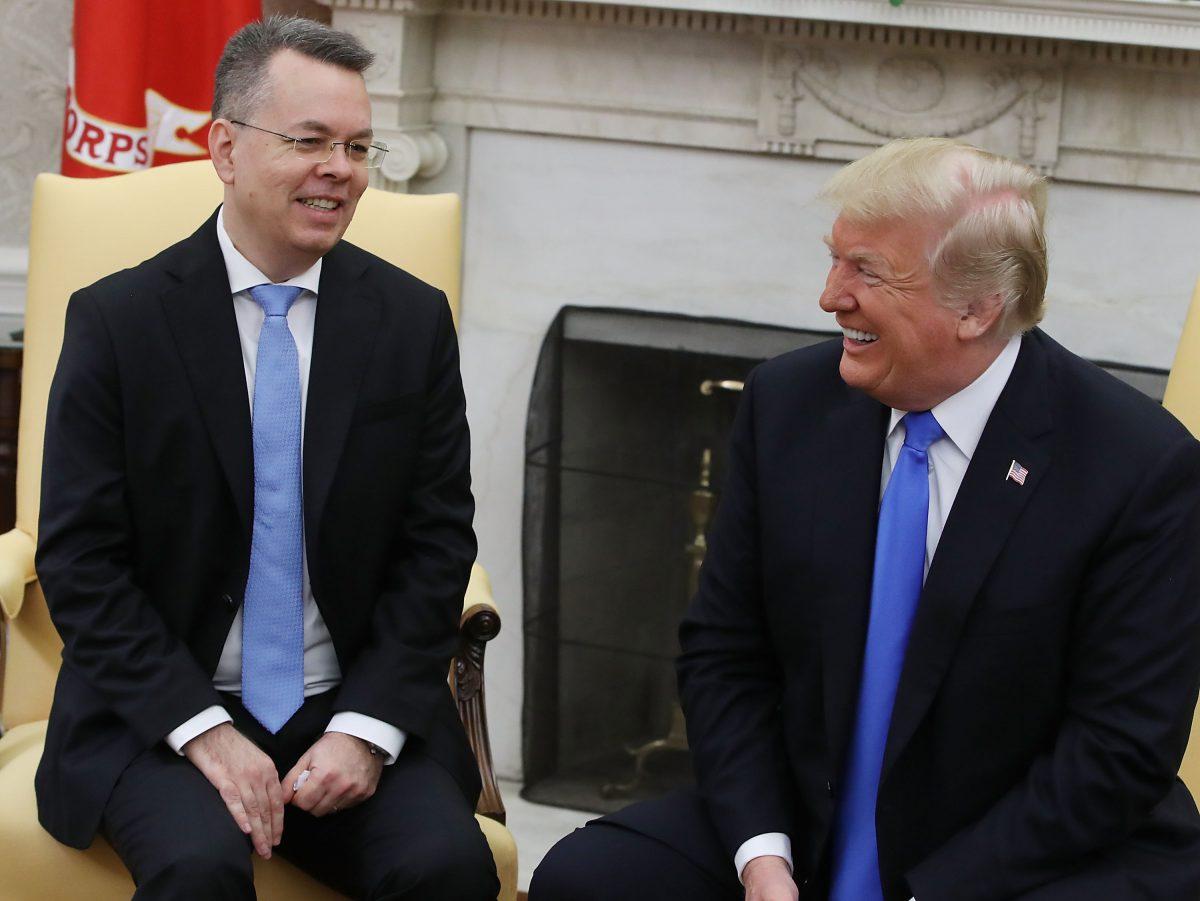
When they arrested Andrew Brunson and his wife, Norine, in 2016, Turkish officials had an order to deport the American pastor, who ran a small Protestant church in the coastal city of Izmir.
Deportations of foreign workers happened occasionally, and the process for Americans, he figured, would be relatively straightforward. Maybe it would take a day.
“But with us,” Brunson told The Epoch Times, “somebody higher up decided to hold onto us to see what would happen.”
What happened was more than the Brunsons had bargained for. Officials released Norine Brunson after two weeks but charged Andrew Brunson with military espionage and terrorism, which resulted in his imprisonment and ignited a diplomatic crisis with the United States.
As of 2022, most of Turkey’s 83 million people are Sunni Muslim, and while the republic is nominally secular, religious minorities have long faced societal and state discrimination. Compared to Orthodox and Catholics, Protestants, who number around 10,000, are a relatively new presence—and are not legally recognized.
Shortly after Brunson’s release in 2018, authorities began deporting or effectively banning foreigners connected to the church with immigration codes that labeled them a “national security threat.”
“I was the first one, and I think that it brought enough negative attention and consequences that they decided it would be easier to just ban people,” said Brunson, who now lives in the United States.
“All of the evidence they used was actually our ministry. And underlying it was the accusation of trying to divide Turkey, politically, through Christianization,” he said.
Brunson in 2019 published a memoir about his imprisonment, which he said the Turkish government used to paint Christians in a negative light.
“There was an awful lot of propaganda about me—‘the dark priest,’ ‘the terror priest, ‘the CIA priest.’ They were false,” he said, but it cast a long shadow on Christians as enemies of the state.
Such anxieties are deeply, historically rooted, and for Turkey’s tiny Evangelical community, a combination of social prejudices and intensifying pressure from the state is exacerbating an already precarious existence.
Still, Brunson says, there is a “relatively high degree” of religious freedom in Turkey today. But as the foreign missionary era comes to an end, Turkish Protestants worry this is a fragile reality.
‘The Honeymoon’
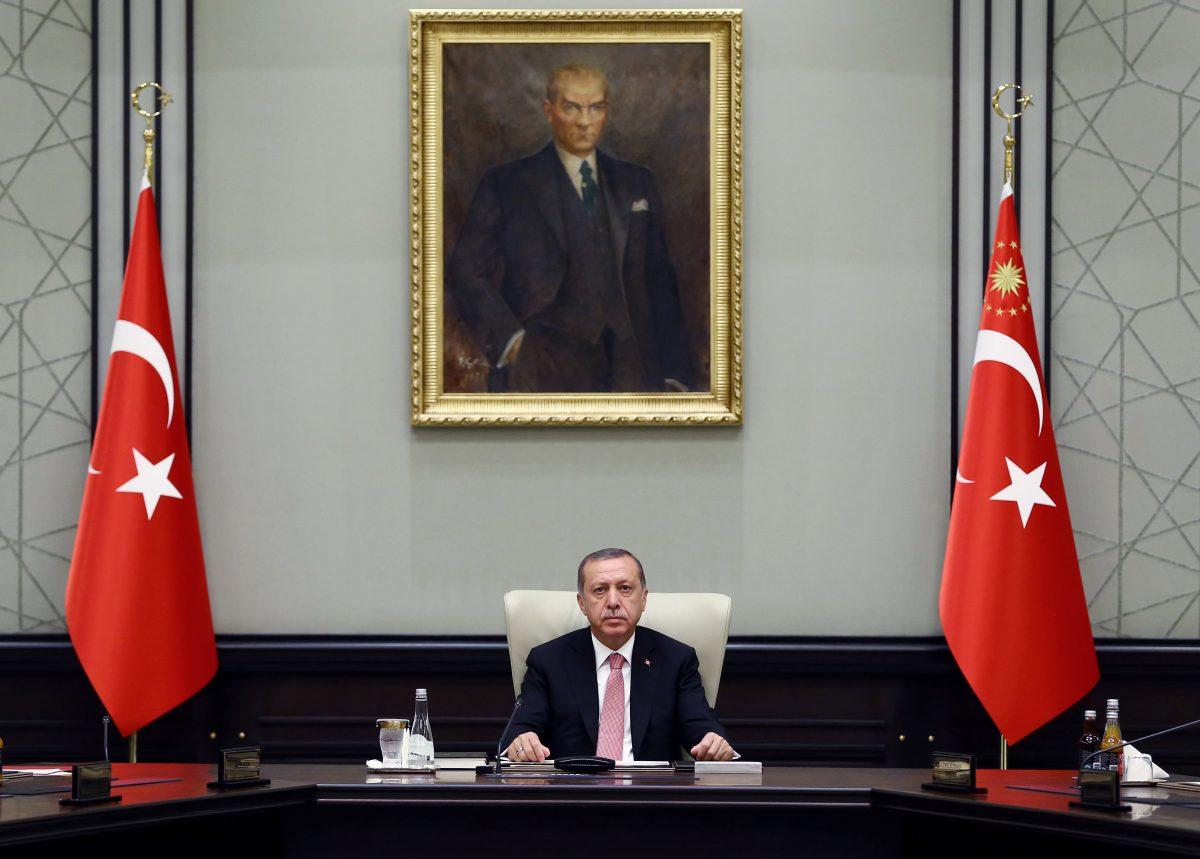
In the early years of President Recep Tayyip Erdogan’s rule—he first served as prime minister in 2003 after four years as the mayor of Istanbul—church leaders saw a kind of common cause between his Justice and Development Party, a conservative movement with Islamic roots, and their own struggle for religious freedom.“At the beginning, we were thinking [of] Erdogan and his party as kind of aligned with us. They were very positive about religious freedom because they were suffering as well,” Ozbek said. “Secularism in this country was very radical.”
Those days, he said, were also the “honeymoon” for Turkey and the European Union.
“It was the era of EU membership negotiations, so it helped us a lot. I represented Evangelicals before the government,” he said. “And the EU was thinking about religious freedom and freedom of speech in Turkey.”
But Evangelicals saw an opportunity.
“He wanted to encourage the Muslims of Turkey to boldly re-Islamize Turkish culture and not be afraid of the secularists,” David Byle, a Canadian American missionary who lived in Turkey for 19 years, told The Epoch Times.
“But what he didn’t realize is that those of us who were not Muslims could also benefit from that rule. A bunch of us said, ‘Well, we need to go out and see if he means it,’” Byle said.
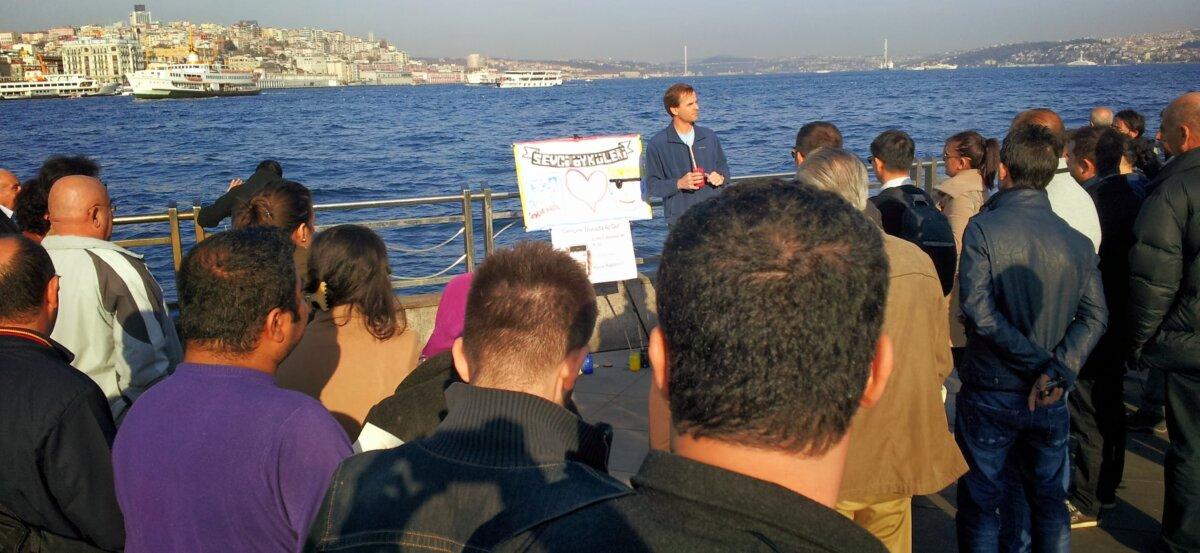
He began “classic street preaching” in downtown Istanbul.
At first, the reaction was harsh. He was arrested repeatedly.
“People said, ‘You can’t do that, this is a Muslim country.’ But we said, ‘the law says you can.’”
Slowly, Byle said, both the government and society softened to such demonstrations and realized “that this is what it means to be an open society.”
‘Totally Blindsided’
Before 2018, Byle managed to evade deportation.“I had been arrested several times and they wanted to deport me because of the street evangelism,” he said.
He opened several court cases against the government.
“We won those cases because there was nothing illegal we had done. But by the time they forced me to leave in 2018, the judicial system had either been cleansed of secular judges or they had been silenced by intimidation,” he said. “What we were doing did not change at all. But by 2018, the judges wanted to get rid of people like me.”
Another American pastor, John, who asked to be identified by a pseudonym, told The Epoch Times he and his wife considered themselves well-connected and well-insulated from the purge.
“We thought we were fairly safe and were totally blindsided,” John said, referring to being barred from reentering the country. “It was 30 years of life. We raised our kids there. I was involved in numerous charities and had to close those down as well.”
Pam and Dave Wilson, also American, were banned from the country in 2019 after nearly 40 years.
“We felt that God had called us there,” Pam Wilson said. “Particularly in the 1980s, there were not a whole lot of people who were terribly bold in reaching out.”
The Wilsons developed a Bible correspondence course that became one of the most effective ministries in the country, she said, “because it was the only public way you could actually find out about Jesus or get a Bible.”
Wilson estimates nearly half of all believers in Turkey chart their spiritual journey through the course.
“It was very fulfilling,” she said. “And then it became home. We loved it there.”
Ozbek said deportations were not initially aimed at Evangelicals, and many missionaries had overstayed tourist visas or were using illegal reasons to stay in the country. But the government soon realized the bans had an impact on Protestants.
“They saw how easy it was to create obstacles against the church.”

Legacy of Missionaries in Turkey
An increasing number of Turks are non-observant Muslims, according to recent polls, including a 2024 survey from KONDA Research.But Islam is more than a religion for Turks, Ozbek said.
“It’s a main part of their identity,” he said. “It’s a heritage which is coming from ages, from wars, from enmity between Western civilization and the Turks. So it has an effect on Turkish culture.”
In particular, a trenchant animosity toward missionaries is rooted in histories that pre-date the modern Turkish republic.
Wilson said tolerance among individuals grew in the 40 years she spent in Turkey, but stigma and suspicion of Christians remains deeply ingrained.
She recalled surveys within the past decade or so asking whether people would rather live next to a drug dealer or a Christian.
“Most people said drug dealer,” she said. “There’s a lot of fear and prejudice that is not actually based in reality.”
“Missionaries are considered a couple steps below rapists and pedophiles,” John said. “In the Turkish mind, a missionary is an agent of a foreign government whose purpose is to undermine and destroy the government. First come the missionaries, then come the businesspeople, then come the soldiers. It’s all part of a Western plot.”
It’s not so much the religious element, he said, but the political connotations attached to it.
“Being a Christian in Turkey is okay. Being active in your faith is okay,” he said, adding that deeply religious Muslims tend to respect someone who takes their faith seriously more than nominal Christians.
“It’s when they think that you’re a missionary. All of a sudden, that’s deeply evil,” John said. “And that makes you political and that makes you dangerous. They would look at a missionary like we would look at a Taliban member.”
Since then, other incidents—including a 2016 arsonist attack on the Istanbul office where Pam and David Wilson published and distributed Christian educational materials—have kept Protestants on guard.

Turkish Protestants
Like nearly all Turks, Uğur Mutlu, 40, was raised Muslim. But when he was 18, he developed a theological curiosity.“I read many books about Christianity and other religions, because Islam was not answering my questions. And after eight years of research, I decided to accept Jesus, because I found my answers in the Bible,” Mutlu told The Epoch Times.
His family were not particularly religious and didn’t object to his conversion.
“I am very lucky,” said Mutlu, now a pastor and Secretary General of the Association of Protestant Churches. “I know many people who accepted Jesus and were rejected by their families.”
Ozbek was not rejected by his family, but lost all his friends.
“People were saying my identity had changed. They said, ‘you became an Armenian by accepting Christ.’”
When Ozbek became president of the Turkish Evangelical Alliance in 1995, there were only a handful of Turkish leaders. But Protestants became more visible when they spearheaded relief activities following a devastating 1999 earthquake, he said.
“It was another turning point in our history. Even our [national] security council was thinking about us as a threat. We read from newspapers that the first threat was Islamic fundamentalists, then Kurdish separatists, and then us Evangelicals,” Ozbek said.
At the time, there were only around 2,000 believers. Now, he notes, there are more than 10,000—all of whom are Muslim converts.
“When we went there in 1993, most of the churches had been started by foreigners,” Brunson said. “And the goal was always to have Turkish leadership.”
Now, as Turkish Protestants take up the mantle, there is some apprehension that, as foreigners have been targeted and forced out, they will be next.
‘No Legal Protestant Church’
Evangelical Christians and other non-Muslim minority religions face a range of challenges: They cannot train clergy or open religious schools—hence the reliance on foreign clergy—can only legally organize as foundations or associations, struggle to find spaces to congregate, and are not allowed their own cemeteries.“There is no legal Protestant church in Turkey,” Mutlu said. “So our churches are becoming foundations and associations. But if someone complains about you and you tell them you are practicing Christianity in this association, they will just come and close the church.”
Generally, he said, society is “almost always” against the church.
“When we are starting to gather in a building, we try to be very careful about our relationships with the neighbors, because if we get any complaints we can be in trouble,” Mutlu said.
According to the Association of Protestant Churches, there are 214 known congregations in 2024; only 12 worship in a traditional historical church and 27 have their own stand-alone or independent building. The rest use shared buildings, rented facilities, or private homes.
A Last Resort
Advocates say cases brought on behalf of Christians fighting deportation are predictably lost in lower courts and go through several appeals before landing with the nation’s constitutional court. Meanwhile, several cases that made it to the European Court of Human Rights have stalled.Turkey is party to the European Convention on Human Rights, and the court’s decisions are binding, although some advocates say Erdogan has a recent tendency of not implementing the “essence of a decision.”
Ken Wiest lived in Turkey legally for more than 30 years and had a valid residence permit at the time he was barred from reentering, a decision based on undisclosed information obtained by the National Intelligence Agency, his lawyers claim.
Advocates told The Epoch Times they were hoping the court would consider whether Turkey violated their clients’ religious freedom, but so far is only considering violations related to disruption of family life and whether Wiest benefited from fair procedure in domestic courts.
“It’s possible they’ll say this is an immigration issue and outside our jurisdiction. But we’re very hopeful they will not say that because the whole point is that Turkey is hiding behind that immigration line of argumentation so they can basically kick out all the missionaries and not have to provide any proof as to why they’re doing so,” Zorzi said.
Even at this level, she said, lawyers cannot see the government’s file on the individuals in question.
“Imagine you’re charged with a crime. You need to be defended and there’s no evidence presented against you. You don’t even know what you did to allegedly commit this crime. That’s the situation all these foreign missionaries in Turkey are finding themselves in,” Zorzi said.
Advocates say they caught a glimpse of the government’s strategy when a 2019 decision on an appeal brought before the Turkish Constitutional Court referenced a state intelligence report.
‘They Don’t Talk About It’
Evangelicals, Ozbek said, appear to be lost in any discussion of Turkey’s human rights obligations.“They don’t talk about it. They write some annual report, and most of the time they don’t mention Evangelicals because we don’t have any political power. They mention the Greek Orthodox church, their struggle is long lasting, and Armenians, because [of] their connection with the U.S. and France. But nobody is talking about Evangelicals.”
Protestant leaders told The Epoch Times they had hoped Pope Leo XIV’s recent historic visit to Turkey would have been more inclusive. The Pontiff preached Christian unity and focused on bridging historic divides between Catholics and Orthodox Christians, but didn’t meet with any Protestant leaders.
“Everyone tends to have a blind eye on Turkey,” a human rights advocate told The Epoch Times. He spoke on condition of anonymity, as he fears government retribution. “In the old days, 10 to 15 years ago, everyone listened. Now no one does, not even in Europe,” he said.
Brunson ascribes this to a shift in the last decade or so, in which religious freedom has become coded as a “right wing” issue.
“You know, they’re the ones who care about religious freedom and therefore it’s something the left views with suspicion,” he said.
In the past, he noted, religious freedom was more broadly viewed as a human right.
“The West has historically driven the interest in that. But you don’t see them doing it anymore,” Brunson said. “They’re just not interested. And so, as that happens, there’s going to be increased persecution.”
As the foreign missionary era ends in Turkey, Brunson said he is inspired by many of the country’s own young leaders.
“The church is losing people with valuable experience who have a deep love for the people there. But it’s also going to be okay. It’s going to stand on its own feet.”