This copy is for your personal, non-commercial use only. Distribution and use of this material are governed by our Subscriber Agreement and by copyright law. For non-personal use or to order multiple copies, please contact The Epoch Times Reprints.
Prime Minister Mark Carney and U.S. President Donald Trump engage in a meeting at the White House in Washington, D.C., on May 6, 2025. The Canadian Press/Adrian Wyld
Ottawa is paying close attention to the legal battle over tariffs in U.S. courts that could have major implications for Canada.
A day after the United States Court of International Trade struck down parts of U.S. President Donald Trump’s trade agenda, a federal appeals court temporarily reinstated the tariffs on May 29.
The New York-based federal trade court had ruled on May 28 that Trump exceeded his authority when he placed tariffs on other countries using the International Emergency Economic Powers Act (IEEPA). That legislation, enacted in 1977, gives the president the authority to regulate foreign commerce after declaring a national emergency.
The Trump administration announced shortly after the trade court’s ruling that it was appealing the decision.
The next day, on May 29, the U.S. Court of Appeals for the Federal Circuit issued an immediate administrative stay of the decision while it considers Trump’s appeal.
While the trade court’s decision had been welcomed by Ottawa, it only applied to some of the tariffs the United States placed on Canada, namely those related to Trump’s border security and drug trafficking concerns.
Trump could decide to continue tariffing Canada through other means, such as Section 232 tariffs, says Eric Miller, president of the Rideau Potomac Strategy Group.
Section 232 of the Trade Expansion Act of 1962 allows the U.S. president to impose tariffs or other restrictions on certain imports through executive action when the quantity or other situation associated with those imports is deemed to threaten national security. It requires the Commerce Department to investigate and submit a report within 270 days.
“What the Court of International Trade said is, ‘You’re not really able to do that, but we’re not going to comment on your ability to use Section 232, Section 301, these other mechanisms,’” Miller told The Epoch Times in an interview. Section 301 of the Trade Act of 1974 allows for unlimited tariffs against countries deemed to have unfair trade practices.
White House press secretary Karoline Leavitt said on May 29 that the trade court’s ruling has not impacted Trump’s trade agenda.
“These judges failed to acknowledge that the President of the United States has core foreign affairs powers and authority given to him by Congress to protect the United States economy and national security,” she said.
Other Tariffs, Trump’s Options
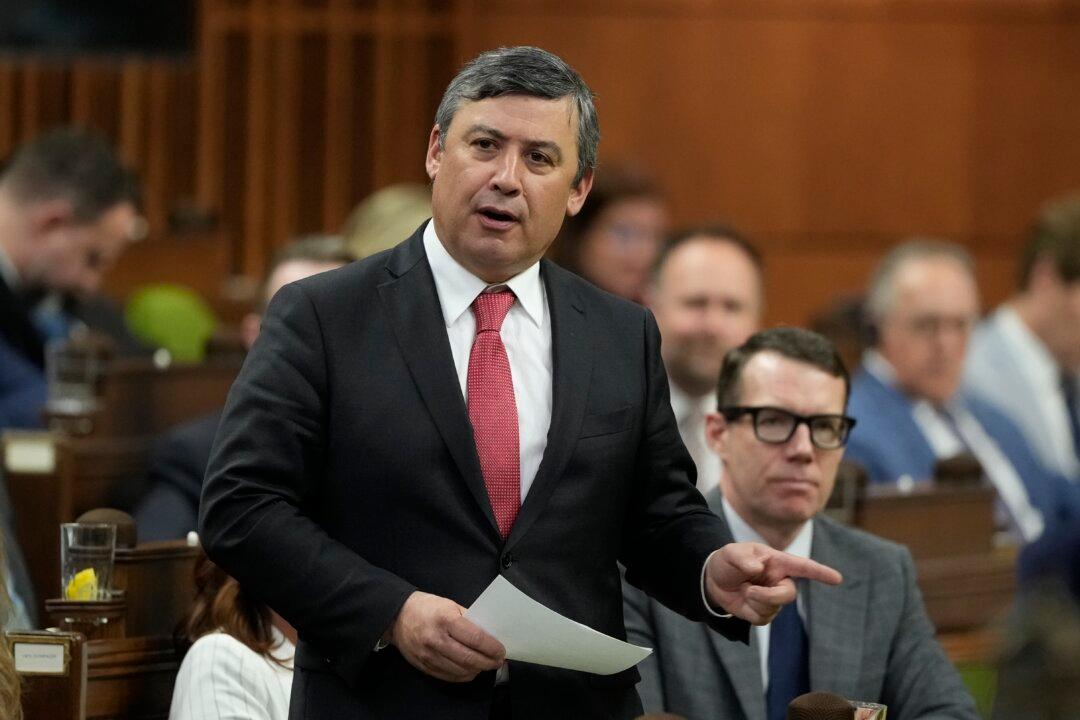
Prime Minister Mark Carney on May 29 commented in the House of Commons on the ruling by the U.S. Court of International Trade, saying that the Canadian government “welcomes” the decision and that it is “consistent with Canada’s long-standing position that the U.S. IEEPA tariffs were unlawful as well as unjustified.”
Carney added that Canada remains “profoundly and adversely” affected by the Section 232 tariffs on steel, aluminum, and the auto sector.
Even if the courts ultimately strike down the IEEPA tariffs, the Trump administration “may find other ways to impose tariffs and ignore the court ruling,” Lakehead University economics professor Livio Di Matteo told The Epoch Times.
In March, Trump imposed universal 25 percent tariffs on foreign steel and aluminum. Later in the month, he put a 25 percent tariff on automobiles and car parts made outside the United States, with exemptions later carved out under the USMCA free trade deal.
To fulfill his tariff agenda, Trump could also use Section 122 of the Trade Act of 1974, which allows for emergency tariffs during economic crises such as large trade deficits, capital flight, or unsustainable foreign debt. This would allow for temporary tariffs of up to 15 percent for 150 days, but would not require a formal investigation.
The other measure, Section 301, which relates to using tariffs on countries deemed to be engaging in unfair trade practices, would require an investigation beforehand and would thus take several weeks or months to complete. The tariffs brought in using this measure expire after four years unless they are renewed.
The previous Trump administration imposed Section 301 tariffs on China between 2018 and 2020 after finding the country engaged in practices like stealing intellectual property and technologies. While the initial tariffs ranged from 7.5 percent to 25 percent tariffs on US$370 billion of imports, a review in 2024 resulted in further tariffs of up to 100 percent on certain products.
Trump Tariffs on Canada
For now, Miller says that since the federal appeals court has reinstated the tariffs, the case will likely go to the Supreme Court. He said this court case will be relevant to Canadians, as it will ultimately determine whether Trump’s “signature policy is being overturned by his judiciary.”
The U.S. president has so far shown no indication he will be removing the tariffs on Canada anytime soon. During a meeting with Carney in the Oval Office on May 6, Trump said there was nothing the prime minister could say to get him to lift the tariffs, adding, “That’s just the way it is.”
Carney said following the meeting that the trade discussions between the two leaders had been “very constructive” and “wide-ranging.” He said they will have more discussions in the future, including at the G7 Summit set to be held in Alberta from June 15 to 17.
Trump implemented tariffs against Canada, Mexico, and China soon after taking office, and later announced sweeping “reciprocal tariffs” on most other U.S. trade partners.
Trump said in January that he would place 25 percent tariffs on Canada and Mexico due to border security concerns—namely, the flow of illegal immigrants and drugs into the United States. But he implemented a 30-day pause on Feb. 3 after speaking with Mexican President Claudia Sheinbaum and then-Prime Minister Justin Trudeau, who proposed border-related concessions.
On March 4, Trump went ahead with the 25 percent tariffs, but two days later created a carve-out for products under the United States-Mexico-Canada Trade Agreement, applying to around 38 percent of imported Canadian goods and roughly 50 percent of Mexican imports. While the carve-out was meant to apply for 30 days, the U.S. administration has kept this in place for several months.
Trump also slapped reciprocal tariffs on most countries on April 2, a day that he labelled “Liberation Day” for America. These tariffs affected most countries and ranged from 10 percent to as high as 50 percent.
On April 9, Trump announced that he would pause the reciprocal tariffs for 90 days and instead put a 10 percent base tariff rate on all countries except Canada and Mexico, which retained their 25 percent rate in addition to the carve-outs—also maintaining the tariffs on Canadian energy and potash at a reduced rate of 10 percent. China, meanwhile, saw its tariff rate rise even further to a whopping 145 percent.
China and the United States have since reached an agreement to lower their tariffs. The United States currently has 30 percent tariffs on Chinese goods, while China has 10 percent tariffs on American goods.