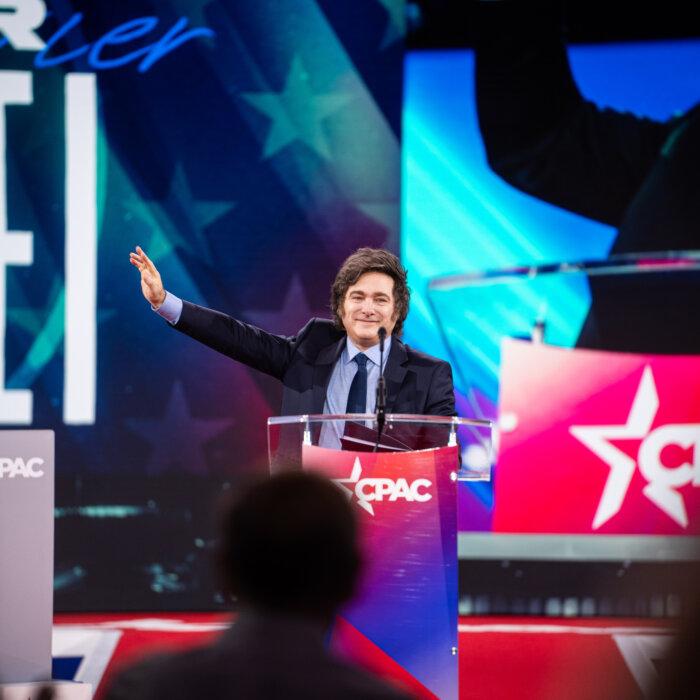
President Donald Trump will host Argentine President Javier Milei at the White House on Oct. 14, marking their second meeting in a month.
Their meeting at the Oval Office comes as Milei wrestles with market upheaval and braces for midterm elections. Stateside, the Trump administration attempted to stabilize the market ship by extending a financial lifeline to the Milei government.
Reforms Come to Buenos Aires
“Afuera [out]!” was the rallying cry of Milei and his La Libertad Avanza—a political coalition of anti-establishment sentiment and libertarian economics—during the election.Within his first year, he cut the number of ministries in half, eliminated tens of thousands of public sector workers, and launched sweeping tax reforms by eliminating 90 percent of taxes and keeping only the essential ones—income, value-added, and trade-related levies.
He introduced market liberalization measures, including the elimination of price controls and rent control laws, the reduction of regulatory burdens on businesses, and the privatization of state-owned companies.

The president also cut subsidies for various sectors, reduced welfare spending, and froze funding for universities.
While he has yet to implement pension reforms, his administration has vetoed multiple legislative efforts to enhance pension and disability spending. Milei has also said that further pension reform efforts will not be on the agenda until broader labor market issues are addressed.
US Lifeline for Argentina
Despite the economic and fiscal gains Argentina has enjoyed over the past two years, the country has faced market upheaval since early September.The Buenos Aires provincial election was held on Sept. 7, leading to Milei’s first political defeat at the hands of the left-leaning Peronist coalition Fuerza Patria. Milei acknowledged the results as a “clear defeat” and committed to staying the course by enacting his agenda.
The Argentine government bolstered steps to stop the bleeding and defend the peso as a cash crunch deepened.
The Trump administration noticed what was happening, prompting officials to intervene.
“The U.S. Treasury is prepared, immediately, to take whatever exceptional measures are warranted to provide stability to markets,” he wrote on social media.

“Argentina faces a moment of acute illiquidity. The international community ... is unified behind Argentina and its prudent fiscal strategy, but only the United States can act swiftly. And act we will.”
Bessent also pushed back against claims that the White House was bailing out Milei.
“It’s not a bailout at all,” Bessent said in an Oct. 9 interview with Fox News host Laura Ingraham.
According to the senior administration official, no money is changing hands, and the Treasury Department’s Exchange Stabilization Fund—a special emergency reserve account created in 1934—has never lost funds.
“I was in the investment business, mostly currencies, for 40 years,” he said. “You’re supposed to buy low, sell high. And the Argentine peso is undervalued.”
Midterm Elections
Later this month, Milei will face his first midterm election. Half of the seats in the National Congress—127 in the lower house and 24 in the upper house—are up for grabs.Predictive markets indicate that Milei’s La Libertad Avanza is gaining momentum as election day approaches and is expected to secure the most seats. The Peronist–Kirchnerist coalition has seen its momentum fade this month.
And this is what the U.S. administration wishes to see.
“The plan is, as long as President Milei continues with his strong economic policies, to help him, to bridge him to the election,” Bessent said. “We are not going to let a disequilibrium in the market cause a backup in his substantial economic reforms.”
Argentine voters head to the polls on Oct. 26.