Argentina Signs Critical Mineral Supply Agreement With United States

The Pentagon already maintains a critical minerals stockpile, stored at six locations nationwide, for use in a national emergency.
Argentina Signs Critical Mineral Supply Agreement With United States
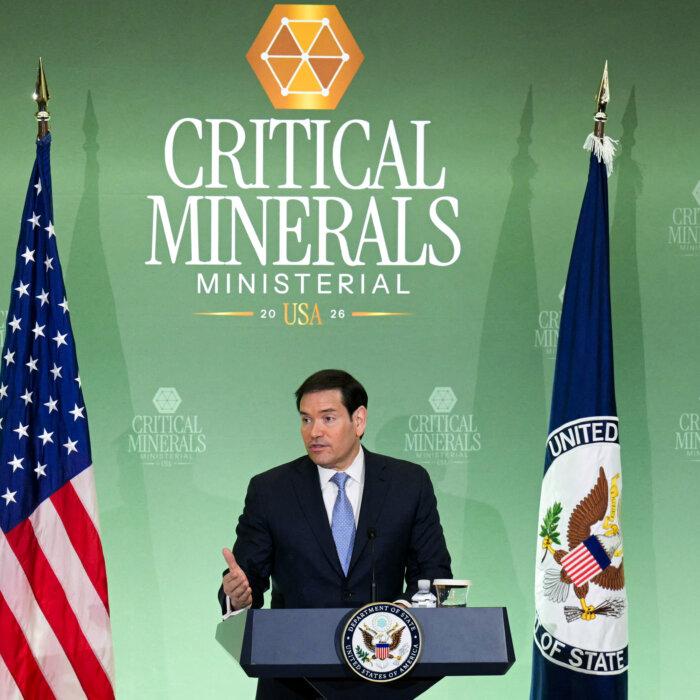
Secretary of State Marco Rubio speaks during a press conference at the inaugural Critical Minerals Ministerial meeting at the Sate Department in Washington, on Feb. 4, 2026. Oliver Contreras / AFP via Getty Images
|Updated:
0:00

Argentina and the United States signed an agreement on the supply of critical minerals on Feb. 4, the Argentine foreign minister has announced.

In a statement on X, the ministry said that the deal will drive significant economic growth for Argentina, whose mineral exports reached $6 billion last year.

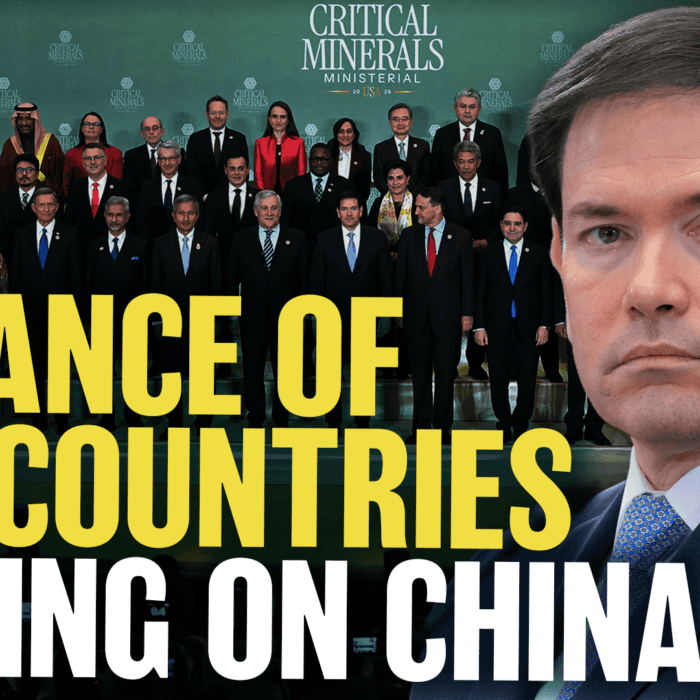
The agreement was among several deals signed at a critical minerals summit in Washington on Wednesday, hosted by Secretary of State Marco Rubio.
Rubio welcomed delegations from 54 countries from Europe, Africa, Asia, and Latin America, including Britain, France, Germany, Israel, Australia, Canada, India, and Saudi Arabia.

“The goal here is very simple. We all understand that having reliable global supply chains in critical minerals and processed and finished materials are critical to everything we do,” Rubio said.

Also present at the summit were Vice President JD Vance, Treasury Secretary Scott Bessent, Interior Secretary Doug Burgum, Energy Secretary Chris Wright, and U.S. Trade Representative Jamieson Greer.
“At the heart of what we’re trying to do all across the administration is recognize that this is something where our alliances and our friendships can really help one another,” Vance told the summit.

‘Rowing in the Same Direction’

“We’re all on the same team. We’re all rowing in the same direction,” Vance said.
The summit followed President Donald Trump’s announcement on Feb. 2 of “Project Vault,” a new U.S.-backed strategic stockpile of critical minerals designed to shield American manufacturers from supply disruptions tied to geopolitical shocks or export controls.
Beijing announced a major rule change in 2025 that would subject all sales of critical minerals mined or processed in China—which could account for up to 90 percent of global supply—to review and approval by Chinese authorities.
The Pentagon already maintains a critical minerals stockpile, stored at six locations nationwide, for use in a national emergency.

Argentine President Javier Milei promised drastic changes to address his country’s economy, which was suffering from rampant inflation.

In October 2025, Milei’s La Libertad Avanza party won a decisive victory in the midterm elections.
Milei’s economic approach has gained Trump’s support, and the administration has offered financial incentives to Buenos Aires if it continues on its current policy trajectory.

The Argentine Foreign Ministry, in its Feb. 4 statement, said that the agreement signed with the United States “aims to consolidate stronger and more diversified value chains, create a favorable environment for long-term productive investments, and respond to growing global demand and the application of cutting-edge technologies.”

It added that there would be cooperation on geological mapping, recycling, and the management of critical materials.

Buenos Aires reported that its mining exports rose 30 percent last year and that the country produced a record 110,000 tons of lithium carbonate.

“Argentina is on track to increase its total exports to around US$100 billion over the next seven years, with a growing share from mining, which could exceed US$20 billion during that period and reach more than US$30 billion by the end of the next decade,” the foreign ministry statement said.

“In turn, mining and energy, due to their close link, could generate a combined export surplus of close to US$50 billion annually in the coming years, with the potential to reach US$75 billion by the end of the decade.”

The United States also signed framework agreements on Wednesday with Uzbekistan, Ecuador, Guinea, Morocco, Paraguay, Peru, the Philippines, the United Arab Emirates, and the Cook Islands.
Google LogoMark Us Preferred on Google
Chris Summers
Chris Summers
Author
Chris Summers is a UK-based journalist covering a wide range of national stories, with a particular interest in crime, policing and the law.