An American man who was convicted of killing a New Brunswick police officer nearly 40 years ago has been transferred to the United States.
The Canada Border Services Agency (CBSA) confirmed that Anthony Philip Romeo, 62, was turned over to the United States Customs and Border Protection on Dec. 29.
Over the past year, CBSA officers have removed nearly 19,000 foreign nationals from Canada for violating the Immigration and Refugee Protection Act (IRPA), a CBSA spokesperson told The Epoch Times in a Dec. 31 email.
Of the 19,000 removals, 841 were subject to “serious inadmissibility” due to national security, organized crime, human rights violations, and criminality, the spokesperson said.
Several media outlets reported that Romeo was recently granted day parole. The Epoch Times reached out to the Parole Board of Canada for confirmation, but a spokesperson said the board is unable to comment on specific cases.
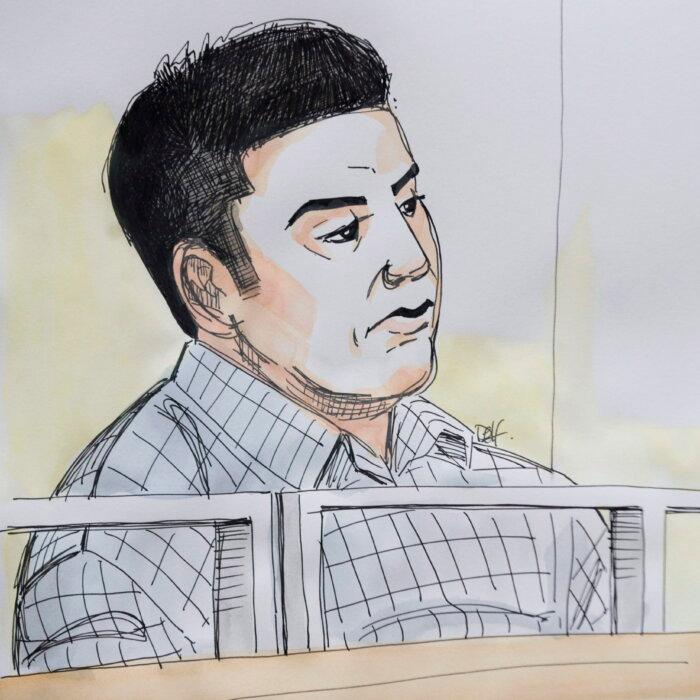
A psychiatrist testified during Romeo’s 1988 trial that he had thought he was being followed by a monster, and believed Aucoin was that monster.
The 1987 traffic stop was the third time Romeo had been stopped by police for speeding in Quebec and New Brunswick after fleeing the United States where he was wanted for murder in the state of New York.
While Romeo became eligible for full parole in 2012, the Parole Board of Canada said at the time that he posed a risk to the public.
Romeo had another parole hearing in 2022, where the board was told that if released, Romeo would be deported to the United States where he would be free and not subject to parole or other forms of supervision.
The Correctional Service of Canada recommended against Romeo’s release, while noting that Romeo had been taking medication for paranoid schizophrenia and engaging in other treatment and support programs.
Romeo told the parole board in 2022 that he was abusing alcohol and drugs and experiencing mental health issues at the time of Aucoin’s murder in 1987. He told the board he planned to use his support network and had no intention of ever drinking alcohol, using drugs, or owning a gun again. He apologized for his actions and said he believed prison had allowed him to turn his life around.
He also expressed concern that he would be denied parole because there was no arrangement for parole to be offered upon his potential return to the United States. “Maybe if the board denies my parole, my case team could find a way to put me on parole in New York and maybe a transfer to a prison in New York,” he said at the time.
The board denied his parole, saying Romeo would still have posed an undue risk to society if released.
Now that Romeo has been transferred to the United States, he is outside Canadian jurisdiction and is not expected to be subject to any form of supervision. He will be unable to return to Canada.