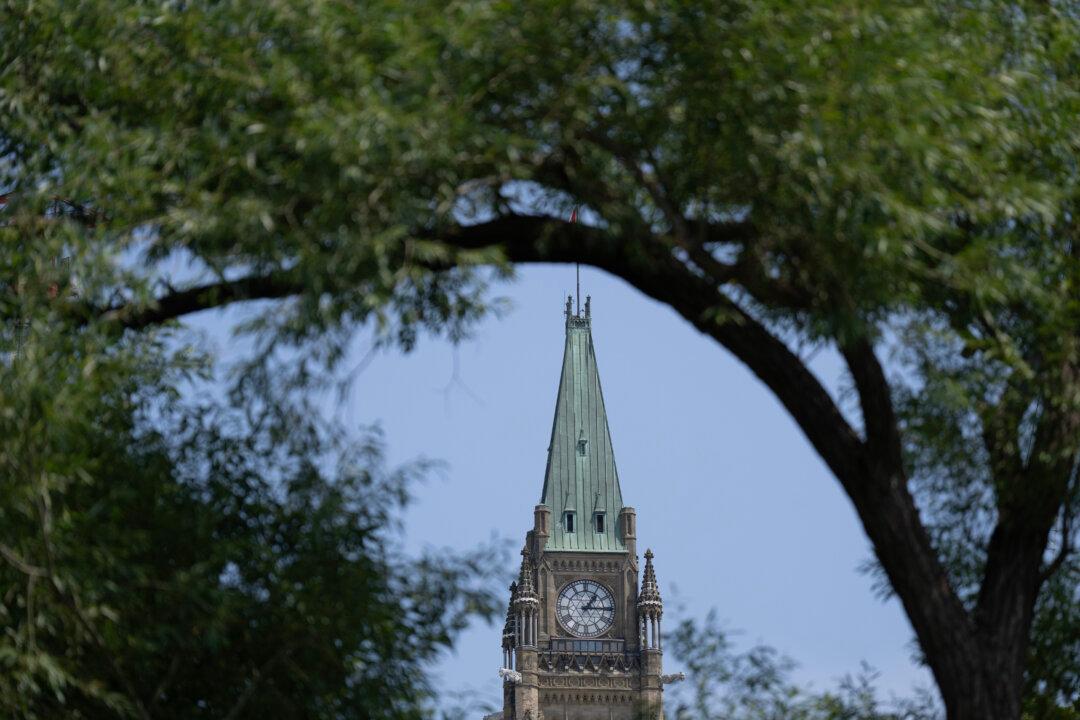
Alberta Premier Danielle Smith is describing Ottawa’s bid to limit provincial use of the notwithstanding clause as a risk to “national unity.”
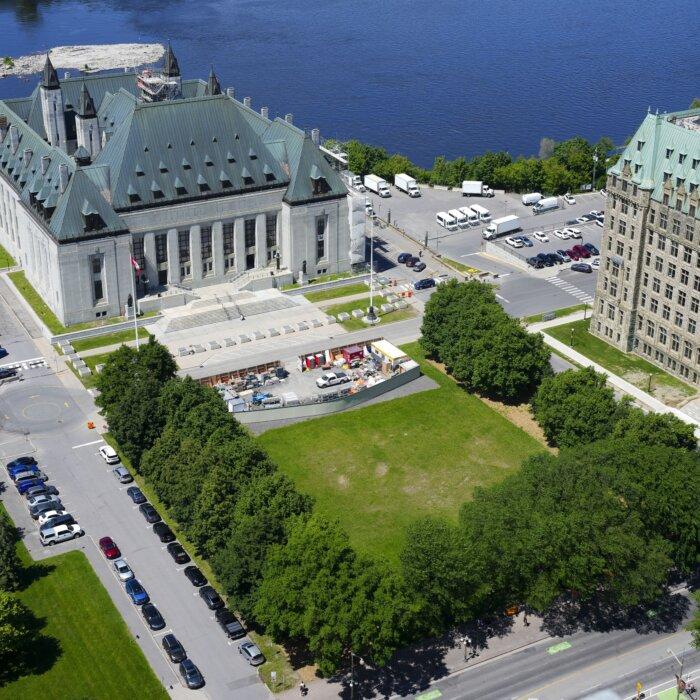
Smith spoke out on Sept. 18 against the federal government’s asking the Supreme Court of Canada to set limits on the manner in which provinces can use the notwithstanding clause, which is part of the Charter of Rights and Freedoms.
The notwithstanding clause can be used by provinces to shield legislation from constitutional challenges based on some sections of the Charter for five years.
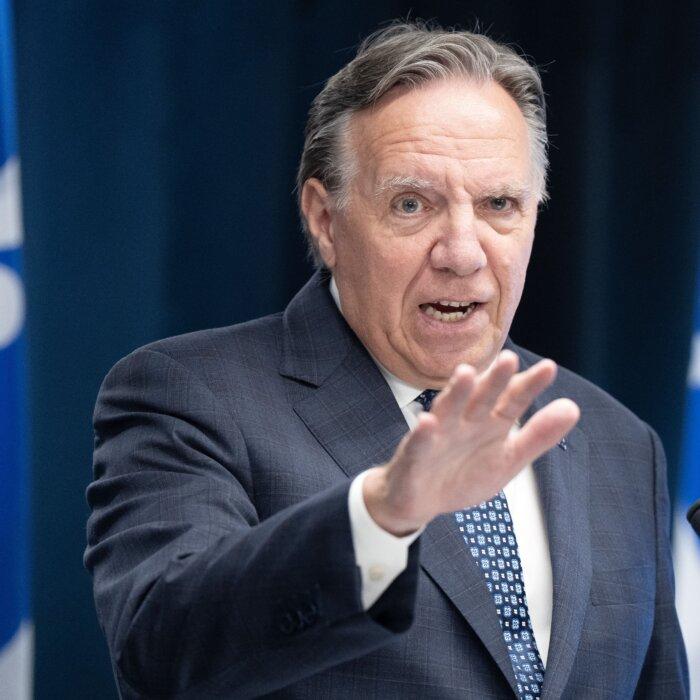
The request from Ottawa comes as Quebec is considering using the clause to override legal challenges of Quebec’s secularism law, known as Bill 21. Premier François Legault has also said he would consider using the clause to push through his government’s upcoming public prayer ban legislation.
She described the clause as “an unassailable provincial constitutional right” and criticized the federal government for trying to prevent provinces from using it.
“We are extremely disappointed that the Federal Government would risk national unity and a foundational principle of our constitution by attempting to attack the use of the notwithstanding clause by a sovereign provincial government in this manner and request they withdraw their appeal to the Supreme Court immediately,” she wrote.
Prime Minister Mark Carney defended his decision to limit use of the clause during question period in the House of Commons on Sept. 17, after being questioned by Bloc Québécois Leader Yves-François Blanchet.
“One of the most important responsibilities of the Government of Canada is to defend the Canadian Charter of Rights and Freedoms,” Carney said.
Alberta to Use Clause?
Alberta is looking to use the notwithstanding clause to amend three laws that affect transgender people, according to a leaked government memo obtained by The Canadian Press.The three laws introduced last year set guidelines for students changing their names or pronouns in school, prohibit transgender girls from competing in amateur female sports, and restrict access to “gender-affirming” health care.
LGBT advocacy groups are challenging in court Alberta’s school pronoun law and rules that limit gender transition for minors, calling them discriminatory.
The law preventing doctors from offering so-called gender-affirming treatment such as puberty blockers and hormone therapy for youth younger than 16 has yet to take effect because of a temporary court injunction issued in June. Alberta appealed the injunction last month.
Smith has previously said the province would use the clause as a last resort to protect the government’s restrictions on gender transition for minors. The recently obtained memo indicates the province is preparing to follow through on that pledge.
The internal document dispatched Sept. 10 by the justice department requests that other departments compile information in accordance with a directive from Smith’s office to activate the clause.
“As you are aware, the premier’s office has directed that legislation be developed for the fall legislative session to amend the following pieces of legislation to permit each to operate notwithstanding the Canadian Charter of Rights and Freedoms and the Alberta Bill of Rights,” says the memo from Malcolm Lavoie, deputy minister of justice. “This legislative initiative is highly sensitive and should be approached with the utmost confidentiality.”
The document directs officials to prepare background information regarding legal ramifications and other alternatives that should be considered. The plan indicates that Smith will be briefed in advance, followed by the presentation of the proposal to the cabinet on Oct. 21. The house will reconvene with a throne speech two days later.
Provincial Clause Use
Quebec has used the notwithstanding clause several times, as have other provinces.Quebec did not sign the Constitution Act 1982 and later enacted legislation that incorporated a standard notwithstanding clause into all existing laws at that time. The clause continued to be included in every new law until Dec. 2, 1985, when a new government put an end to the practice.
The province used the clause in 1988 in response to a ruling by the Supreme Court of Canada, which found that Quebec’s law allowing only French on commercial signs was in conflict with freedom of expression.
The Legault government used the clause in 2019 to preemptively pass Quebec’s secularism law, Bill 21. The law bans teachers, judges, police officers, and jail guards from wearing religious symbols while at work. Legault’s administration used it again in 2021 to pass Bill 96, a law that amended Quebec’s Charter of the French Language.
Ontario and Saskatchewan have also invoked the clause.
Doug Ford’s PC government used it in June 2021 to limit third-party election financing, and again in 2022 when negotiating a new contract with 55,000 Ontario education workers, but repealed it days later. The province also threatened its use in 2018 when reducing the number of city council seats in Toronto.