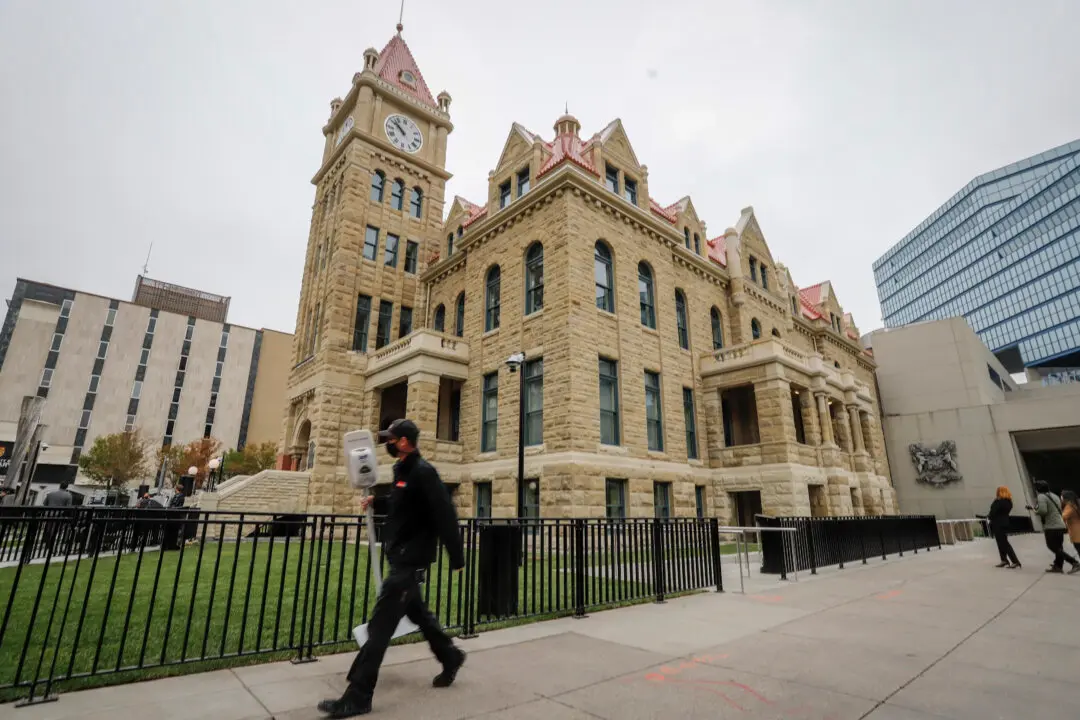
Alberta’s teachers union has filed a legal challenge to the provincial government’s back-to-work legislation that brought a three-week teachers strike to an end.
The teachers strike started on Oct. 6 after talks broke down between the Alberta Teachers’ Association (ATA) and the Teachers’ Employer Bargaining Association (TEBA), which bargains on behalf of school boards. Teachers said they were looking for a salary increase, and wanted the province to address “classroom complexity” issues.
Premier Danielle Smith’s government passed Bill 2, the Back to School Act, on Oct. 28, legislation that forced teachers back to the classroom, and imposed a collective bargaining agreement initially put forward by the province and the union, which had been rejected by teachers in a vote. The government invoked the notwithstanding clause to prevent legal challenges from blocking the legislation.
The union said it was also seeking an injunction that would prevent the Act from being enforced until the court makes a decision about the legal challenge.
ATA president Jason Schilling said the government’s decision to invoke the notwithstanding clause set a “precedent” that threatens the freedoms and legal protections of Albertans.
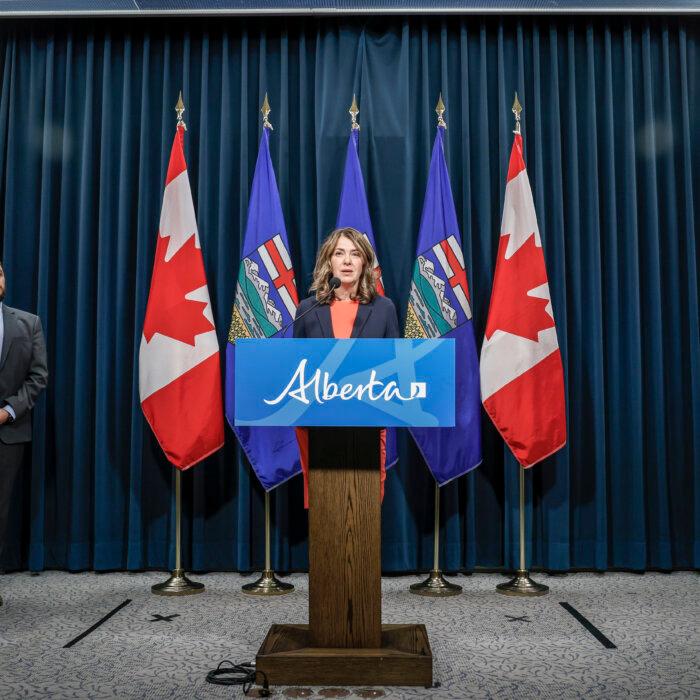
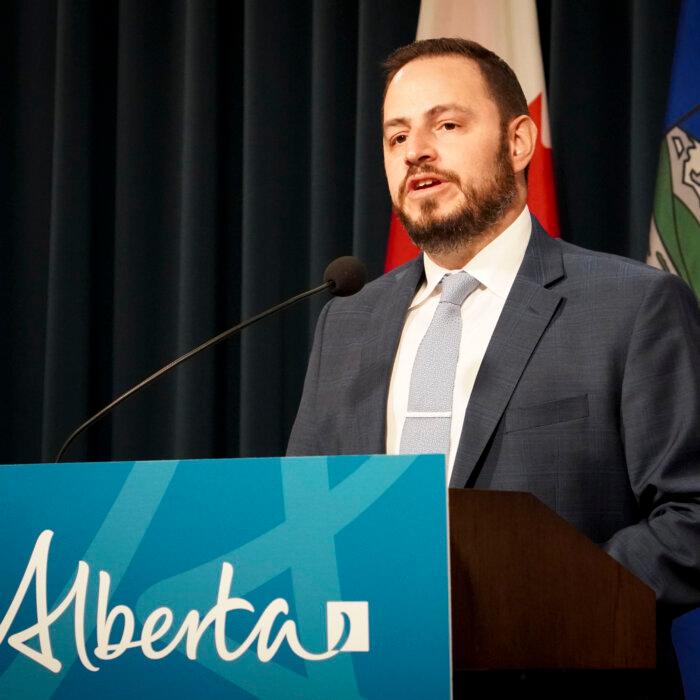
“Bill 2 represents such a serious intrusion on collective bargaining rights of teachers that teachers must oppose it, not just on their own behalf, but all Canadians whose government might try and perpetrate similar injustices,” he said.
“In this action, teachers will ask the court to declare that the government’s use of the notwithstanding clause was improper and invalid,” Schilling told reporters at a Nov. 6 news conference.
The notwithstanding clause is a Canadian constitutional provision contained in Section 33 of the Charter of Rights and Freedoms, and permits governments to override Charter rights if it is deemed necessary by the provincial or federal government. It protects legislation from legal challenges for up to five years, and can be renewed.
Alberta’s Justice Minister Mickey Amery said in a statement that the province would “vigorously” defend itself in court.
“We invoked the notwithstanding clause because students and parents deserve full certainty that children could return to the classroom and stay in the classroom,” he said.
Amery added the government remained focused on “long-term stability in education, fair compensation for teachers, and protecting the best interests of students.”
The case is scheduled to be heard Nov. 20 in Edmonton Court of King’s Bench.
Teachers previously voted against the collective agreement that has now been imposed on them. Under the agreement terms, teachers will see a 12 percent salary increase over four years, with the province committing to hiring 3,000 more teachers and 1,500 more educational assistants. Teachers say the salary increase isn’t enough, and want more to be done to address issues such as class sizes.
The strike included about 51,000 teachers and impacted more than 740,000 students across the province.
The Act fines any noncompliant ATA member with a maximum fine of $500 per day, and $500,000 per day for the union as a whole if it doesn’t comply with returning to work.
Smith previously said that her government wants to address the issues that led to the strike, but in a “more nuanced way.”
The move put Smith’s government at odds with other unions across the province as the union coalition Common Front previously promised an “unprecedented response” if the government invoked the notwithstanding clause.
The organization said if governments start using the clause with workers and unions, it would “make a mockery of the constitutionally protected right to strike.”
Enhanced Screening
The provincial government said it will be introducing legislation to require early math and reading assessments to identify students struggling as part of a strategy to address the issue of classroom complexity.The screenings have been described by the province as “short, simple activities” that will assess everyday reading and math skills. They will be a requirement for all students in kindergarten to Grade 3.