The Alberta government is planning to introduce legislation to prevent “long-ballot” protests in Alberta elections by increasing the number of signatures candidates need to be nominated.
Schow declined to provide further details about the legislation, deferring questions to Justice Minister Mickey Amery, who is expected to table the legislation this fall. Schow said the legislation will ensure ballots are clear and candidates are “genuinely serious” about running for office.
Amery’s press secretary, Heather Jenkins, told The Epoch Times in an Oct. 21 email that the legislation will prevent “long-ballot” protests by increasing the number of signatures required for nomination and prohibiting electors from signing more than one nomination paper or inducing others to sign more than one nomination paper.
“Concerns were raised across the country in the last federal election, including by experts such as former chief electoral officer Jean-Pierre Kinsley, who reiterated a longstanding call for governments to change the laws,” Jenkins said. “Alberta’s government will be taking action to protect the integrity of our elections through legislative changes to address this.”
Schow said “certain interest groups” have organized long-ballot campaigns “to confuse” voters and the legislation will bring “clarity and transparency” to the election process.
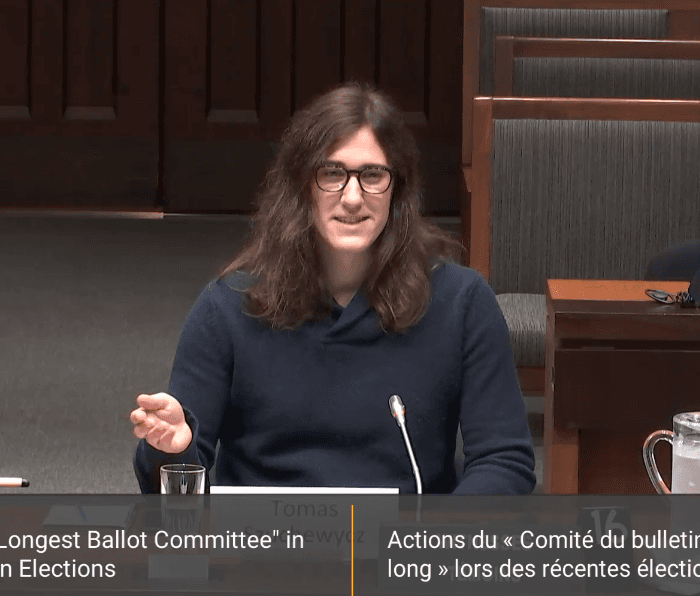

Longest Ballot Committee
Federal Liberals and Conservatives, as well as Elections Canada, have also raised concern about protest groups flooding election ballots.He said the Longest Ballot Committee (LBC) protest movement was confusing voters and undermining democracy after it signed up hundreds of candidates to run against him in the Battle River-Crowfoot byelection in August.
Poilievre suggested the federal government require candidates to get signatures from a minimum of 0.5 percent of riding voters to file a candidacy, instead of the current 100 people. He also recommended that nomination supporters only be allowed to endorse one candidate, and that candidates’ official agents be restricted to representing only a single candidate at a time.
The Carney government responded to Poilievre’s letter, with Government House Leader Steven MacKinnon’s office saying he shares some of the Conservatives’ concerns and was studying the matter.
Federal Election
The long-ballot movement started in the 2021 election to protest Canada’s first-past-the-post system, in which the party that gets the most votes wins the riding, without requiring a majority of votes cast. The LBC targeted Poilievre’s Carleton riding in the federal election in April.Although Poilievre had represented the Carleton riding since 2004, he lost the seat to Liberal candidate Bruce Fanjoy, who garnered 50.6 percent of the vote compared to the Tory leader’s 46.1 percent.
Eighty-five of the 91 candidates listed on the ballot were linked to the LBC, resulting in a significantly prolonged counting process compared to earlier elections.
He urged committee members to consider accessibility issues caused by the protest, noting a ballot with additional candidates required a smaller font size on on the ballot, making it harder for individuals with literacy barriers or disabilities.