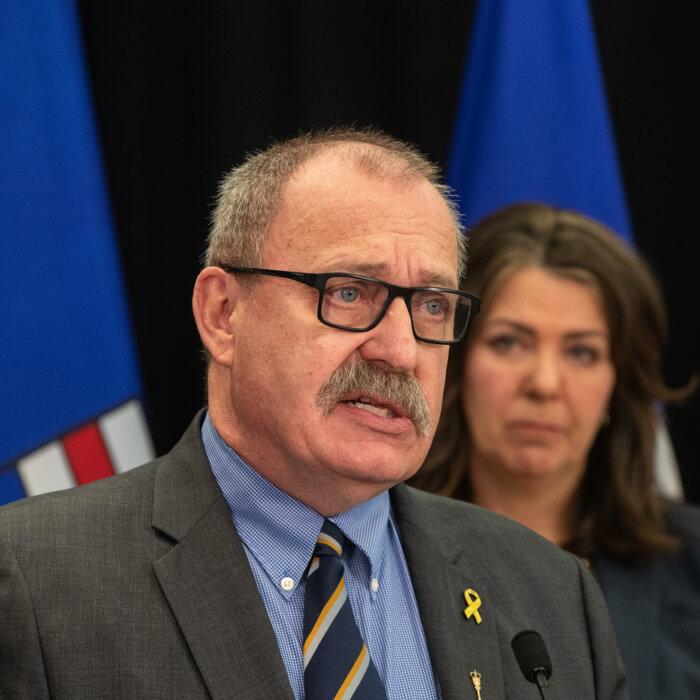
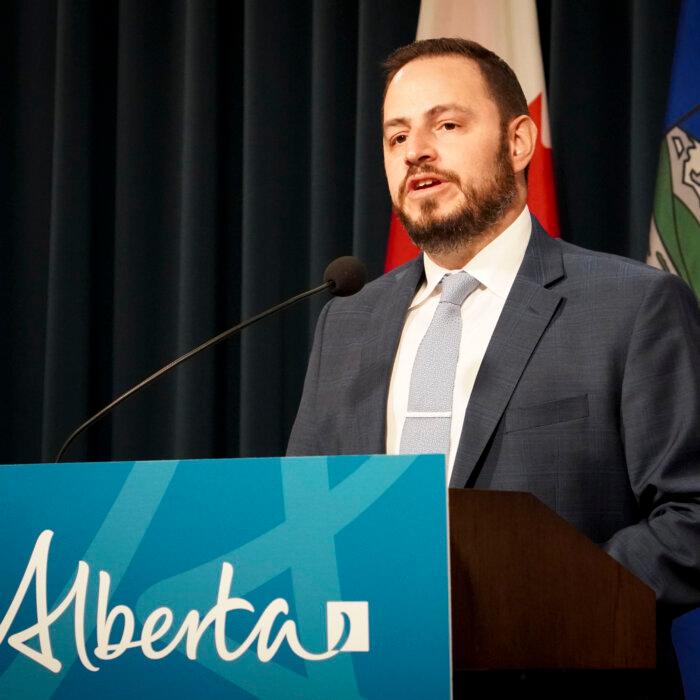
Alberta is launching an action team this summer to address increasing aggression and complex needs in classrooms, the province’s education minister has announced.
The action team will be composed of 20 education system leaders, including representatives from school boards in Edmonton and Calgary, and the Alberta Teachers’ Association. Nicolaides said the team will work together with teachers, education support workers, school resource officers, and representatives from student and family advocacy groups.
The list of team members will be published online when finalized, the minister said, adding that the team will begin meeting this summer and deliver a report to the province’s education department this fall.
The action team’s report will consist of advice and recommendations for the government to implement solutions and policy changes to address the “increasing complexity” of Alberta classrooms, Nicolaides said.
Some of the recommendations could be implemented as early as the 2025-26 school year, the province said, noting that more details about the action team’s mandate will be shared with the public in the coming weeks.
Alberta School Boards Association (ASBA) president Marilyn Dennis spoke at the June 30 press conference and expressed the association’s support for establishing the action team.
“Addressing classroom complexity is critical to ensuring positive learning outcomes and a healthy school community,” Dennis said. “The well-being and health needs of our students can be very complex and often require the services of professionals such as counsellors, psychologists, and occupational or physical therapists.”
“School boards remain dedicated to ensuring that these needs are met, and today’s announcement is a meaningful step forward,” she added.
Rising Incidents of Aggression
A December 2023 study by the Alberta Teachers’ Association (ATA) found that one in two teachers have encountered bullying or violence, and 95 percent of the aggression was experienced in person at school, according to an ATA news release from April 2, 2024.“Deepening societal divisions, effects of the pandemic, declining empathy and increase in social media use have created a culture war in school communities,” the release said.
The study found an increase in “rude or obscene” gestures, rumour-spreading, and intimidation incidents. Meanwhile, 63 percent of teachers disclosed they had not undergone training to defuse such situations and half of teachers expressed “discomfort” in their ability to curtail these confrontations, the release said.
Consequences for aggressive behaviour in schools have been “insufficient,” according to many survey respondents who said the school system and leaders did not often support teachers in acting against aggressive behaviour.
“Our survey shows that many teachers need training in how to de-escalate scenarios,” ATA president Jason Schilling said in the press release. “That is one place to start. We also need clear and consistent implementation of school board policies on the consequences to the actions of others.”
Additionally, 71 percent of teachers said they observed students make “derogatory or hateful comments” toward their peers who expressed different beliefs from their own.
The ATA survey offered recommendations from teachers and school leaders to reduce aggression in schools, some of which include prioritizing safety and well-being, enhancing training supports, creating programs for behaviourally challenged students, and establishing consistent and fair discipline.
“We need to see investment by government in supports for our students, their mental health and supports for inclusion,” Schilling said. “We need to address the issue before we see incidents happen, but teachers, students and schools need supports.”