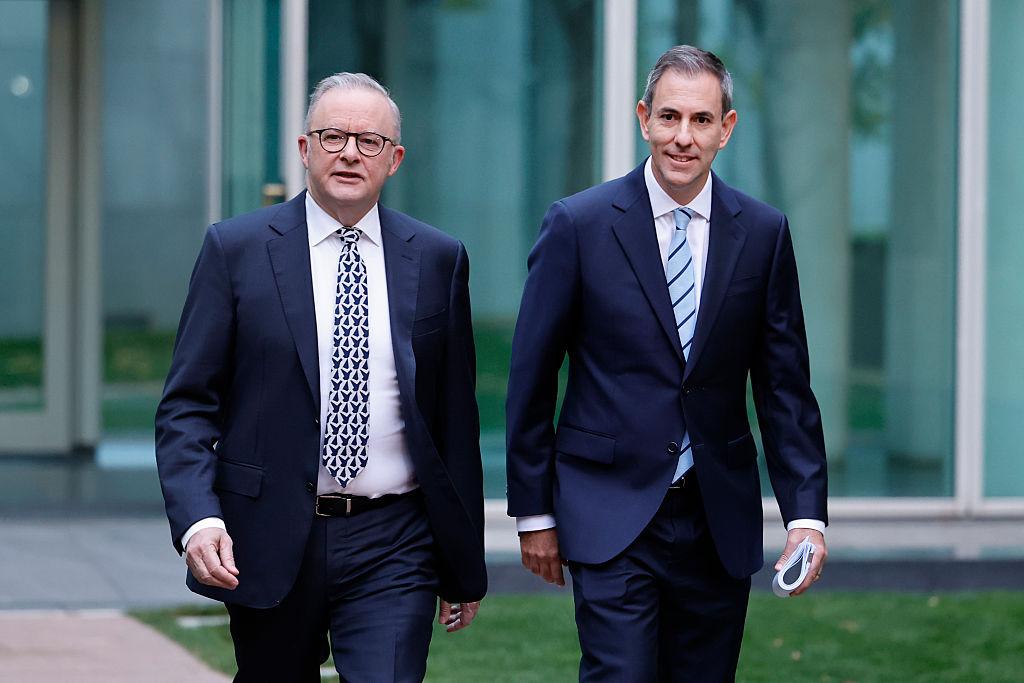
Prime Minister Anthony Albanese has raised the prospect of Canada joining Pillar II of the AUKUS pact—the wing of the high-level security agreement focused on sharing advanced military technologies such as quantum capabilities, hypersonic missiles, and artificial intelligence.
“I think that Australia always has a case for maximising our defence and security relationships in what is an uncertain world,” Albanese told reporters in Canada, where he is attending the G7 summit.
“We’re also both Five Eyes countries so there’s a lot of cooperation that occurs already in intelligence,” he said. “What people are looking for is certainty in trusted relationships. Australia and Canada are just such partners.”
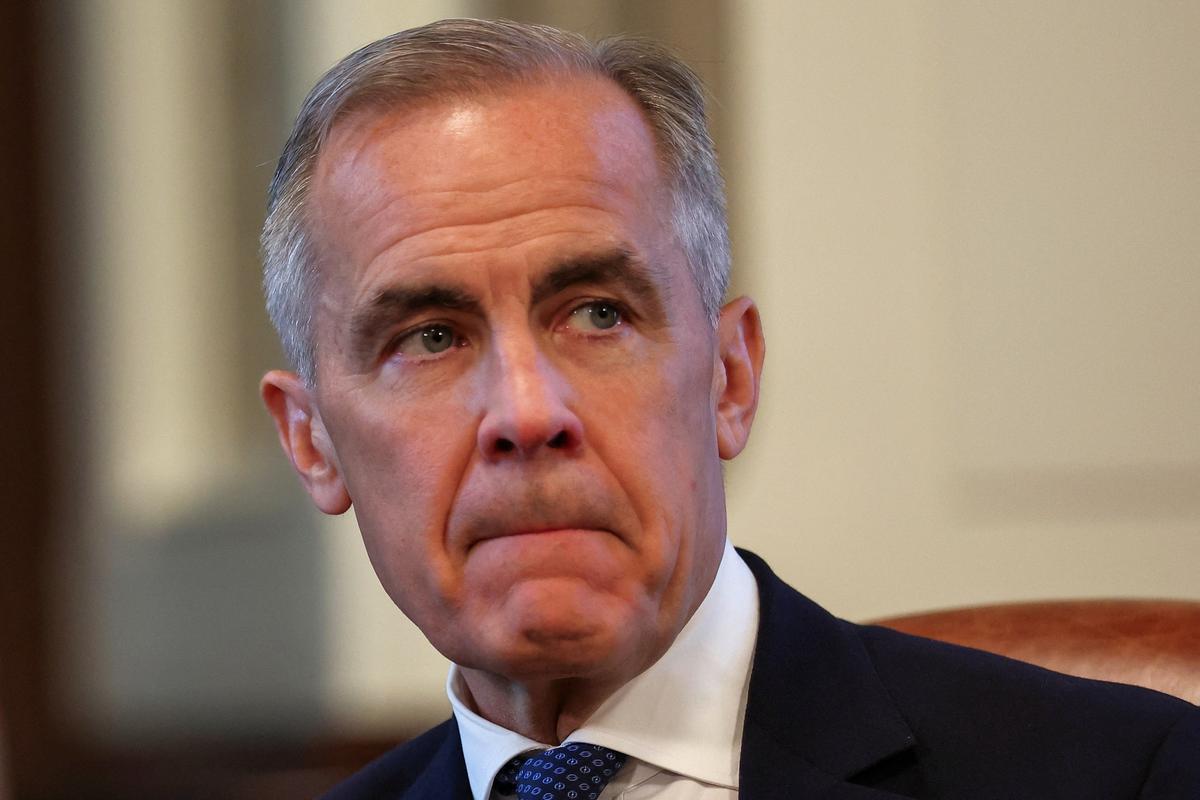
Albanese met with Canadian Prime Minister Mark Carney to discuss expanding defence ties, including Canada’s proposed purchase of Australian over-the-horizon radar technology.
“We want to increase our cooperation on security, trade and energy,” he told reporter after the meet.
PM Spruiks AUKUS Pact
With the AUKUS pact under review in Washington, Albanese said he will use his upcoming meeting with U.S. President Donald Trump to make the case for why the deal is in America’s strategic interest.
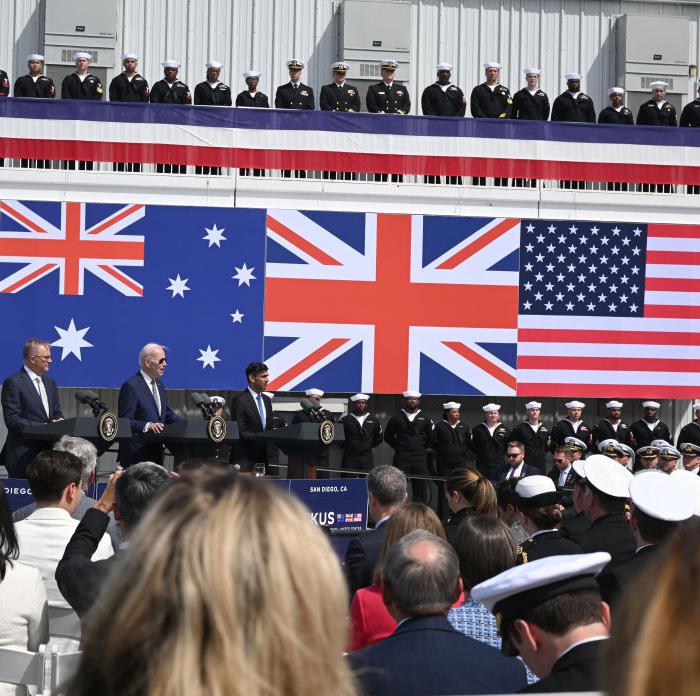
The White House launched the review to determine whether the trilateral agreement aligns with the president’s “America First agenda.” The pact would grant Australia access to nuclear submarine technology in exchange for deeper Indo-Pacific military cooperation.
Albanese said AUKUS benefits the United States by bolstering its industrial capacity and expanding its ability to keep submarines operational, with planned maintenance facilities at Henderson.
“In addition to that, there’s all the support that we give to the United States and with our defence relationships, including fuel reserves in the Northern Territory, including the presence of U.S. forces in Darwin as well.”
Tariffs Under the Microscope
On trade, Albanese confirmed he would continue pressing the case against tariffs, including the 10 percent duty the U.S. imposed on Australian metals earlier this year.“A successful meeting is one where we are able to–I, as the Australian prime minister–am able to put forward our position,” he said.
“Now, our position when it comes to tariffs is very clear. We see tariffs as acts of economic self-harm by the country imposing the tariffs. Because what it does is lead to increased costs for the country that is making those decisions.”
When asked whether Australia might join with Canada or other G7 countries to pressure Washington to roll back its tariff stance, Albanese said the two nations are already aligned.
Israel Pushes G7, PM Backs Dialogue
Albanese was also asked about Israeli President Isaac Herzog’s push for the G7 support to counter Iran’s nuclear threat. He confirmed the matter was discussed with Canadian PM Carney.“We share a view wanting to see a de-escalation of conflict, wanting to prioritise dialogue and diplomacy,” Albanese said.
Australia currently advises against travel to both Israel and Iran, and has previously voiced concern over Tehran’s nuclear ambitions.
“Iran gaining the capacity of nuclear weapons is something that is a threat to security in the region,” he said. “But we, along with other like-minded countries, do want to see that priority on dialogue and diplomacy.”
EU Security Pact on PM’s agenda
Albanese confirmed that he will meet with European Commission President Ursula Von Der Leyen in the coming days, where he is expected to consider signing a security and defence partnership with the EU.“I'll enter those discussions constructively, but we look to cooperate and to strengthen Australia’s capacity. One of the things that I’ve said consistently is we invest in our capability and we invest in our relationships.”
However, the prime minister downplayed expectations of a breakthrough on the stalled EU-Australia trade deal, saying, “Do not expect the EU trade deal to be finalised at the G7.”
He confirmed a packed schedule of bilateral meetings, including talks with leaders from the UK, Japan, Germany and NATO, and his first face-to-face with the new South Korean president.
“I had a phone conversation with the president on Thursday night to congratulate him on his election. I look forward to our first meeting.”