The European planemaker reported that the “vast majority” of aircraft had received the required changes, leaving fewer than 100 still awaiting updates.
“We are working with our airline customers to support the modification of less than 100 remaining aircraft to ensure they can be returned to service,” Airbus said in its Dec. 1 statement.
The company also apologised for disruptions to passengers and carriers.
The incident during a flight from Cancun, Mexico, to Newark, New Jersey, was linked to corrupted flight-control data possibly triggered by intense solar radiation.

“Airbus has consequently identified a significant number of A320 Family aircraft currently in service which may be impacted.”
Affected Airlines
Airlines across Europe, the Middle East, Asia, and North America have spent the past week grounding aircraft overnight, shifting maintenance personnel and reorganizing schedules to meet regulatory deadlines.
In Britain, easyJet and Wizz Air said on Dec. 1 that they had completed their upgrades over the weekend without interrupting scheduled operations, according to company statements. Both carriers said engineers had been assigned to complete the updates quickly to avoid cancellations during the busy early-December travel period.
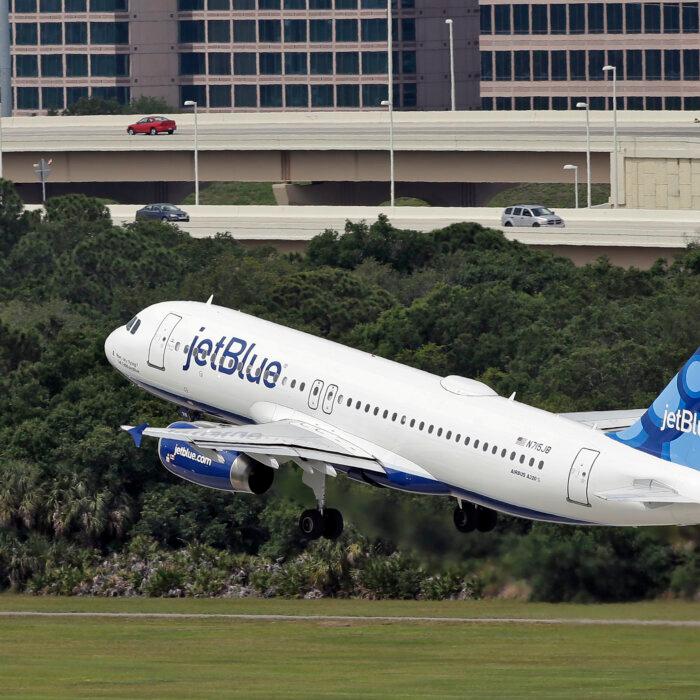
JetBlue said late on Nov. 30 it expected 137 of its 150 affected aircraft to return to service by Dec. 1. The carrier anticipated canceling around 20 flights on that day as the remaining jets awaited modification.
Air India said on Nov. 29 that more than 90 percent of its operating A320-family aircraft had been updated.
“We expect to cover the entire fleet within the timeline prescribed by EASA, with safety remaining our top priority,” the airline wrote.
It said engineering and ground teams “worked round the clock to ensure there were no cancellations and that the impact on our schedule integrity across the network was minimal.”
In the Middle East, Air Arabia said on Nov. 30 that it had successfully completed all updates across its A320 fleet.
“Thanks to the exceptional efforts of our teams, the installation was completed swiftly and with minimal disruption, despite this being one of the busiest travel periods,” the carrier said, adding that it was restoring its full schedule.
An investigation into the Oct. 30 incident found that intense solar radiation was a contributing factor, revealing a vulnerability in the A320’s systems. Large solar storms, though infrequent, can affect aircraft systems, satellite-based navigation, radio frequencies, and high-altitude communications.