Air Canada will begin cancelling flights as the company has issued a lockout notice to the union representing its flight attendants after receiving a 72-hour strike notice.
The company says the first round of flights will be cancelled on Aug. 14, with more cancelled on Aug. 15, and a complete stoppage of flights by Air Canada and Air Canada Rouge on Aug. 16. Air Canada will notify customers whose flights have been cancelled and customers will be eligible for a full refund through the airline’s website or mobile app.
Additionally, customers will be notified of alternative travel options through other Canadian and foreign carriers, which Air Canada has made arrangements with. However, Air Canada warns that alternate options may not always be “immediately” possible since other carriers may be “very full” due to it being peak summer travel season.
“We regret the impact a disruption will have on our customers, our stakeholders and the communities we serve,” Air Canada President Michael Rousseau said in a statement, saying that the airline’s only option in response to the union’s strike notice is to suspend operations in an effort to “provide customers certainty.”
Unable to Reach Agreement
The airline has been unable to reach an agreement with the Canadian Union of Public Employees (CUPE), which represents 10,000 flight attendants at Air Canada and Air Canada Rouge.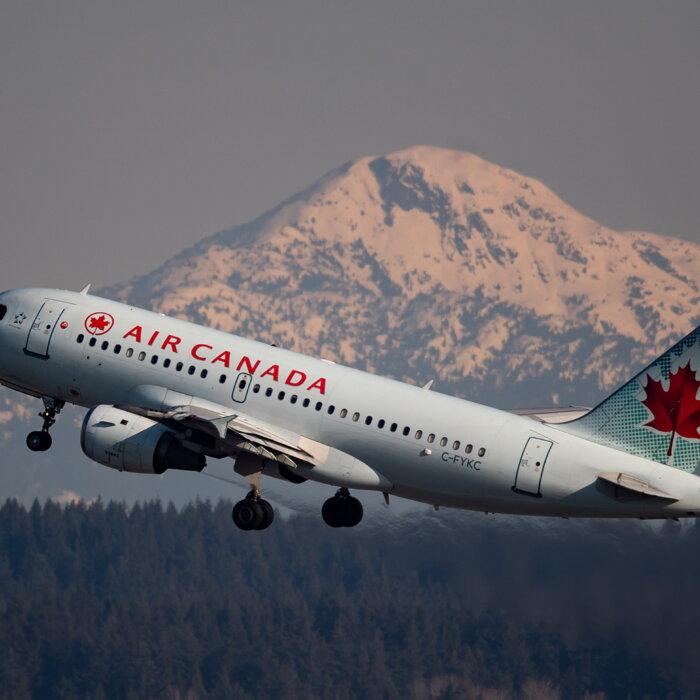
The union has been pushing for changes to salaries and pensions, as well as eliminating unpaid work by flight attendants while the plane is not in the air, including when preparing for boarding and deplaning.
After eight months of negotiations, Air Canada proposed its latest revised offer to the union on Aug. 11 that would provide a 38 percent compensation increase for flight attendants over a four-year period, which the airline said would have made its flight attendants “the best compensated in Canada.”
Additionally, Air Canada offered to provide ground pay, improved pension and benefits, increased crew rest, and has also offered to enter a third-party, binding arbitration to settle the union’s outstanding concerns.
CUPE rejected the offer and responded with a notice to initiate a strike as early as Aug. 16.
“Given this, while we remain available for discussions with CUPE, we have requested government-directed arbitration as we now view it as the only certain avenue to bring closure to bargaining and mitigate the impact on travellers, business and the Canadian economy,” Rousseau said.
‘Controlled Wind Down’
Air Canada and Air Canada Rouge provide airline services to approximately 130,000 customers per day who could be affected by the threat of a strike, including 25,000 Canadians who fly back to Canada from abroad each day. Air Canada operates globally, with flights to roughly 65 countries on six continents, and has a fleet of 259 aircraft.Around 20 percent of Air Canada’s daily customers use Air Canada Express flights, which will continue to operate as normal as they are operated by Jazz and PAL Airlines.
The airline noted the impact the decision to lock out its flight attendants in the face of a strike notice will have, especially during the busy summer travel season. However, the airline says that a “controlled wind down” of operations will allow customers to make alternative arrangements ahead of time.
An unplanned shutdown could result in a “significantly worse” disruption to travel, and also be a major risk for the company itself and other employees, Air Canada says.
The union said negotiations with Air Canada broke down in July, which led to the vote. According to CUPE, Air Canada flight attendants’ entry-level salaries have only gone up by 10 percent in the past 25 years, which falls far below inflation that has increased around 169 percent over the same time period.