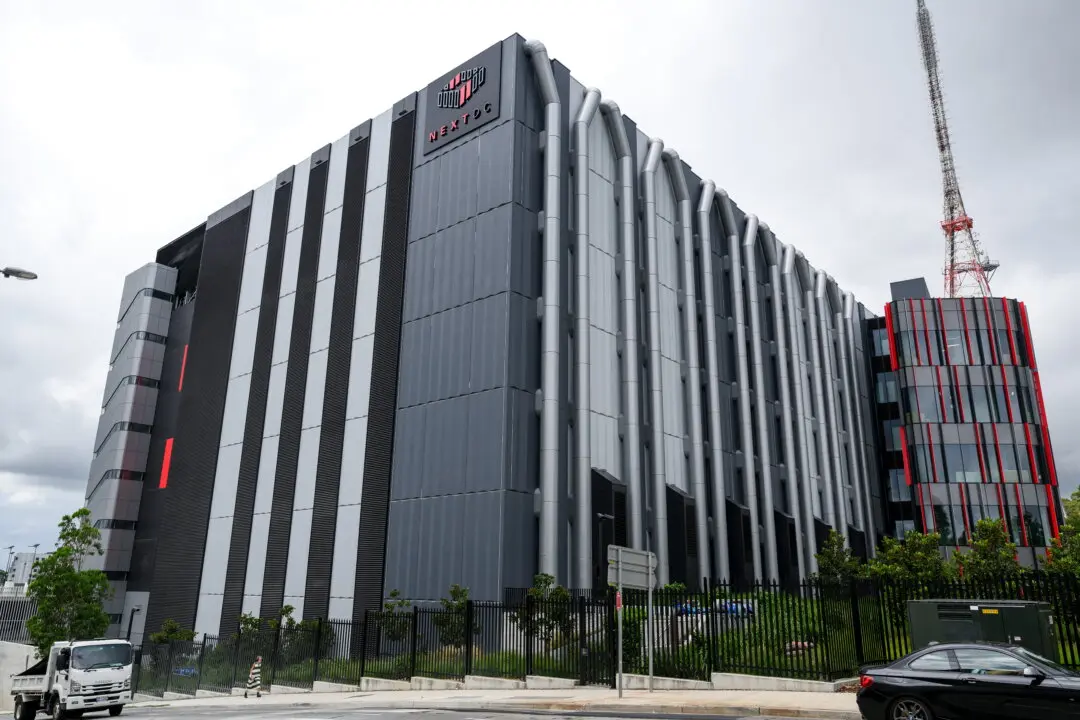
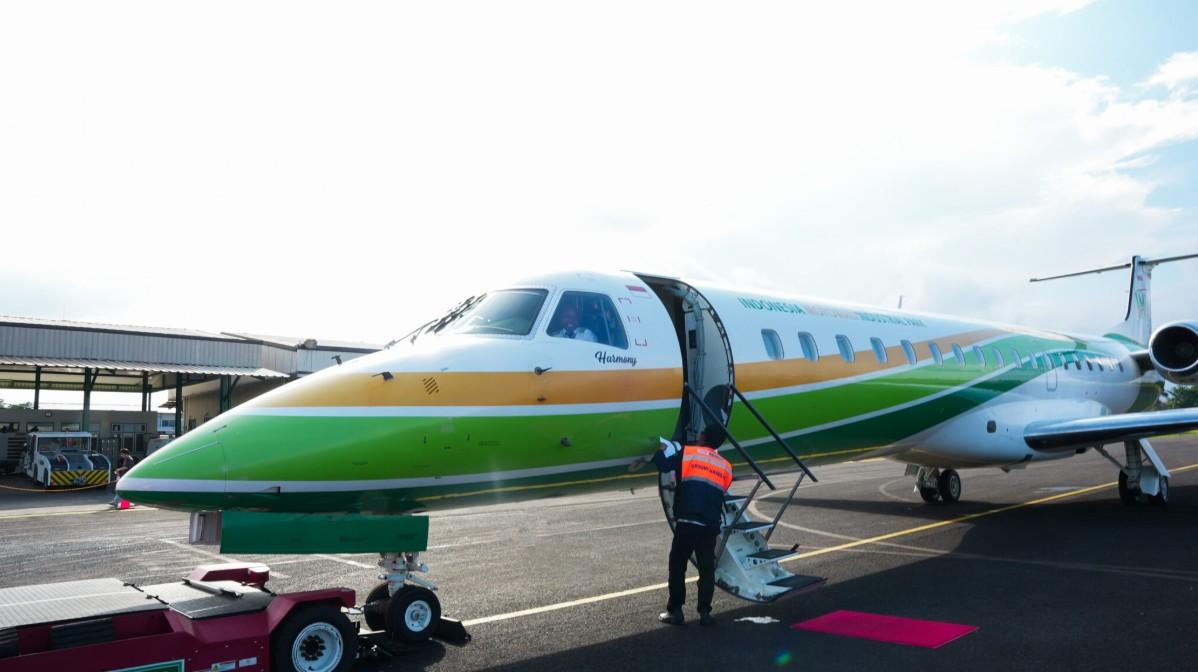
A lack of oversight of the operations of a Chinese majority-owned and operated private airport in Indonesia’s nickel-processing region of Morowali poses a potential threat to the country’s sovereignty and economic stability, its defence minister has warned.
Sjafrie Sjamsoeddin raised concerns during the TNI (Indonesian Armed Forces) Integrated Exercise in the region on Nov. 20, claiming the airport was “operating without any state apparatus” on site.
The absence of government officials at such a critical infrastructure facility could expose the country to “economic sovereignty” risks, he said, adding that a facility operating without a state presence was an “anomaly.”
“This republic must not have a republic within it. We must uphold all provisions without looking at the background of where they come from,” Sjafrie said in a written statement quoted from the Ministry of Defence website on Nov. 26.
His concerns were echoed by a member of Indonesia’s House of Representatives, T.B. Hasanuddin, who described the facility as a “stealth airport,” and highlighted potential violations of legal regulations, as well as risks to security and sovereignty.
In response, the Transportation Ministry claimed the airfield held valid permits and dismissed suggestions that the airport lacked state oversight.

How Much of the Ownership Structure is Chinese?
Ownership of that company is complex.It is a joint venture between Shanghai Decent Investment (Group) Co. Ltd. (49.69 percent shareholder), itself a subsidiary of Tsingshan Group, one of the largest private stainless-steel manufacturers in China; Bintang Delapan (25.31 percent), an Indonesian firm; and Sulawesi Mining Investment (SMI), which holds 25 percent.
SMI is also a joint venture, between Shanghai Decent Investment Group and PT Bintang Delapan Group.
In effect, Shanghai Decent Group (Tsingshan) holds 66.25 percent of the shares in the facility’s operation, and PT Bintang Delapan holds 33.75 percent.
While it is a private company, Tsingshan’s projects in Indonesia have received support from the Chinese Communist Party’s Belt and Road Initiative, including loans from state-owned banks such as the China Development Bank and the Bank of China.
IMIP, situated in central Sulawesi, was established in response to the Indonesian government’s decision to ban the export of unprocessed minerals from January 2014 and is now the world’s largest vertically integrated stainless steel production centre, and the epicentre of global nickel production.
In recent years the park has expanded in size and now spans 5,500 hectares.
Generally, Indonesian aviation laws restrict such special airports to serving only the operational needs of their owners and prohibit them from handling direct international flights, unless granted temporary approval by the minister. However, that’s exactly what happened earlier this year, when regulations were passed designating three special airports, including IMIP, as international airports.After Sjamsoeddin raised the issue, it quickly became contentious, and causing the government to immediately revoke the airport’s “special” status permit on Nov. 28.
Despite that, the Indonesian Democratic Party of Struggle (PDIP) is calling on President Prabowo Subianto to conduct a thorough investigation.
MP Guntur Romli said on WhatsApp on Nov. 30 that former President Joko Widodo’s claim that he hadn’t opened the airport was “puzzling and suspicious because the public knows that Jokowi inaugurated PT IMIP in 2015.”
“Is it reasonable that during Jokowi’s 10-year era, the country was said to overlook it?” he questioned.
An investigation seems likely, as even those close to the president are supporting it.
H. Kurniawan, chairman of the Gerakan Cinta Prabowo movement (Love Prabowo Movement), also raised concerns that access to the airport was restricted and state presence appeared absent.
Parliamentary Chair Promises Review
However, Lasarus, chairman of Parliament’s Transportation Affairs Commission, seems less enthusiastic.Responding to Sjamsoeddin’s suggestion that IMIP functions like a “state within a state,” he said his committee will review whether such concerns reflect legal breaches, or misunderstandings of how private airports operate.
Even without on-site state officials, flight activity at any airport remains traceable, he claimed.
“Any aircraft planning to take off must request clearance. All of this is recorded by [national] Air Traffic Control,” said Lasarus.
He noted examples of mission-operated airstrips in Papua, which operate similarly without a full on-site government presence.
“As long as there are no international flights, it is not inherently problematic,” he said.
While the Indonesian government appears to be in no hurry to address those issues, it has tightened up laws regarding its airspace. Parliament passed the Airspace Management Bill in a plenary session on Nov. 25.
Minister of Law Supratman Andi Agtas noted several key issues the law sought to address.
These include the lack of a comprehensive legal framework for national airspace management, the rampant violations of Indonesian airspace by foreign aircraft or vehicles, and the lack of regulations regarding airspace violations in Indonesian law.
‘We Simply Do Not Know’: MP
Mori Hanafi, a NasDem Party lawmaker who serves on the transportation commission, said the IMIP airport had never been mentioned in hearings it held with the Transportation Ministry.“We are genuinely surprised. Airport licensing lies with the Transport Ministry. But in all of our hearings, this airport was never brought up. Either it slipped through the cracks, or it was monitored but never reported to us. We simply do not know,” he told reporters.
Mori, who also served on the special committee that drafted the newly passed Airspace Management Law, warned that any indication of international flights operating from IMIP would constitute serious violations involving immigration controls, customs supervision, and national security.
“How are passports stamped? How are the [incoming and outgoing] goods [inspected]? If foreign nationals and cargo come in without customs or immigration, that is a violation of state authority,” he said.
The Transportation Commission’s upcoming hearing is expected to reveal whether IMIP has complied with national aviation law, whether it has ever served cross-border flights, and why its operations were never formally discussed at the parliamentary level.
Until then, lawmakers say the fundamental question remains unresolved: how a functioning airport inaugurated by a president operated for years without the knowledge of the government agencies tasked with supervising it or of the nation’s parliament.