This copy is for your personal, non-commercial use only. Distribution and use of this material are governed by our Subscriber Agreement and by copyright law. For non-personal use or to order multiple copies, please contact The Epoch Times Reprints.
Canadians in nine provinces and one territory will be able to purchase alcohol directly from producers by next spring, says the minister of transport and internal trade.
All provinces except for Newfoundland and Labrador and Yukon agreed to sign a memorandum of understanding to implement direct-to-consumer alcohol sales for personal consumption by May 2026, according to an announcement made on July 8 at a Committee on Internal Trade meeting chaired by Northwest Territories Minister Caitlin Cleveland. The committee consists of all federal, provincial, and territorial ministers responsible for trade.
The ministers say there is work to do to finalize this agreement, such as ensuring appropriate taxation is established, and that public safety and public health are considered when implementing direct-to-consumer alcohol sales.
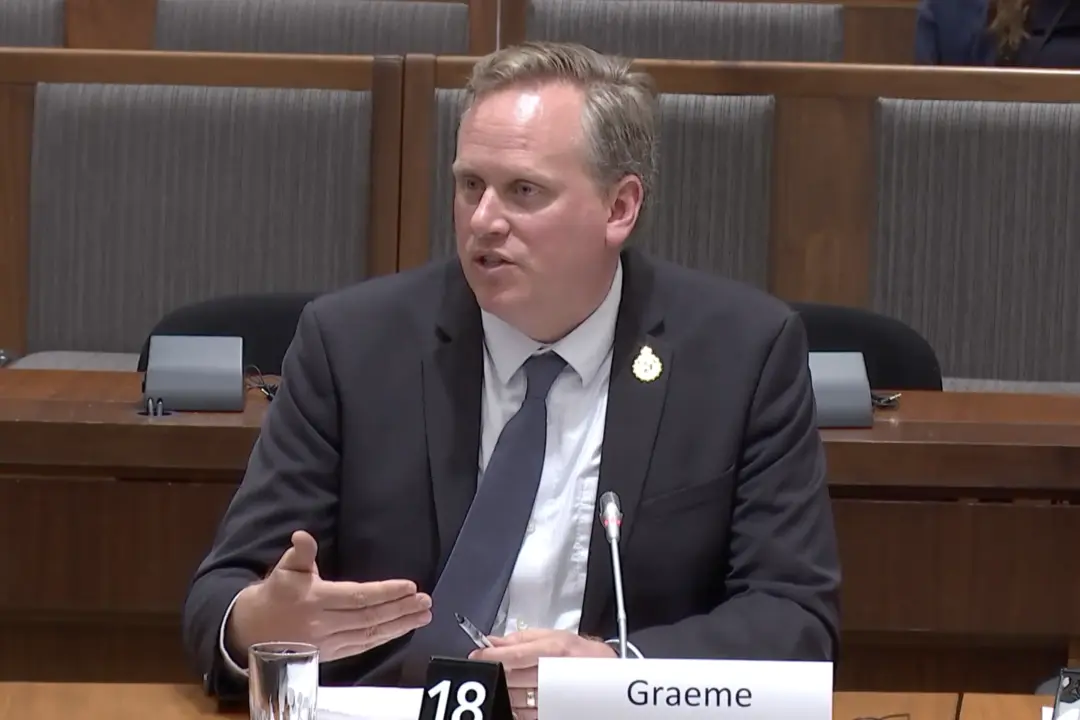
“We’re starting from scratch, something that’s never been done before in Canadian history—that is, to align all the provinces for direct sales to consumers of alcohol,” Quebec Minister Christopher Skeete said during the July 8 press conference in Quebec City, echoing that provinces need to consider several factors including taxation, quantities of alcohol being sold, and dry communities.
“We are 14 jurisdictions trying to get this right, and because it is a complex issue, it’s something that requires us to take the time,” Skeete added. “The good news is, the first ministers have agreed to do this for the first time.”
The committee’s in-person meeting was part of its effort to create a “strong, integrated domestic economy” by removing interprovincial trade barriers amid “global uncertainty” and “external threats” from U.S. tariffs, Cleveland noted.
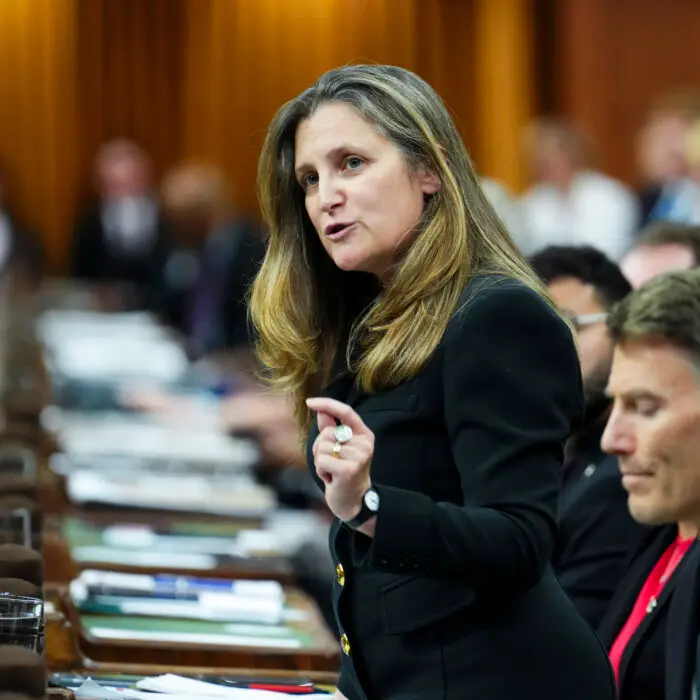
“This is not just about a promise for the future,” Freeland said. “This meeting is part of a series of conversations and actions and legislation passed federally and provincially, which has created a more united Canadian economy than at any time since Confederation.”
Removing Trade Barriers in Canada
The meeting also addressed the progress the committee has made since the first ministers’ March 5 recommendation to eliminate internal trade barriers in Canada. At the July 8 meeting, the provinces also agreed to address labour mobility and trucking regulations.
Freeland stressed the importance of building one Canadian economy at a time when Canada is “being beaten up” economically.
The One Canadian Economy Act, formerly known as Bill C-5, received Royal Assent on June 26 and aims to eliminate federal barriers to interprovincial trade and labour mobility. The new law was part of Prime Minister Mark Carney’s promise to remove all federal internal trade barriers by July 1.
A few days later, the federal government announced it was removing all remaining federal exceptions from the Canadian Free Trade Agreement, which had been inhibiting free trade between the provinces, according to a June 30 news release.
“We are moving quickly on commitments to improve labour mobility for workers across the country, implement mutual recognition agreements to get goods and services moving, and [remove] duplication of requirements which for too long have created extra costs and delays for Canadian businesses and workers,” Freeland said.
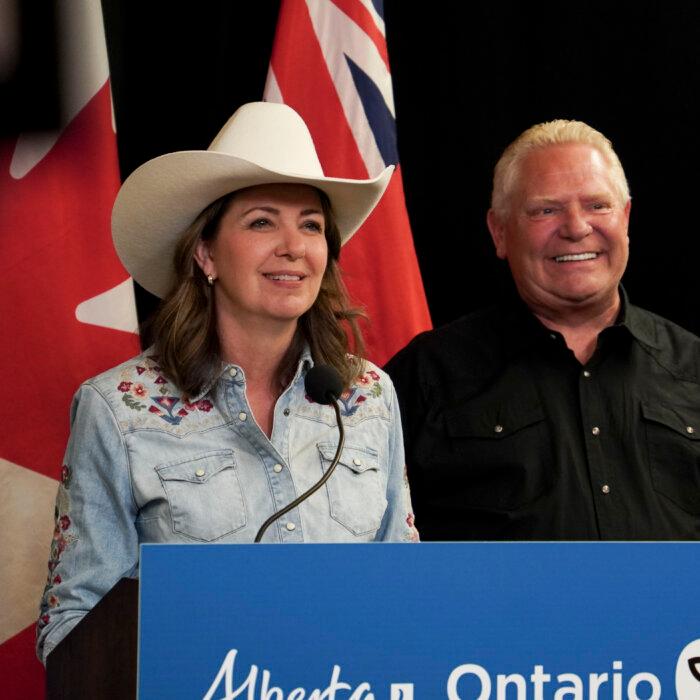
Additionally, several provinces and territories have agreed to work together to remove trade barriers. Most recently, Ontario and Alberta agreed on July 7 to increase interprovincial trade opportunities and build energy corridor infrastructure, such as pipelines and railways, for the provinces’ oil, gas, and critical minerals to reach global markets.
The premiers of Ontario, Alberta, and P.E.I. also signed a memorandum of understanding on June 1 in Saskatoon to “knock down barriers to trade” across the country, a June 1 news release says.
“With President Trump threatening our economy, there’s never been a more important time to boost internal trade and cooperation between provinces,” Ontario Premier Doug Ford said at the time.
Carolina Avendano and Jennifer Cowan contributed to this report.