Four in five new cases of Ebola detected in eastern Congo are coming from unknown chains of transmission, the World Health Organization (WHO) reported, as the death toll in the country exceeded 700.
Dr. Chikwe Ihekweazu, executive director of the WHO’s Health Emergencies Programme, said on July 14 that many of the newly reported deaths are those who died in their communities without ever making it to a medical facility to receive care.
People who die outside the healthcare system cannot be treated, cannot be isolated, and cannot have their contacts traced and tested, which increases the risk of the spread of the disease.
“And as of today, 80 percent of new cases are outside our contact lists and so are coming to us from unknown chains of transmission,” Ihekweazu told reporters in Geneva after returning from Bunia, which is one of the worst-hit cities.
The WHO official said that the outbreak “continues to outpace the response efforts.”
According to Congolese authorities, as of July 13, at least 1,926 people have been infected with Ebola, of whom 702 have died, and cases have also been confirmed in neighboring Uganda.
The African Centres for Disease Control and Prevention has described this as the fastest-growing Ebola outbreak on the continent.
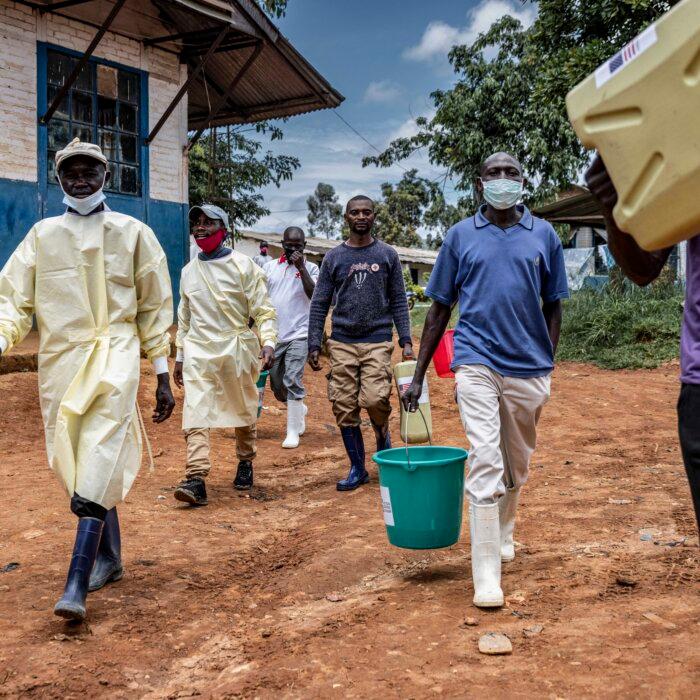
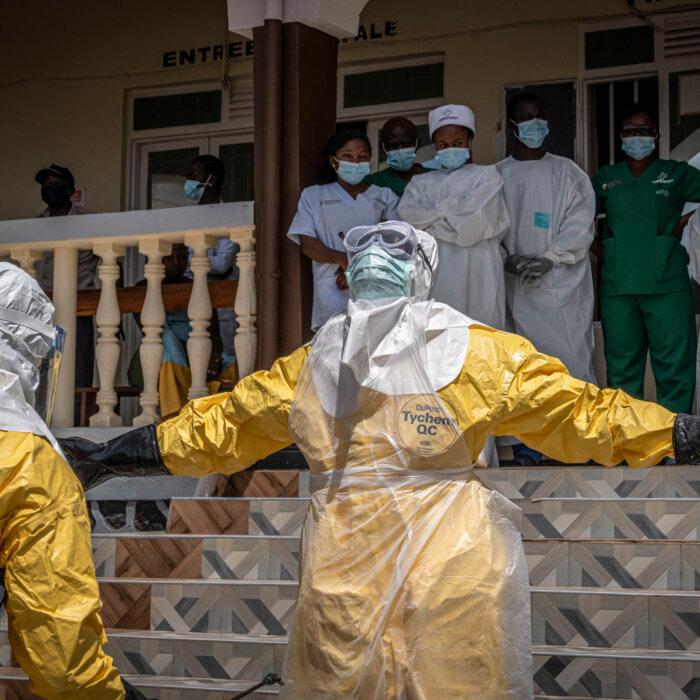
Bunia, in Ituri Province, is at a treatment capacity of nearly 800 beds, increasing every week. Lab capacity has also grown from one to 14 labs.
Ihekweazu said that his visit to Bunia was encouraging but deeply concerning. He said that despite the best efforts of health authorities, they “have not caught up in the race.”
Last week, the WHO said that the outbreak was worsening because of population movements.
“It is still in the expansion phase, unfortunately. We would like to say it is stabilizing but, frankly, we cannot say it yet,” Congo’s WHO representative, Anne Ancia, told reporters on July 7.
Outpacing Response Efforts
Global medical charity Médecins Sans Frontières said in a July 15 statement that the outbreak “continues to outpace response efforts” and called for increased international support.
“In just two months, the current Ebola disease outbreak, caused by the Bundibugyo virus, has become the third largest, and the fastest growing, Ebola outbreak on record,” it said.
On July 11, the U.S. Centers for Disease Control and Prevention said that an American citizen working in Congo had contracted the Bundibugyo virus.
“CDC is working with the patient’s employing organization, other U.S. federal agencies, public health authorities, and partners in DRC to help prevent further transmission by supporting contact tracing and performing risk assessments to identify high-risk contacts,” the health authority said in a statement.
The CDC said in a fact sheet updated on July 14 that it was responding to the Ebola outbreak in Congo and Uganda. To date, no cases have been confirmed in the United States because of this outbreak, the CDC said, adding that the risk to the American public is low.