A Pipeline With a Caveat
The memorandum of understanding (MOU) between Ottawa and Alberta allows for one or more privately financed pipelines, including a proposed route capable of carrying roughly 1 million barrels a day of bitumen to Asia.Adjusting Oil Tanker Ban
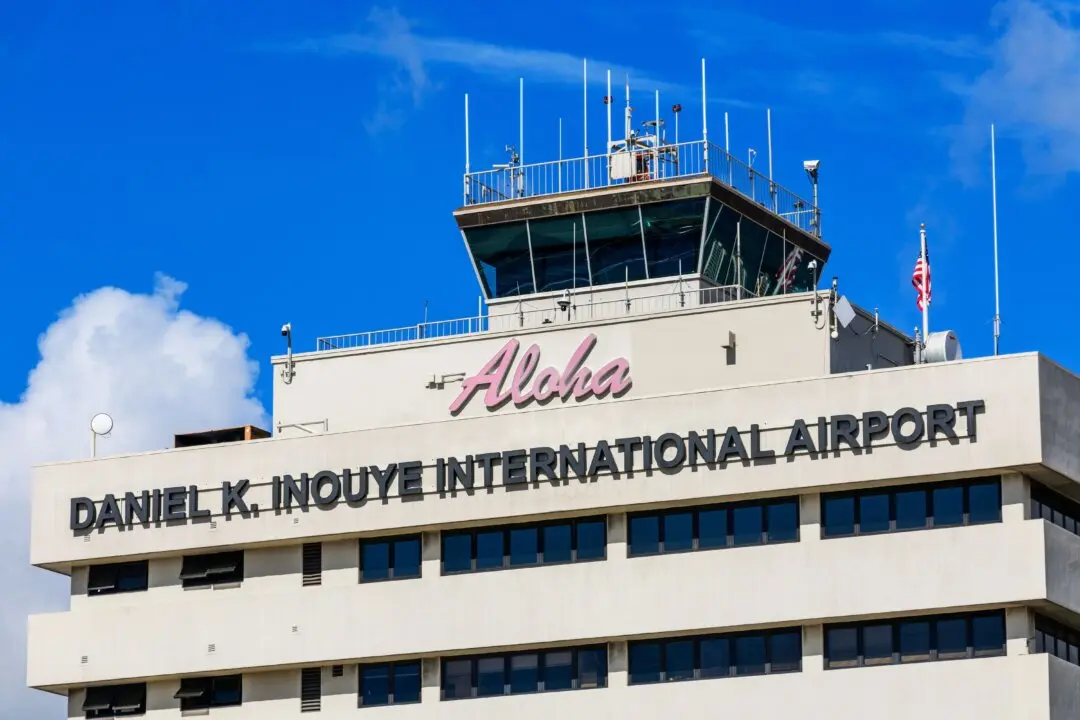
In order to get the oil from the pipeline to markets in Asia, it would have to be shipped via oil tankers. However, since 2019, there has been a ban on oil tankers carrying more than 12,500 metric tons of crude oil from docking or loading at ports on B.C.’s northern coast.No More Emissions Cap, Net-Zero Emissions Electricity Grid
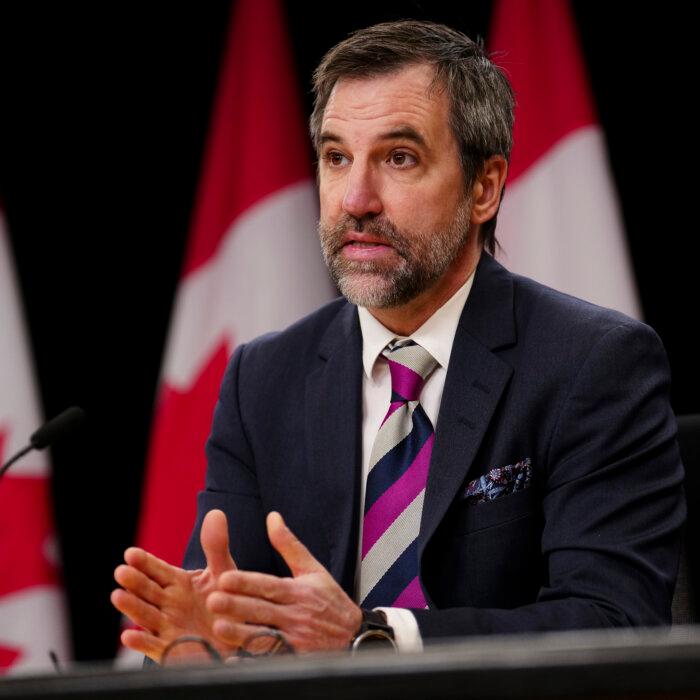
The MOU states that the federal government will not implement its cap on oil and gas emissions, which it had said in its latest budget may not be “required” due to emerging technologies such as carbon capture and storage. In 2023, then-Environment Minister Steven Guilbeault unveiled the federal government’s oil and gas emissions cap, requiring emissions in the sector to be cut by at least one-third by 2030.
In response, Smith said the cap acted as a de facto limit on production, calling it an “intentional attack by the federal government on the economy of Alberta and the financial well-being of millions of Albertans and Canadians.”
Other Trudeau-Era Energy Policy Changes
Smith described the agreement as a “win for Alberta,” and noted that seven out of what she has called the “nine bad laws” relating to the energy sector are addressed by the deal.Besides the removal of the emissions cap, exemption to the Clean Electricity Regulations, and adjustment to the tanker ban, the MOU also calls for a “cooperation agreement” on the Impact Assessment Act (formerly Bill C-69) by April 1, 2026, which Alberta has criticized as the “no more pipelines act” because of its strict environmental assessment requirements for major projects such as pipelines.
Other measures include lifting federal restrictions on energy companies’ environmental advertising, giving Alberta oversight of its industrial carbon tax, and working with the province to enable oil and gas exports.
Carbon Tax Change and Methane Emissions
The MOU also requires Alberta to increase its industrial carbon pricing system to a minimum of $130 a tonne. In May, Alberta froze its industrial carbon price at $95 per tonne through 2026, which put it out of sync with the federal government’s backstop price, set to increase to $110 per tonne in 2026 and $170 a tonne by 2030.Smith had said following a meeting with Carney in October that she was open to adjusting it. “That’s part of why we’re having a conversation about how we adjust some of the programs,” she said when asked about the $95 per tonne price.
As part of the MOU, Alberta also committed to reduce methane emissions from the oil patch by 75 percent from 2014 levels by 2035.
Reactions From BC, First Nations, Conservatives
In a landmark 2020 decision, the Supreme Court of Canada upheld a decision by a lower court that Ottawa has legal authority over pipelines between provinces. However, speaking this past June, Carney said Ottawa wouldn’t “impose” any projects on provinces while noting that projects will also need “the participation of indigenous peoples.”That may make building the pipeline more difficult, given that the B.C. government and First Nations in the province have expressed opposition to parts of the plan. B.C. Premier Eby said on Nov. 27 that he was “anxious” that the project would distract from other projects with indigenous support, and said the pipeline still does not have a private proponent to build it or support from coastal First Nations.
“It cannot draw limited federal resources, limited indigenous governance resources, limited provincial resources, away from the real projects,” he said, adding that B.C. should have been “at the table” for discussions between Ottawa and Alberta.
Eby and coastal First Nations are also opposed to changing the ban on oil tankers operating off B.C.’s northern coast, citing environmental concerns.
Poilievre said the federal government should “get out of the way,” get rid of the industrial carbon tax, and grant a permit for Alberta to build a pipeline.
Carney said that any pipeline project to B.C. would need indigenous co-ownership, and involvement from the B.C. government.
“Canada and Alberta also agree to engage meaningfully with Indigenous Peoples in both Alberta and British Columbia on this project, with the involvement of the B.C. Government for engagement with B.C. First Nations,” the MOU says.
Smith said that not all indigenous communities oppose the pipeline, and that such a project would also bring prosperity to them.
Guilbeault Leaves Cabinet
Culture Minister Guilbeault, who was formerly the environment minister from 2021 to 2025, announced he was resigning from cabinet over the MOU on Nov. 27. He said he will remain in the Liberal caucus as the MP for the Quebec riding of Laurier-Sainte-Marie.“When I entered politics, it was because I had a deep conviction that I could make a difference in fighting climate change and protecting our environment. My commitment to leaving a better world for the future of our children and our planet remains unchanged,” he said in his resignation letter.
Guilbeault said “environmental issues must remain front and center” and the decision to exempt Alberta from the Clean Electricity Regulations in exchange for stricter industrial carbon pricing rules and the Pathways project was a “serious mistake.” He also expressed disappointment in Carney government’s changes to the other policies he brought in as environment minister, such as dropping the consumer carbon tax and delaying the electric vehicle sales mandate.
Making a Pipeline Happen
It could likely be many years before a pipeline to the coast of B.C. could be built, although the MPO, which was created to speed up approvals, aims to reduce approval times to two years.A key factor is the emergence of a private investor, which Smith says would materialize once regulatory requirements and other barriers are eased under the MOU.
Opposition from B.C. and First Nations would also add to complications in the process.
“We look at this as the start of a process. We’ve created some of the necessary conditions for this to happen, but there’s a lot more work to do,” Carney said on Nov. 27.
Smith said her government will hold Ottawa to its commitment.
“Although I am not blind to the fact that the people of Alberta have had the rug pulled out from underneath them too many times to count over the past 10 years, I also know that a new relationship and a new beginning needs a starting point grounded in good faith,” Smith said.