Three-quarters of Canadians say the country’s military is “falling behind” despite Ottawa’s recent commitment to meet NATO’s defence spending target of 2 percent of GDP by March 2026, a new survey suggests.
Seventy-five percent of the nearly 1,500 people polled by Angus Reid earlier this month said Canada is “being left in the dust” by the international community when it comes to military capabilities. It is a major spike since last year when 58 percent of Canadians had similar concerns.
This month’s survey found that only 14 percent of Canadians think the country’s military is “keeping up,” while 11 percent are uncertain.
Conservative voters are most likely to say the country’s military is lagging at 88 percent, closely followed by Bloc Québécois voters at 82 percent. Sixty-eight percent of Liberal voters held this opinion while 57 percent of NDP voters voiced concern.
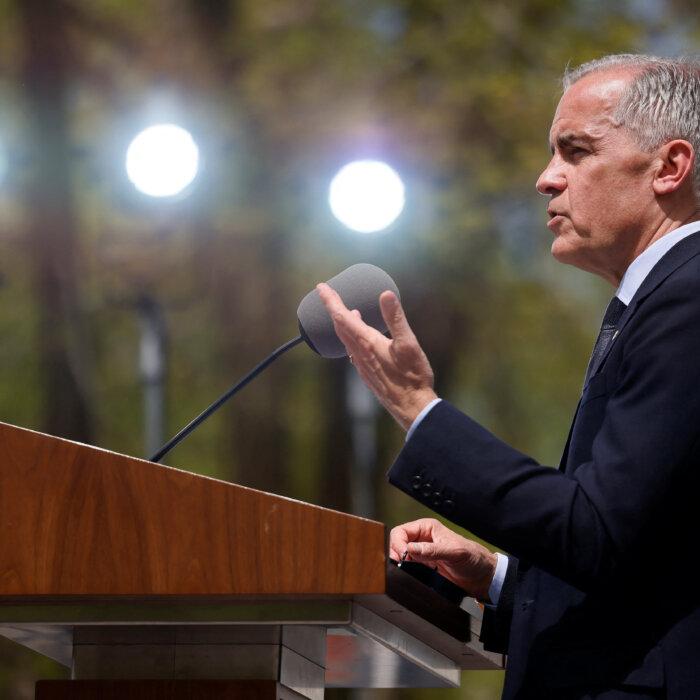
The poll results come on the heels of Ottawa’s announcement that Canada had signed a defence security pact with the European Union. The agreement provides Canada with the opportunity to begin discussions on joining Europe’s rearmament plan, Prime Minister Mark Carney has said.
Carney is in Europe this week for a NATO summit at The Hague where focus is expected to be on increasing the defence spending targets of all 32 member countries. This year’s summit is set to establish a new defence spending goal of 5 percent of gross domestic product (GDP), more than doubling the current 2 percent benchmark.

The summit also comes at a time when tensions are rising in the Middle East. Iran responded to Israeli and U.S. airstrikes on Iranian nuclear facilities—which were intended to halt Tehran’s pursuit of nuclear weapons—by attacking a U.S. military base in Qatar and launching missiles at Israel. A ceasefire has since been reached between Iran and Israel, officially taking effect on June 24.
The Angus Reid survey found that although some Canadians expressed concern about nuclear war, these worries have not increased since previous years.
“In 2017, when U.S. President Donald Trump was threatening to ‘totally destroy North Korea,’ 37 percent of Canadians felt that such nuclear conflict was inevitable,” the report authors said. “Now, after the recent bombing campaign against Iran’s nuclear facilities, fewer but close to the same amount (32 percent) say the same.”
The number of Canadians showing uncertainty in response to the question has changed, however, rising from 14 percent to 21 percent.
International Trade
While military spending has grown as a priority for Canadians, 66 percent of those surveyed ranked forging better trade ties with international partners as their top concern as the country continues to grapple with U.S.-imposed tariffs. Military preparedness was in second place with 21 percent support, followed by foreign aid at 13 percent.Trade has been a growing concern for many Canadians over the past three years, the authors said.
“Canadians have been pessimistic about Canada’s international standing on trade in recent years, with at least half in 2023, 2024, and this year saying that Canada is losing ground on trade competitiveness,” they wrote.
“In 2015, Canadians were more likely to believe Canada was ‘keeping up’ with its international peers on the trade front. Now the number who believe Canada is lagging on trade has grown to more than three-in-five.”
Sixty-one percent of respondents to this month’s survey said the country’s trade competitiveness is “falling behind” compared to 25 percent who say Canada is “keeping up.” Fourteen percent were uncertain.
Carney and Trump met during the recent G7 summit in Alberta to discuss the ongoing trade dispute between the two countries. Carney’s office announced after the meeting that the two leaders had agreed to continue negotiations toward a deal “within the coming 30 days.”
As worries about trade and the military rise, the focus on foreign aid has dipped with only 19 percent of respondents saying Canada should do more. Fifty-six percent said the country is doing enough and 25 percent were uncertain.