The Second International Summit of Religious Leaders has concluded with a call to end fighting in Gaza and the adoption of a two-state solution to resolve the conflict.
The event, held in Kuala Lumpur, drew over 1,000 participants from 54 countries, comprising 400 Islamic and non-Islamic leaders, as well as academics, political leaders, and parliamentarians.
Through five sessions, the summit addressed themes, including religiously motivated conflicts and their root causes, the role of religious diplomacy in supporting peaceful settlements, and the tragedy in Gaza as an international failure.
It was organised by the office of Malaysia’s prime minister, Anwar bin Ibrahim, and the Muslim World League (MWL), which was founded in Mecca, Saudi Arabia, in 1962.
Gaza Crisis
Ibrahim told the gathering that “we are living in an era of declining trust, a deficit not only among political leaders but also in upholding the values of justice, humanity, and truth.”He said the Gaza crisis has revealed a “profound loss of the international community’s commitment to justice and humanity.”
He noted that all religions call for the promotion of compassion and coexistence, and warned against the dangers of “clash of civilisations” theories.
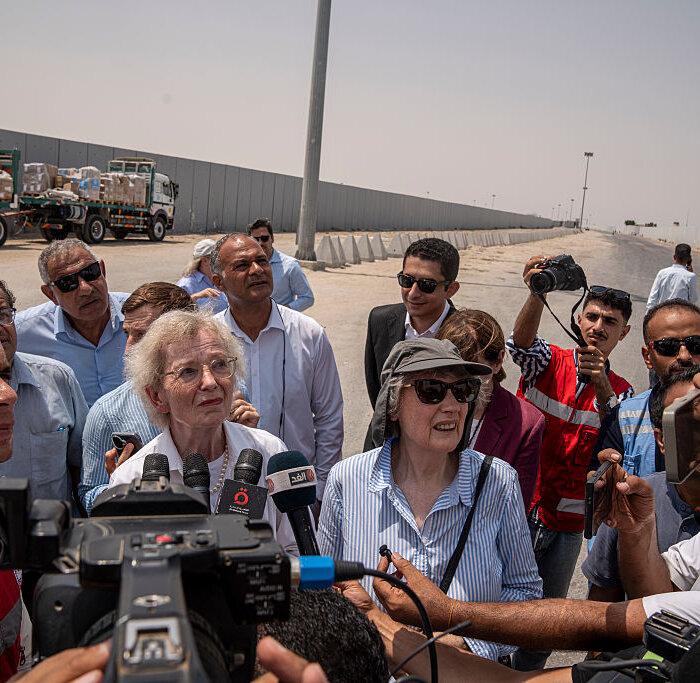
Participants strongly condemned the war and starvation in Gaza, urging governments and religious leaders worldwide to take immediate action to halt the crisis.
Dialogue Between Various Faith Groups
Sadhguru Brahmeshanandcharya Swamiki, founder and president of the International Sadhguru Institution in India, discussed the combining of faith and governance, saying that “when religious leaders come together in the spirit of dialogue, modern leadership and religion can go together hand in hand.”Kirinde Sri Dhammaratana, the Buddhist chief high priest of Malaysia, also emphasised the importance of interfaith dialogue.
“We need to have a healthy society,” he said.
“Therefore, I strongly appeal to all the religious leaders and all the global leaders to have a bit of an understanding of other people’s cultures and traditions and then a little bit about basic teaching, and then we can live peacefully and happy,” he added.
The summit reaffirmed its support for the final document of the High-level International Conference on the Peaceful Settlement of the Palestinian Question and the Implementation of the Two-State Solution, which was drawn up at a meeting hosted by Saudi Arabia and France at the U.N. in New York.
The religious leaders pledged to mobilise their spiritual and societal influence to rally support for the document.
Israel Says Palestinian State Not a Solution
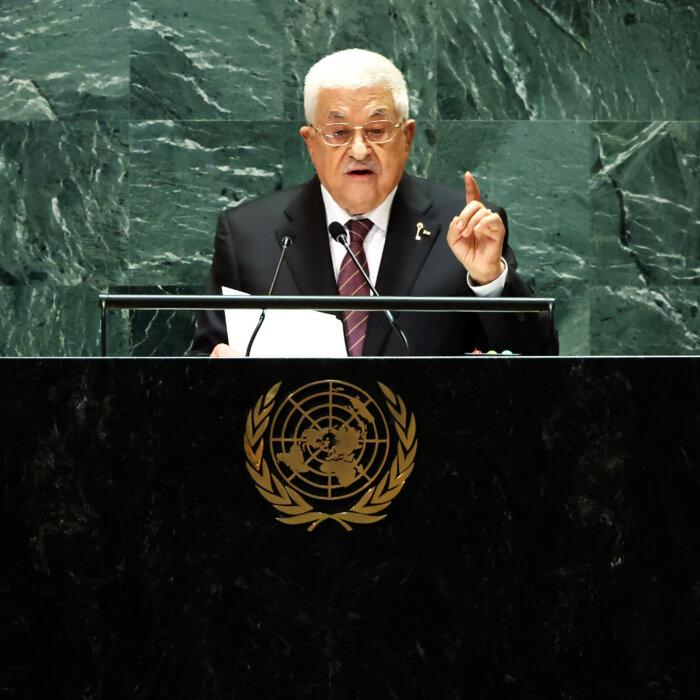
Israel rejects the two-state solution because it claims that a sovereign state of Palestine would profoundly endanger its national security.A year ago, Prime Minister Benjamin Netanyahu told the U.N. General Assembly that his country favoured a solution that would see “Israel and its Arab partners forming a land bridge connecting Asia and Europe,” and blamed Iran for fomenting trouble in the region.
He noted that Palestinian Authority President Mahmoud Abbas refused to condemn the attack by Hamas on Oct. 7, 2023.
Netanyahu claimed “he’s still paying hundreds of millions to terrorists who murdered Israelis and Americans” and that the Palestinian Authority “still wages unremitting diplomatic warfare against Israel’s right to exist and against Israel’s right to defend itself.”
Israel’s position is backed by the current Trump administration, in a departure from the two-state solution policy the country has promoted for 25 years and through five presidents, including President Donald Trump’s first term.