More than one-third of stock analysts are anticipating a recession by the end of 2025, according to a Bank of Canada survey.
Thirty-five percent of the respondents in the central bank’s Market Participants Survey said it is “probable” the Canadian economy will enter a recession within six months, as first reported by Blacklock’s Reporter.
The quarterly survey, which polls representatives from banks, dealers, pension funds, insurers, and asset-management and research firms, found that an additional 30 percent of respondents said a recession is likely within 12 months.
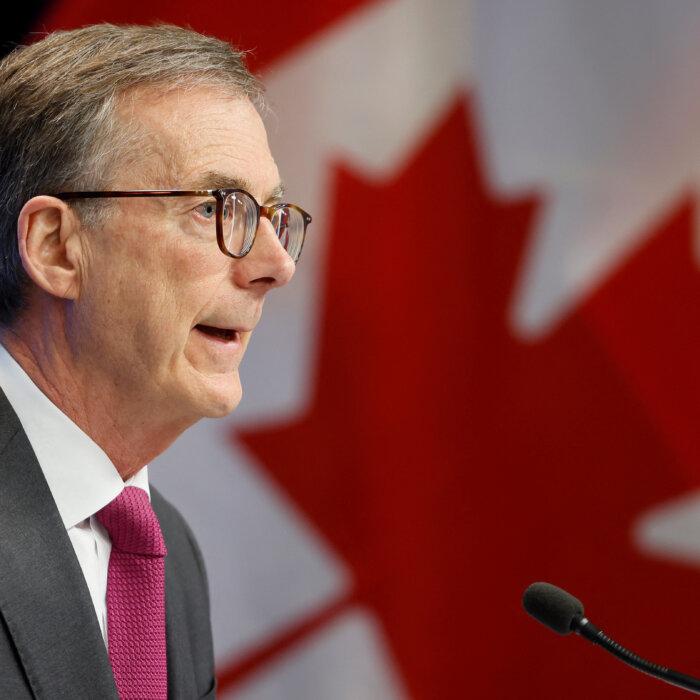
The survey results come shortly after Bank of Canada Governor Tiff Macklem said the bank is not anticipating a recession in 2025.
“The third and fourth quarters, you get modest growth I think is the message,” Macklem said during a July 30 press conference to announce the bank’s decision to hold its key interest rate at 2.75 percent for the third time in a row.
“The unusual degree of uncertainty does mean we have to put more weight on the risks, look over a shorter horizon than usual and be ready to respond to new information.”

Survey respondents were also asked their opinions on Canada’s gross domestic product (GDP) growth and inflation rates.
The median forecast for headline inflation is expected to reach 2.2 percent by the end of 2025 and 2 percent by the end of 2026. Meanwhile, Canada’s GDP growth is estimated to be 0.8 percent at year-end and 1.8 percent by the end of 2026.
Nearly 89 percent of those surveyed identified a rise in trade tensions as the primary downside risk to the country’s economic growth.
Trade has been strained between Canada and the United States since the election of U.S. President Donald Trump last fall. Trump has placed a series of tariffs on Canada this year, including 50 percent tariffs on steel and aluminum, 25 percent tariffs on vehicles and auto parts, and 10 percent tariffs on oil and potash. The United States has also put a general 35 percent tariff on Canadian goods not covered under the United States-Mexico-Canada Agreement.
Macklem has said U.S. tariffs are still too unpredictable to give one forecast for the Canadian economy and presented various scenarios in a report last month based on different tariff rates.
Regardless of the rate, Macklem said the longer tariffs remain in place “the longer this uncertainty goes on, the more it is going to weigh on the Canadian economy.”
While those surveyed by the Bank of Canada pointed to trade as the main downside risks to Canada’s growth outlook, it was not the only issue identified. Forty-four percent also pointed to weaker consumer spending and a declining housing market as factors.
Meanwhile, approximately 90 percent reported that the alleviation of trade tensions and a fiscal stimulus larger than anticipated were the key upside risks to their growth outlook.