This copy is for your personal, non-commercial use only. Distribution and use of this material are governed by our Subscriber Agreement and by copyright law. For non-personal use or to order multiple copies, please contact The Epoch Times Reprints.
The Confederation Building is seen behind people taking in the view from a lookout on Parliament Hill in Ottawa on June 12, 2025. The Canadian Press/Sean Kilpatrick
Ottawa will give out a record high in equalization payments to the provinces next year totalling more than $27 billion, an increase of roughly $1 billion from this year.
The federal equalization program involves the transfer of tax dollars collected by Ottawa from across the country to provinces with lesser abilities to raise revenues at given tax rates.
Quebec will once again receive the highest equalization payments of any province, including $13.9 billion in fiscal year 2026–27, representing an increase of roughly $340 million from fiscal year 2025–26, according to the federal finance department.
The second-highest payment will go to Manitoba at approximately $5 billion, followed by Nova Scotia at $3.5 billion, New Brunswick at $3.3 billion, Prince Edward Island at $723 million, Ontario at $406 million, and Newfoundland and Labrador at $182 million.
The equalization payments for 2025–26 followed a similar pattern, with Manitoba at $4.7 billion, Nova Scotia at $3.4 billion, New Brunswick at $3.1 billion, Prince Edward Island at $666 million, Ontario at $546 million, and Newfoundland and Labrador at $113 million.
Meanwhile, Canada’s western provinces, including British Columbia, Alberta, and Saskatchewan, will continue to receive no equalization payments in 2026–27, as their share of payments gets transferred to other provinces. This has been the case for the western provinces for more than a decade, but all provinces have received equalization payments at some point since the program’s implementation nearly 70 years ago.
Saskatchewan Premier Scott Moe posted on social media a map of the provinces’ equalization payments for 2026–27, noting that the federal government had provided next year’s equalization amounts to the provincial finance ministers.
“This map is a clear indication of which provinces are driving Canada’s economy and how the equalization formula disincentivizes economic growth,” Moe said in the Dec. 11 post on X.
The federal government says the purpose of the program is to “ensure that provincial governments have sufficient revenues to provide reasonably comparable levels of public services at reasonably comparable levels of taxation.”
Calls for Reform
Ottawa’s equalization program has been a long-standing source of criticism in Alberta due to the wealth redistribution to other provinces under the equalization scheme, as contributions from the energy-rich province make up a sizeable portion of the payments to other provinces.
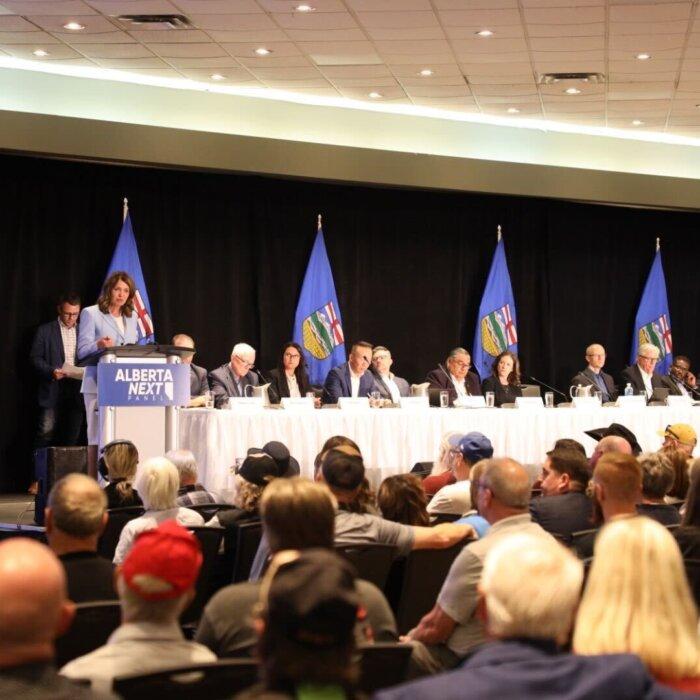
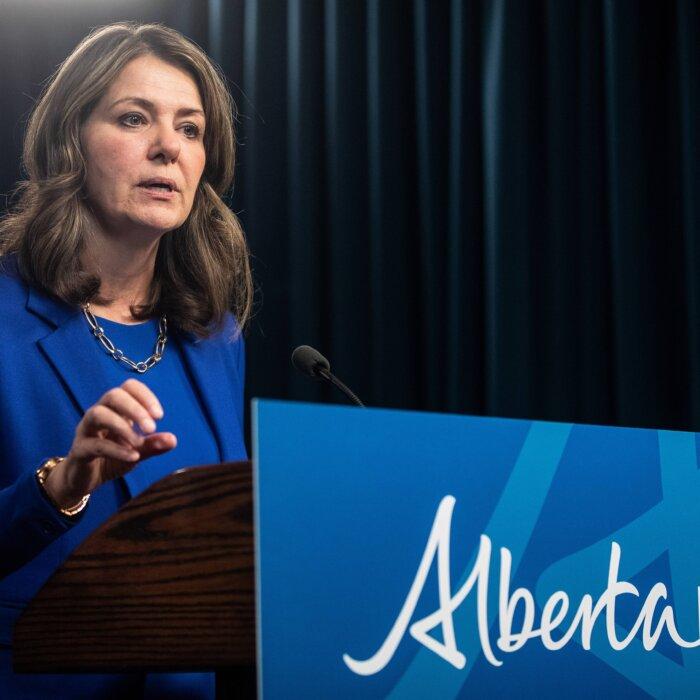
Alberta Premier Danielle Smith called on Ottawa to overhaul the equalization program in her post-federal-election speech earlier this year, calling the program unfair. She expressed frustration in her speech, saying Alberta is propping up the country’s largest provinces while receiving nothing in return. She said Alberta should receive the same per capita federal transfers under the equalization payment program as Canada’s other large provinces.
Moe has also been vocal about the issue, tabling a reform proposal for the program in 2018 that amounted to a 50 percent cut to equalization in addition to a redistribution of the savings on an “equal-per-capita basis to all provinces,” according to a 2024 report by the Johnson Shoyama Graduate School of Public Policy.
Newfoundland and Labrador has had its own issues with the program, launching a constitutional challenge against it in 2024, saying it places the province at a disadvantage and doesn’t consider the cost of delivering services.
N.L. also criticized the cap impose on equalization payments, which is determined by factoring in 100 percent of N.L.’s natural resource revenue without considering the costs incurred by the province for their development.
The province also called for the equalization funds to be distributed among all the provinces, similar to Alberta. N.L. received equalization payments in the 2024–25 fiscal year for the first time since 2008.
B.C. Premier David Eby had told reporters he wanted to “support” N.L.’s plans to sue Ottawa over the equalization program, saying B.C. taxpayers are put at a disadvantage by the equalization formula.
The federal government has said that the provincial governments do not contribute financially to the equalization program and that the provinces are not involved in the transfer unless they qualify for a payment.
Isaac Teo and Jennifer Cowan contributed to this report.