Very Large Telescope Zooms in on Fried Egg Nebula

September 28, 2011 Updated: October 1, 2015

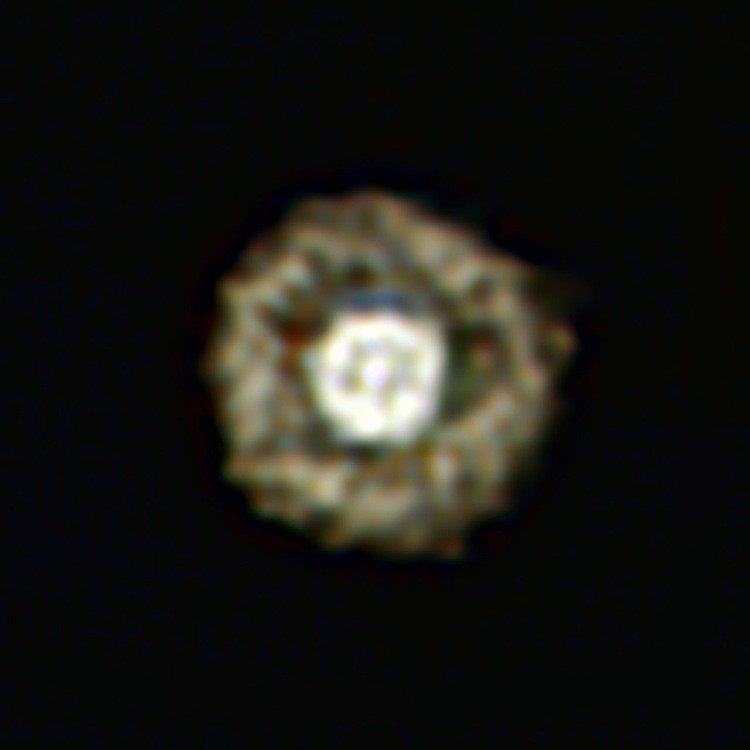
This picture of the nebula around a rare yellow hypergiant star called IRAS 17163-3907 is the best ever taken of a star in this class and shows for the first time a huge dusty double shell surrounding the central star. (ESO/E. Lagadec)
The European Space Observatory’s (ESO) Very Large Telescope (VLT) has captured new images of IRAS 17163-3907 that reveal a double shell, giving it a new nickname: the Fried Egg Nebula.

This gigantic star is around 1,000 times larger than our sun, and shines about 500,000 times more brightly. It is located in the constellation of Scorpius around 13,000 light-years away.

The VLT’s VISIR infrared camera snapped shots that showed the nebula has two almost perfectly spherical shells, just like a yolk and egg white.

The radius of the outer shell is 10,000 times the distance from the Earth to the sun. If the nebula was centered on our solar system, it would envelop all the planets, dwarf planets, and some of the comets orbiting far beyond Neptune.

It is the closest known yellow hypergiant, an extremely active star transitioning through a series of explosions. In only a few hundred years, this star has released matter equivalent to four times the sun’s mass, forming a double shell full of gas and silicate-rich dust.

"This object was known to glow brightly in the infrared but, surprisingly, nobody had identified it as a yellow hypergiant before," said research team leader Eric Lagadec of the ESO in a press release.

Due to its hyperactive state, the star will probably soon explode, forming one of the next supernovae in the Milky Way.

"It is amazing that one of the brightest stars in the infrared sky had previously gone unnoticed," Albert Zijlstra at The University of Manchester in the release.

"We are seeing a very rare event, when a star is beginning to blow off its outer layers, as a prelude to its final explosion as a supernova."

Last week, the ESO released a new image of the Running Chicken Nebula in the constellation of Taurus. What’s next on the nebula menu?