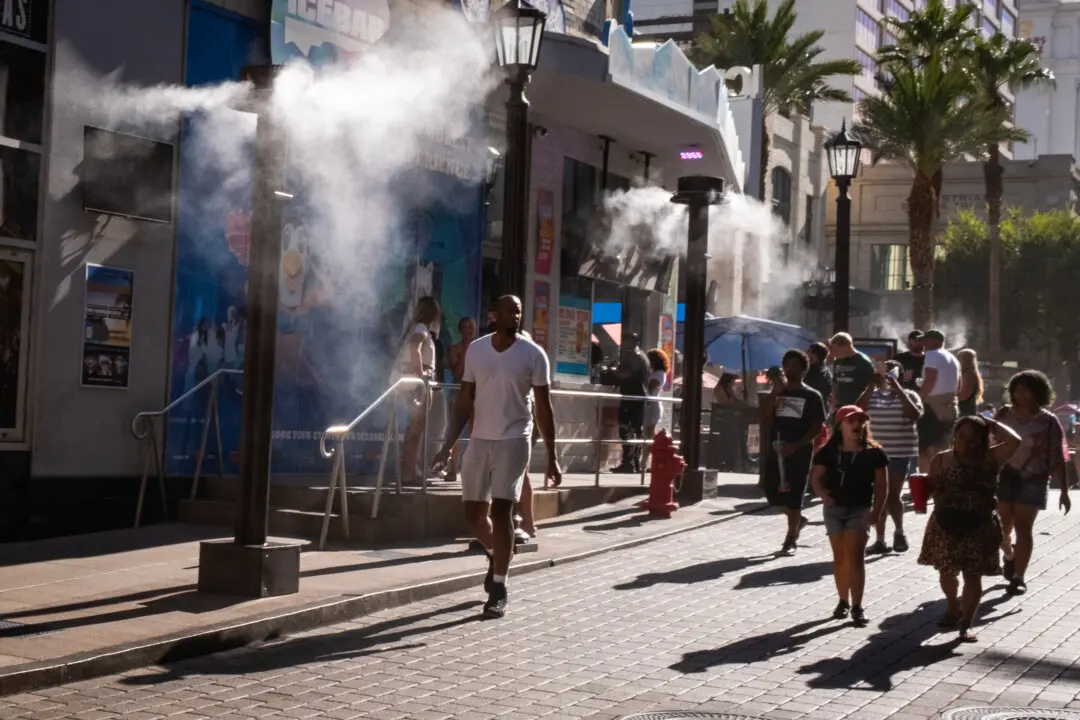
Detroit, Minneapolis, and Chicago had the worst air quality in the world on July 16 due to heavy smoke caused by hundreds of wildfires in the United States and Canada.
The intense infernos prompted evacuations and health alerts for people living in both countries as fire crews worked around the clock to contain the flames.
But conditions could get worse.
Here is a look at where wildfires are burning and how health experts suggested you protect your home and family.
Canadian Wildfires
At least 858 active fires raged across Canada on Thursday, with 110 considered “out of control,” according to the Canadian Wildland Fire Information System.


The provinces with the most out-of-control fires included Manitoba, Saskatchewan and Ontario, according to Canadian fire officials.
Ontario’s minister of emergency preparedness, Jill Dunlop, requested that the Canadian government prepare to deploy federal resources and Canadian Armed Forces troops to help with evacuations if conditions worsened.
Environment Canada meteorologist Colin Fong told The Canadian Press that dry conditions likely caused rain to evaporate before landing, increasing fire danger.
Minnesota Fires
At least one of the fires in Canada crossed into Minnesota on Wednesday. The Land of 10,000 Lakes currently has six active fires that are zero percent contained, according to the National Interagency Fire Center at 1 p.m. ET on July 16.
Five of the six fires in Minnesota are in Superior National Forest, just south of the Canadian border.
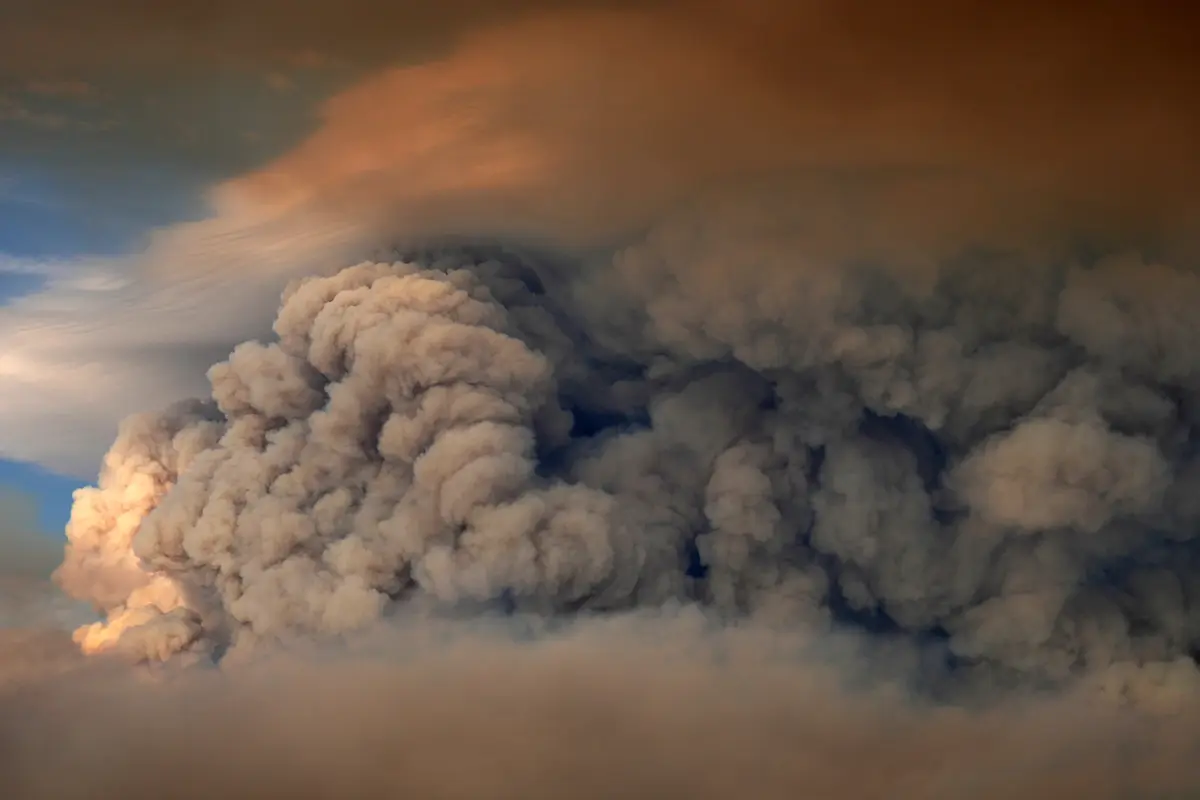
The largest fires inside the forest include the Thumb Fire, which burned 14,500 acres, and the Bear Trap Fire, at 13,500 acres.
A large evacuation zone was declared in northern Minnesota after blazes were sparked on July 6 by a lightning storm.
Crews across the United States are working to contain dozens of other fires that are also impacting air quality. The National Interagency Fire Center reported 49 large fires from Minnesota to the Pacific Northwest, Great Basin, and Rocky Mountain areas.
Air Quality
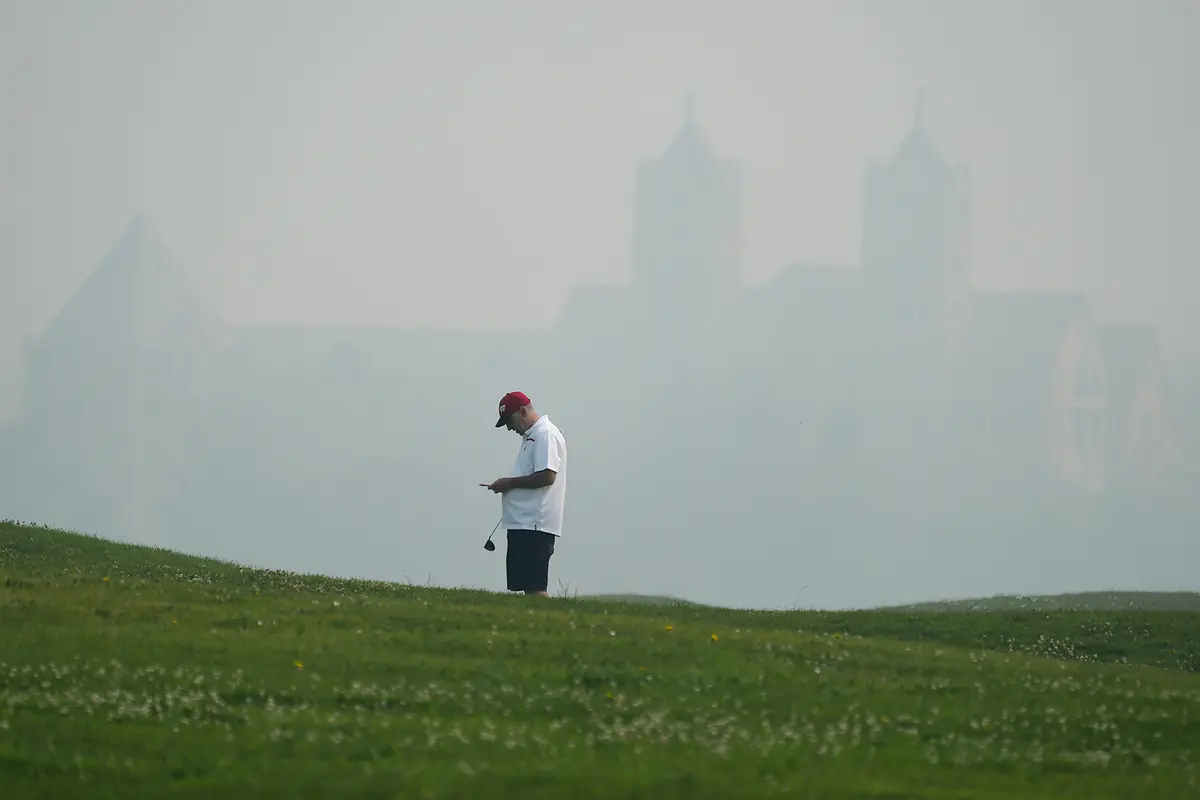
Detroit had the worst air quality in the world on Thursday afternoon, according to the Swiss air quality technology company IQAir.
The Michigan Department of Environment, Great Lakes, and Energy urged people to “limit time outdoors when possible, especially for children, older adults, and people with heart or respiratory conditions such as asthma.”
Minneapolis came in second, prompting the Minnesota Pollution Control Agency to issue an air quality alert for most of the state, including the Twin Cities of Minneapolis and St. Paul.
Chicago came third.
“The air quality has gotten worse in the last few hours and is now hazardous,” Chicago’s Office of Emergency Management and Communications shared in an X post on Thursday afternoon. “This means the air is unsafe for EVERYONE and you should stay indoors and severely restrict outdoor activity.”
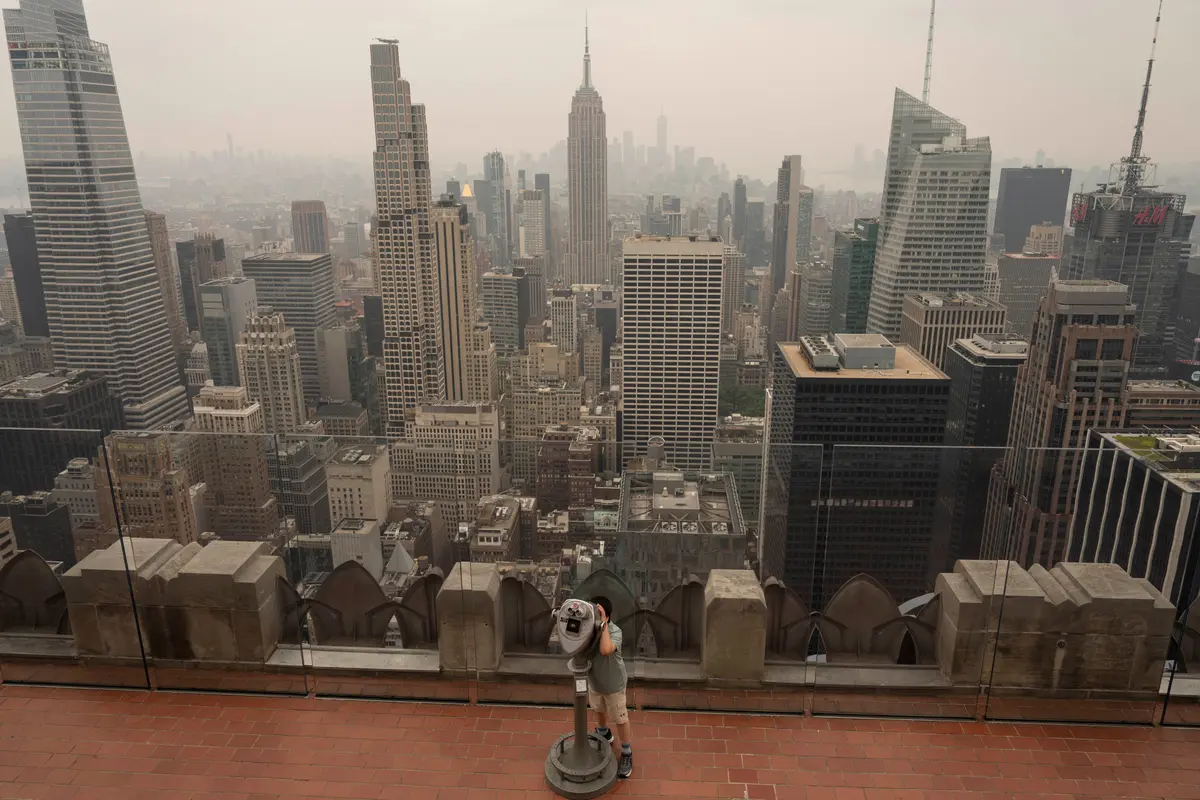
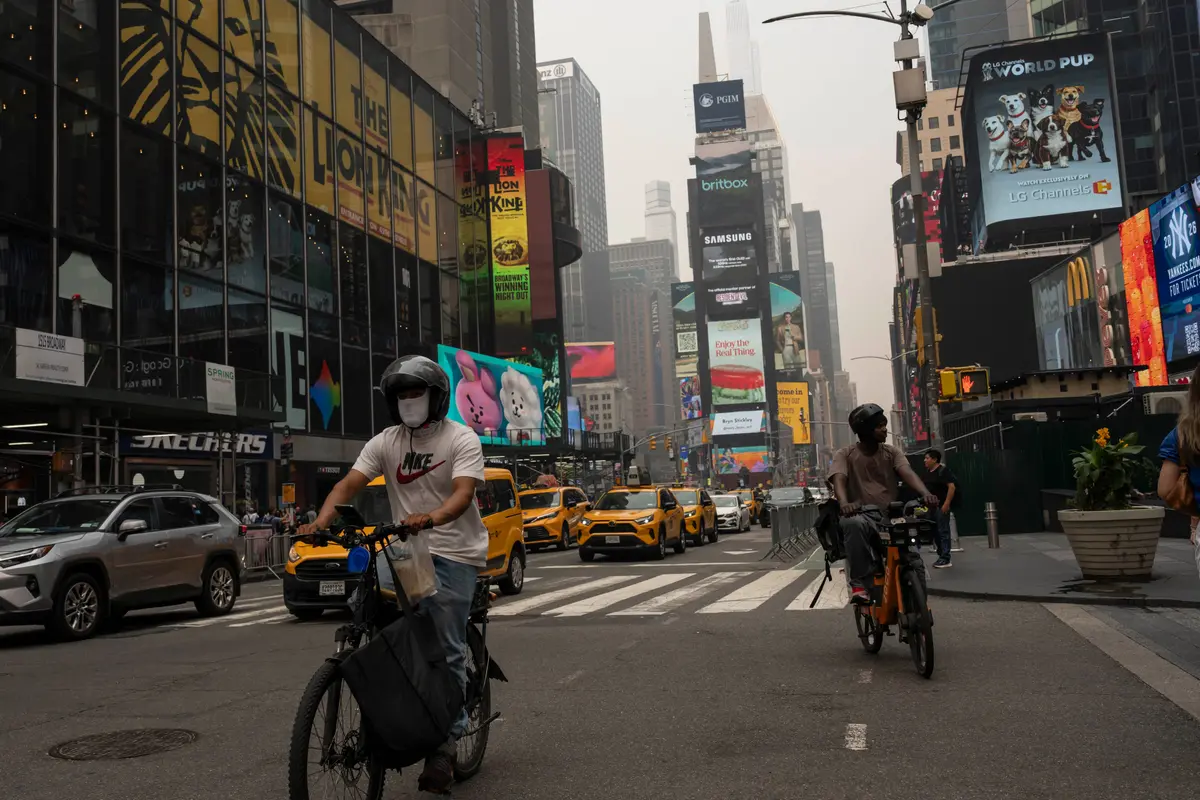
New York City, which ranked 20th in worst air quality in the world on Thursday, opened cooling centers and handed out free KN95 masks across the metro area.
“New York City, it’s hot and air quality today will likely reach unhealthy levels,” Mayor Zohran Mamdani wrote in an X post on Thursday afternoon. “Take precautions to stay cool and out of harm’s way.”
The Epoch Times reached out to FIFA for comment on how it will address the condition.
Short-Term Impact
Air quality expert Dr. Ted Myatt suggested that smoke could linger throughout the weekend.
“The thickest smoke is expected to stay around through Friday and into Saturday with gradual, slow improvement on the horizon by the end of the weekend,” Myatt told the Epoch Times in an interview on July 16.
Myatt added that a shift in the wind pattern and incoming rain could help clear the air in these affected areas if the wildfires in Canada and Minnesota don’t expand.
“If they flare up, then additional waves of smoke could be on the way,” Myatt warned.
The poor air quality may not be contained to the Northeast.
“Mid-Atlantic states, parts of the Ohio Valley, and southern New England should brace for downgraded air quality in the coming days [or] weeks,” Myatt said.
People in impacted areas are urged to keep windows and exterior doors closed, limit outdoor activity, and keep pets indoors if possible.
Myatt suggested people run a HEPA air purifier inside their home.
Smoke Removal
San Diego-based cleaning expert Renata Cruz, who is part of Coastal Maid San Diego’s team, told The Epoch Times that opening a window to rid a home of smoke isn’t enough after the poor air quality levels outside subside.
“Place a fan blowing inward toward an entrance to bring in new air, and place a window on the opposite side of the room or home to blow the smoky air outward,” Cruz said. “Do this for each room individually instead of trying to circulate all the air in the house at one time.”
Then once the air is out, she suggested people clean walls, counters and all surfaces in the home even if the rooms were closed off.
“There are two natural odor-absorbing products that I use most when treating ongoing odor issues,” Cruz added.
Cruz suggested people place baking soda or activated charcoal in bowls around areas affected by smoke odor to “draw remaining odor out of the air over multiple days.”
She added that white vinegar can be used in a similar manner both in bowls around a room and/or as a wipe-down product for cleaning on hard surfaces and walls.
If a person is trying to get the smoke smell out of their car, Cruz suggested removing all floor mats and letting their car vent for 30 to 60 minutes before vacuuming everywhere.
“After vacuuming I apply baking soda to all soft surfaces and let sit for a night and then vacuum again the next day,” Cruz added.
Cruz and Alexander Marsh, a Washington-based CEO and Founder at Bearcat Heating and Cooling, told The Epoch Times that if smoke smell and residue remain in your car and house after attempts to clear it, it may be time for professional help.
“Contact a remediation company for deep smells. They specialize in that level of contamination and are really great for removing the contaminants that are left behind from smoke.”