The search for missing flight recorders, or “black boxes,” on a flight like Malaysia 370, which mysteriously disappeared and was never seen again, raises the question of why airlines do not transmit flight data remotely as cloud storage technology evolves.
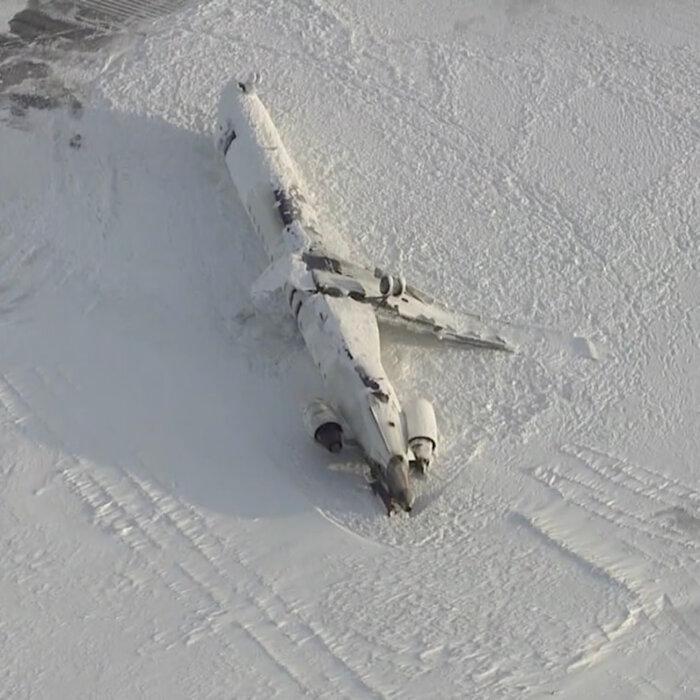
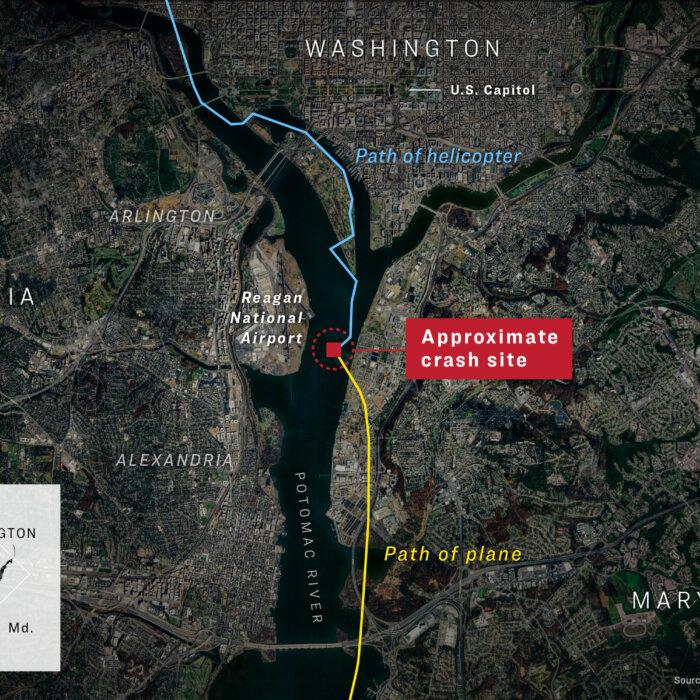
Earlier this year, rescue divers had to search through the Potomac River’s ice-cold waters to retrieve the black boxes of an Army Black Hawk helicopter and a Bombardier CRJ700 after the two collided near Ronald Reagan Washington National Airport.
Why do aircraft still use onboard black boxes to record flight data if remote uploading and cloud storage technology have excelled?
How Black Boxes Work
The Federal Aviation Administration (FAA) requires that all large commercial aircraft—and some smaller commercial, corporate, and private aircraft—be equipped with two “black boxes” that continuously record data throughout flights, according to the National Transportation Safety Board (NTSB).The other, a flight data recorder, measures and stores data on the aircraft’s altitude, airspeed, and heading—which is the direction the plane’s nose is pointed.
Both recorders are installed in an aircraft’s most survivable portion, which is usually near the tail. They’re designed to survive crashes, fire, and pressure from deep-sea submersion.
Years ago, these black boxes used one-quarter-inch magnetic tape to store the data, whereas newer units employ digital storage and memory.
Black boxes are orange, not black. The nickname comes from some of the first flight recorders developed decades ago that used photographic film to store information, and thus had to be sealed to prevent light from getting inside.
But how do accident investigators find these devices if an aircraft crashes over open water? That’s why each black box is equipped with an underwater locator beacon, or “pinger,” which activates when the recorder detects water immersion. It works at depths of up to 20,000 feet.
The technology isn’t foolproof, though.
Investigators have still not found Malaysia Airlines Flight 370 after it disappeared en route to Beijing in 2014. Some investigators believe the aircraft is sitting at the bottom of the southern Indian Ocean.
A report indicated that the battery for the locator beacon for one of the Boeing 777’s black boxes had expired more than a year before the fatal flight.
Whenever a downed aircraft is located, both black boxes are removed from the accident site and sent to the NTSB in Washington for analysis.
After that, investigators use the data to determine the probable cause of the accident or incident.
However, some of the data—the pilot’s voices in the cockpit—are protected by privacy laws, and the public will not have access to those recordings.
Issues With Using Cloud Storage
Several hurdles make it difficult or impractical to use cloud storage technology for aircraft flight recorders.“Streaming that much data in real time, especially over oceans or remote areas, would require massive satellite bandwidth, which can be technically challenging,” an FAA spokesman told The Epoch Times.
Another issue is the limited or no real-time broadband connectivity in many of the places aircraft fly. Since cloud storage requires uninterrupted real-time uploading, an aircraft could lose connection from a “catastrophic failure,” the FAA said.
Peter Bentley, a technology expert and honorary professor at the University College London computer science department, told The Epoch Times that since aircraft operate in areas where it’s extremely difficult to transmit data wirelessly with conventional masts or receivers, satellites must be used to “receive aircraft data directly and relay the signal to the ground.”
But when hazardous situations like electrical storms, solar flares, or severe conditions in or out of the aircraft occur, “wireless transmission may become interrupted and that vital data may be lost just when it’s needed the most,” Bentley explained.
“The only really reliable method for recording data is to do it on the aircraft itself and then make the black box as indestructible as possible,” he said.
Shem Malmquist, who has worked in aviation for nearly 40 years, including as a commercial pilot, professor, and safety consultant, told The Epoch Times that there’s no comparison between the data storage capabilities of digital or solid-state memory in black boxes and the limits of wireless data uploading.
He said that as aviation technology advances, the amount of data and information that can be mapped and stored in real-time grows exponentially, outpacing the capabilities of cloud storage’s wireless uploading.
“Now we’re capturing hundreds of parameters, and some of them have data rates of 100 times per second,” Malmquist said. “I think that that is probably the biggest issue.”
The FAA said that pilots and airlines have also expressed privacy concerns about streaming cockpit voice data in real time.
As the NTSB noted, the audio files for cockpit voice recordings found in black boxes are privacy-protected by Congress, with strict rules for what can be released via written transcripts. However, there is some concern that streaming that data live could make it vulnerable to breaches and potentially end up in the public domain.
Malmquist explained why airlines, pilots’ unions, and the FAA protect those recordings and keep them private.
Uses of Cloud Storage in Aviation
Despite concerns about replacing black boxes with cloud storage, there are some current examples where the technology is already being deployed in aviation, as well as some potential future uses.Live streaming is being explored as a supplement to black boxes, Bentley said.
“If it works, it could enable faster accident investigations and could aid in recovery of aircraft lost at sea where location is difficult to determine,” he added.
“It’s difficult—there are so many thousands of aircraft in the air at once—that’s a lot of data for the satellites to handle simultaneously.”
The FAA mentioned that many modern aircraft use technology like the Aircraft Communications Addressing and Reporting System (ACARS) to send periodic position and maintenance data in real time.
Live data streaming “would be very beneficial in events such as Malaysia 370,” Malmquist said.
He added that commercial aircraft already monitor and upload some data via cloud storage, but most of them do not do so until they get to the gate, because of the volume and bandwidth problems.
The data includes engine parameters and maintenance information, Malmquist said.
“[Airlines] want to transmit maintenance things because although pilots are supposed to let the company know if they have some kind of maintenance issue before landing, some are fairly hidden … and you don’t necessarily even know about them until you lock in,” he added.
Malmquist suggested one way of getting around the wireless uploading limits: live streaming simplified batches of information that give airlines and investigators some idea of the aircraft’s parameters.
“You don’t have to [upload] all of it,” he said.